Oakland attic rodent cleanup follows a specific sequence that most homeowners—and some contractors—get wrong. The mistake is rushing to install new insulation before the attic is actually ready. When contamination stays hidden under old material, when entry points remain unsealed, or when sanitization gets skipped, the problem comes back. This guide explains the professional process that prevents callbacks and protects your home for the long term.
At a glance
- Inspect first — a professional assessment reveals contamination extent, entry points, and hidden damage before any work begins.
- Remove contaminated insulation — exposing the attic floor allows full evaluation and effective cleanup.
- Clean and sanitize — CDC-recommended protocols address droppings, urine, and odor that remain after material removal.
- Seal entry points — rodent proofing prevents re-entry, which trapping alone cannot accomplish.
- Install new insulation last — only after the attic is clean and sealed does new insulation make sense.
Why the Order of Oakland attic rodent cleanup Matters
Short answer: The correct sequence is inspect, remove contaminated insulation, clean and sanitize, seal entry points, then install new insulation. Doing these steps out of order—or skipping any—often leads to repeat infestations, trapped odors, or contamination buried under fresh material.
Most attic rodent problems are bigger than what you can see from the hatch. Droppings, urine, nesting material, and damaged insulation hide under the surface layer. Install new insulation without addressing what’s underneath, and you’re covering the problem instead of solving it.
The sequence matters because each step depends on the one before it:
- You can’t fully assess contamination until insulation is removed.
- You can’t sanitize effectively until the attic floor is exposed.
- You can’t seal entry points you haven’t found.
- New insulation performs poorly if air leaks and gaps remain open beneath it.
What Happens When You Skip Steps
When insulation goes in before cleanup, droppings and urine residue stay trapped against your ceiling. Odors intensify in warm weather—and Oakland attics get hot. When entry points aren’t sealed, rodents return within weeks. When sanitization is skipped, contamination residue remains even after the visible mess is gone.
A proper Oakland attic rodent cleanup addresses the root cause, not just the symptom.
Step 1 — Inspect the Attic Before Any Work Begins
Short answer: A professional inspection identifies contamination extent, entry points, duct damage, and insulation condition. This assessment determines what the project will actually require.
Before any material is removed or money is spent, the attic needs a careful inspection. This isn’t a quick flashlight check from the hatch—it’s a systematic assessment of:
- Visible contamination: droppings, urine staining, nesting material, carcasses
- Insulation condition: compression, displacement, damage, odor
- Entry points: gaps at roofline, vents, utility penetrations, construction openings
- Duct condition: gnaw marks, holes, disconnections, nests inside ductwork
- Moisture indicators: staining, mold-like discoloration, condensation signs
In many Oakland homes—especially older craftsman bungalows, mid-century ranches, and properties with additions—contamination hides under loose-fill insulation. A surface inspection can miss the worst of it. That’s why insulation removal often reveals problems that weren’t visible during the initial inspection.
Signs of Rodent Contamination Oakland Homeowners Often Miss
Droppings in corners are obvious. But homeowners often miss:
- Urine odor that gets stronger when the attic heats up
- Trails of compressed or disturbed insulation where rodents travel
- Gnaw marks on ducts, wiring, or wood
- Nesting material tucked into insulation or near HVAC equipment
- Grease marks along rafters and joists where rodents repeatedly travel
Oakland homes face year-round rodent pressure. Unlike colder climates where winter reduces activity, the East Bay’s mild temperatures mean rodents stay active and breeding all year. According to the CDC, rodent populations grow quickly when food, water, and shelter are available—conditions that persist year-round in the Bay Area. Contamination can accumulate for months before homeowners notice the problem.
Step 2 — Remove Contaminated Insulation
Short answer: If insulation contains droppings, urine, nesting material, or persistent odor, removal is typically recommended. This step exposes the attic floor so entry points and damage become visible.
Removing contaminated insulation isn’t always necessary—but when rodents have been living in your attic, it usually is. The insulation holds the evidence: urine-soaked material, droppings mixed into loose fill, nesting debris, and odors that don’t dissipate.
Removal involves:
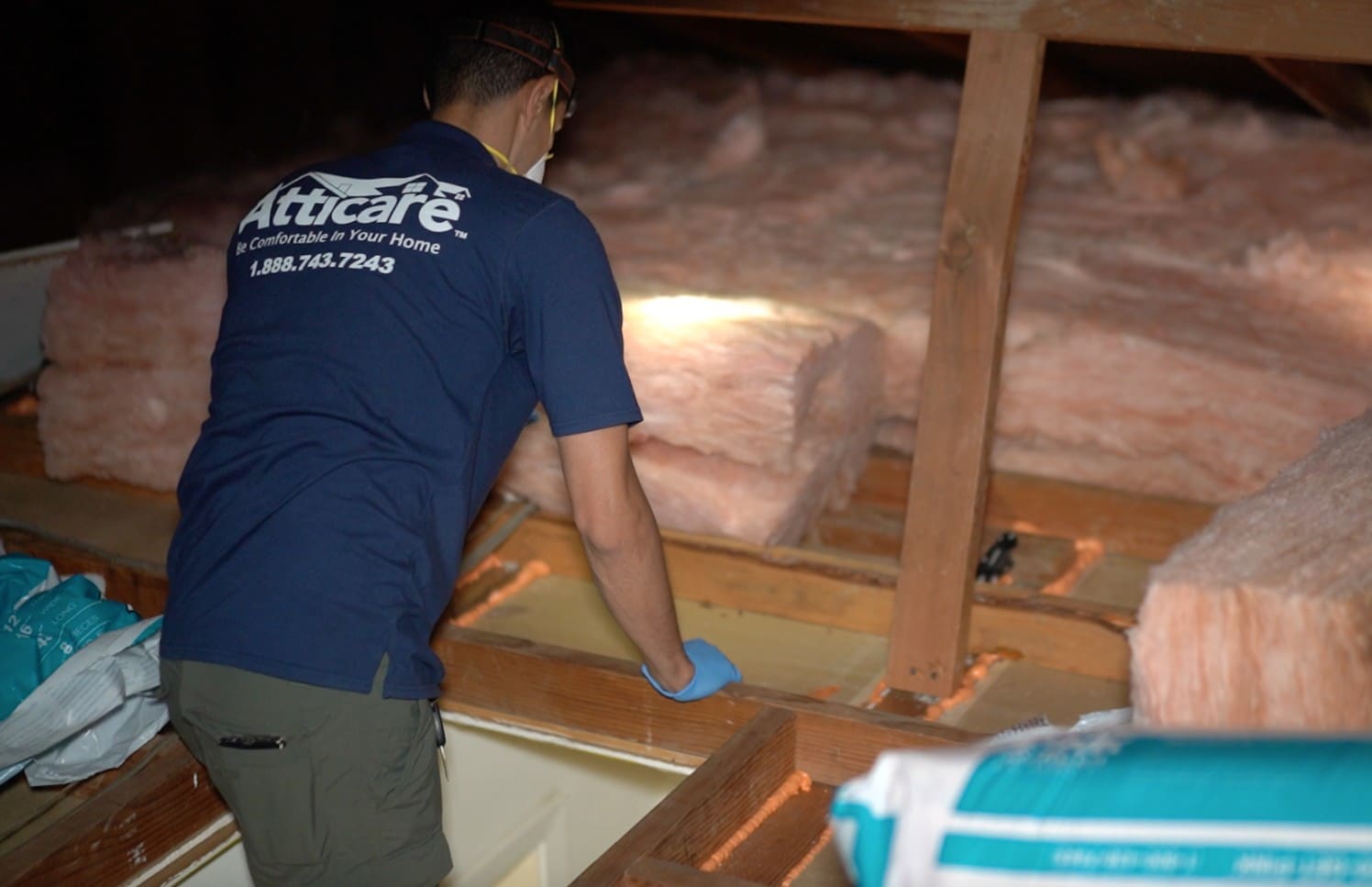
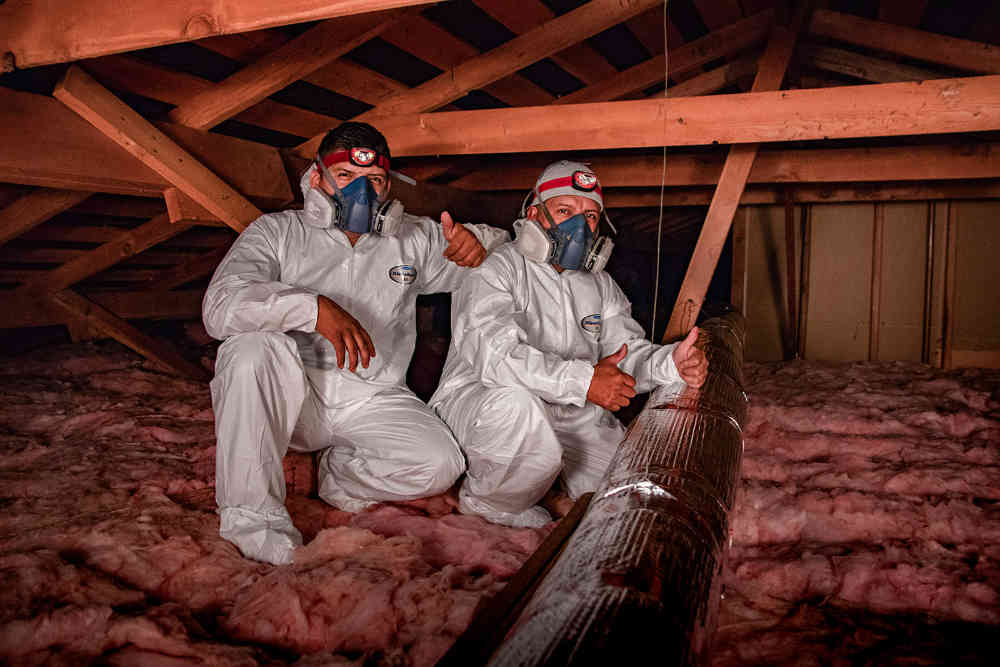
- Protective equipment for the crew (respirators, suits, gloves)
- Containment and dust barriers to protect living spaces
- Commercial vacuum equipment for loose-fill material
- Careful handling of batt insulation and debris
Once the old material is out, the attic floor becomes visible. This is when entry points, hidden damage, and contamination extent can be fully assessed. Contractors who skip removal are working blind.
Can You Install New Insulation Over Old After Rodents?
Direct answer: usually not advisable if contamination is present.
Installing new insulation over contaminated material traps odors, doesn’t address the source of the problem, and can void manufacturer warranties. The right approach is to remove compromised material, clean the space, then install fresh insulation on a prepared surface.
Atticare USA treats new insulation as the final step—never the first. Covering a problem doesn’t solve it.
Step 3 — Clean and Sanitize the Attic Space
Short answer: After insulation removal, the attic floor and surfaces still hold contamination residue. Cleanup and sanitization address droppings, urine, and odor that remain after material is gone.
Removing insulation takes out the bulk of contaminated material. But the attic floor, joists, and surfaces still need attention. Droppings residue, urine crystals, and odor persist on wood and other surfaces.
The CDC recommends specific protocols for cleaning areas contaminated by rodents, including ventilating the space, avoiding dry sweeping or vacuuming that can aerosolize particles, and using appropriate disinfectants. Professional cleanup follows these guidelines to protect both the crew and the home’s occupants.
Sanitization isn’t an upsell—it’s a necessary step between removal and restoration. Atticare USA includes sanitization as part of the standard attic cleaning sequence, not as an optional add-on.
Step 4 — Seal Rodent Entry Points (Exclusion)
Short answer: Rodent proofing means identifying and sealing gaps, cracks, vents, and penetrations where rodents enter. This is the durable fix—trapping alone doesn’t prevent re-entry.
Exclusion is where the long-term protection happens. According to the EPA, mice can squeeze through openings as small as a dime, while rats can enter through gaps the size of a quarter. Common entry points in Oakland homes include:
- Roofline gaps where roof meets fascia—especially on older craftsman homes with decorative trim
- Unscreened or damaged vents (gable, soffit, foundation)
- Utility penetrations for plumbing, electrical, HVAC
- Construction gaps at additions, dormers, or remodels
- Crawl space openings and foundation vents—common in Oakland’s older housing stock
Sealing involves wire mesh, cement, foam, metal flashing, or other materials appropriate to the opening. The goal is to close every accessible entry point so the next generation of rodents can’t get back in.
Rodent Proofing vs. Pest Control: What’s the Difference?
These terms get confused, but they’re different services:
Pest control (trapping, baiting, extermination) removes rodents that are already inside. It addresses the current infestation but doesn’t prevent the next one.
Rodent proofing (exclusion) seals entry points to prevent future access. It’s the durable fix that stops the cycle.
Most attic rodent problems need both—but the exclusion work is what makes the fix last. Atticare USA handles exclusion, cleanup, sanitization, and restoration through its rodent proofing service. When live rodents need to be removed first, that work is coordinated with a licensed pest control provider. Atticare USA’s rodent proofing carries a 1-year warranty—a one-time solution, not another service contract.
Step 5 — Install New Insulation (Only After the Attic Is Ready)
Short answer: Insulation is the final step, installed only after the attic is clean, sanitized, and sealed. Installing insulation before these steps wastes money and invites repeat problems.
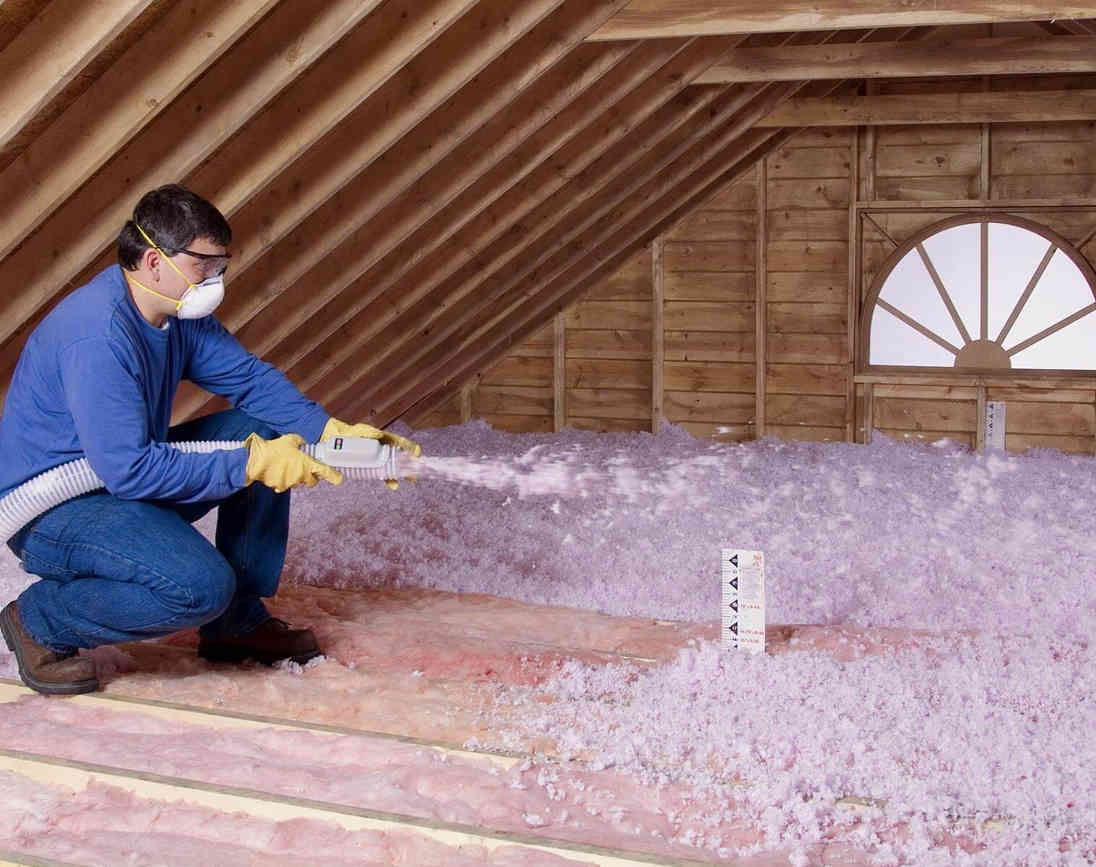
With contamination removed, surfaces sanitized, and entry points sealed, the attic is finally ready for new insulation. Blown-in fiberglass is common in Bay Area attics because it fills irregular spaces and achieves consistent coverage.
But insulation alone isn’t the complete picture. Air sealing—closing gaps around fixtures, wiring, plumbing, and other penetrations—should happen before insulation goes in.
Should You Add Air Sealing Before Insulation?
Air sealing addresses the gaps where conditioned air escapes from your living space into the attic. The Department of Energy recommends air sealing as a critical step before adding insulation, noting that sealing air leaks improves comfort and energy performance more effectively than adding insulation alone.
Common air leakage points include:
- Recessed light fixtures and junction boxes
- Plumbing and wiring penetrations
- HVAC register boots
- Attic hatches and pull-down stairs
- Top plates where walls meet the attic floor
ENERGY STAR guidance on attic air sealing confirms that sealing these gaps before insulation improves thermal performance and reduces energy waste from conditioned air escaping into an unconditioned attic. Atticare USA offers air sealing as part of comprehensive attic restoration.
Do You Need One Contractor or Multiple for Oakland Attic Restoration?
Short answer: A full-service attic restoration company can handle exclusion, cleanup, sanitization, and insulation in one coordinated project. Live rodent removal may require a separate pest control service first. Asbestos and mold require licensed specialists.
The advice to “use separate companies” makes sense for some situations—but it’s not always the best path. Coordinating three or four contractors means you’re the project manager: scheduling, sequencing, and hoping each vendor understands what the others did.
A full-service restoration company handles the connected work in one project:
- Inspection and assessment
- Insulation removal
- Cleanup and sanitization
- Rodent proofing (exclusion)
- New insulation installation
What’s not included: Atticare USA doesn’t trap, bait, or exterminate—that’s pest control, handled by a licensed pest control provider if needed. Asbestos abatement and mold remediation require separately licensed specialists.
For most Oakland attic rodent cleanup projects, one company handling the restoration scope is faster, cleaner, and more accountable than assembling a team of specialists yourself.
What to Expect: Timeline and Cost Factors
Short answer: Most full restoration projects complete within a few days of active work once access is clear. Cost depends on attic size, contamination severity, entry point count, and insulation type.
Unlike a multi-week trapping program with repeat visits, Oakland attic rodent cleanup work is concentrated. Once any live rodents are removed and the attic is accessible, the restoration sequence typically completes efficiently.
Cost factors include:
- Attic square footage
- Contamination severity and insulation type
- Number of entry points requiring sealing
- Whether duct repair is needed
- Insulation depth and R-value target
Financing options and rebates (including utility programs and federal tax credits) can help offset costs. Use the insulation cost calculator to get a ballpark estimate for your project.
Atticare USA provides a written proposal outlining the recommended scope of work and pricing—no hidden charges or upfront fees.
Why Oakland Attics Face Year-Round Rodent Pressure
Bay Area homes don’t get the winter pause that colder climates experience. Rodents stay active year-round, which means:
- Infestations can develop any month
- Contamination accumulates longer before detection
- Exclusion is more important than seasonal trapping
Oakland’s older housing stock—craftsman bungalows, Victorians, mid-century homes, and mixed-era properties—often has construction gaps, aging vents, and crawl space access that create vulnerabilities. Many homes have had additions, conversions, or patchwork repairs over the decades that leave unsealed gaps rodents exploit.
The mild East Bay climate keeps rodents breeding, and the older construction gives them entry points. That’s why exclusion—not just trapping—is the fix that lasts.
FAQ: Oakland Attic Rodent Cleanup
How do I know if my attic insulation is contaminated by rodents?
Look for droppings, urine staining, disturbed or compressed insulation, nesting material, and persistent odor—especially when the attic heats up. If you see any of these signs, professional inspection is recommended before installing new insulation.
What’s the difference between rodent proofing and pest control?
Pest control removes active rodents through trapping or baiting. Rodent proofing seals entry points to prevent future access. Both may be needed, but exclusion is the durable fix.
Can one company handle attic cleanup, sealing, and insulation Oakland projects require?
Yes. A full-service restoration company like Atticare USA handles exclusion, cleanup, sanitization, and insulation in one coordinated project. Live rodent removal is handled separately by pest control if needed.
Will rodents come back after the attic is sealed and re-insulated?
Proper exclusion significantly reduces the chance of re-entry. Atticare USA’s rodent proofing carries a 1-year warranty.
Next Step — Book a Free Attic Inspection
The right attic restoration starts with knowing what you’re dealing with. A free inspection reveals contamination extent, entry points, and what the restoration will actually involve—before you commit to any work.
Atticare USA has served Bay Area homeowners since 2012, completing over 11,000 projects. The San Leandro office serves Oakland, Berkeley, and the East Bay. The company is Diamond Certified, licensed, bonded, and insured (CA License #1051462).
Book a free attic inspection to start the process. Get a clear assessment, a written proposal, and a restoration plan that addresses the problem in the right order—so you solve it once.
Sources
- CDC — Controlling Wild Rodent Infestations
- CDC — Cleaning Up After Rodents
- EPA — Identify and Prevent Rodent Infestations
- DOE — Attic Air Sealing Guide
- ENERGY STAR — Attic Air Sealing Project

About the Author
Sean Madar leads Atticare USA, a California attic and crawl-space restoration company specializing in rodent cleanup, exclusion, decontamination, and insulation. He works with Bay Area and Southern California homeowners to restore cleaner, healthier, more energy-efficient attics.
Recent Atticare USA projects in and near Oakland
- Attic Insulation Replacement & Rodent Proofing in Oakland, CA (Oakland, December 2025)
- Attic Insulation Removal, Cleanup & Rodent Proofing in Oakland, CA (Oakland, June 2026)
- Attic Insulation Replacement & Rodent Proofing in Oakland, CA (Oakland, September 2026)
- Attic Insulation Replacement & Rodent Proofing in Oakland, CA (Oakland, July 2026)