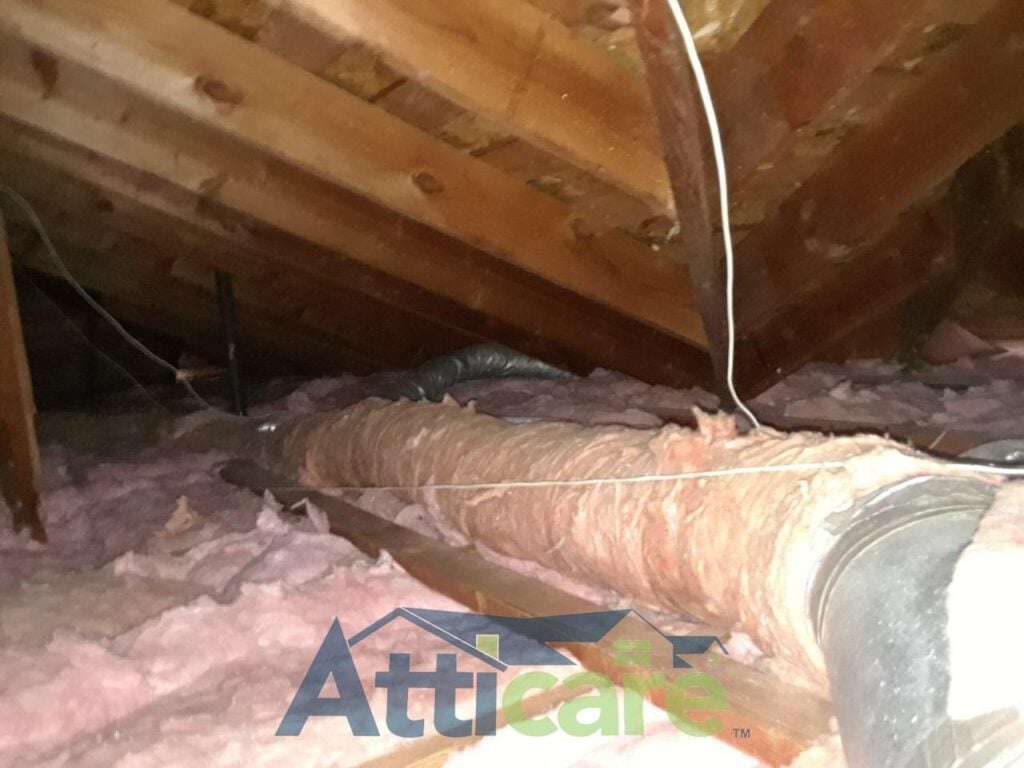
Rodent infestations are one of the most common (and most damaging) problems Bay Area homeowners face. The mild climate, dense neighborhoods, and older rooflines give rats and mice easy access to attics year-round. Once inside, they tear through insulation, gnaw on wiring, leave behind toxic waste, and quietly compromise your home’s air quality for months before anyone notices.
Professional attic rodent removal in the Bay Area is not a one-step fix.
This guide walks you through what that process looks like, what it costs, and how to choose a company that gives you a lasting solution rather than a temporary patch.
Schedule your free attic inspection today.
How Do You Know If You Have Rodents in Your Attic?
Most homeowners don’t find out until the damage is already done. Rodents are nocturnal, and attics are rarely checked. Here are the signs worth taking seriously:
- Scratching or scurrying sounds at night, especially above bedrooms or in the ceiling
- Droppings along joists, near vents, or scattered through insulation
- Chewed wiring or gnaw marks on wood beams
- Torn, compressed, or flattened insulation in nesting areas
- Strong ammonia or musky odors that seem to come from nowhere
- Grease marks near roof vents, soffits, or eave gaps
If you’re noticing any combination of these, don’t wait. The longer a colony establishes itself, the more insulation gets contaminated and the more entry points get widened.
Rats vs. Mice: What You’re Dealing With
Indicator | Rats | Mice |
Droppings | Large (¾ inch) | Small, rice-sized |
Noise | Loud movement | Light, quick scratching |
Entry Size | ½ inch gaps | ¼ inch gaps |
Damage | Structural + wiring | Insulation + small wiring |
Norway rats typically nest at ground level but invade attics through wall voids. Roof rats are the most common species in Bay Area attic rodent removal cases. They’re agile climbers and almost always enter from the roofline.
Not sure what you’re dealing with? Book a free inspection and we’ll assess your attic.
What Does a Complete Attic Rodent Removal Service Include?
A lot of companies stop at trapping. That’s not enough. Without sealing the entry points and cleaning up what’s left behind, the problem comes back. Here’s what a complete service looks like:
Full Attic Inspection
Before anything else, a licensed technician needs to get eyes on your actual attic. That means crawling through the space, checking every corner where insulation has been disturbed, and tracing the roofline from the inside to find where rodents are getting in.
Entry points are often smaller than homeowners expect. Think a gap behind a soffit, a loose vent screen, a crack where a pipe penetrates the roof deck. Moisture issues and poor ventilation get noted too, since both create conditions that make attics more attractive to rodents in the first place.
Rodent Removal
The removal method depends on what’s living up there and how established the colony is. Roof rats, the most common culprit in Bay Area attics, respond well to snap traps placed along their travel routes.
For homeowners who want a pesticide-free approach, live trapping is also an option. Either way, a single visit is never enough. Technicians return over the following days to check traps, remove anything caught, and confirm the population is gone rather than just quieter.
Exclusion and Sealing
This is the step that separates a real fix from a temporary one. Once the attic is clear, every entry point gets sealed. Roofline gaps, soffit edges, plumbing penetrations, deteriorated vent screens, all of it, using materials rodents can’t chew through.
Mice can squeeze through a gap the size of a dime, so this part of the job requires a level of detail that most general pest control companies simply don’t bring to an attic.
Cleanup and Decontamination
Rodent droppings and urine carry hantavirus and leptospirosis, both of which become airborne when disturbed. Proper attic sanitation means physically removing the waste.
This entails applying hospital-grade disinfectant to contaminated surfaces and neutralizing the odor compounds that would otherwise keep attracting new animals. Skip this step, and you’ve just moved the rodents out temporarily.
Insulation Removal and Replacement (When Needed)
Contaminated insulation can’t be disinfected. Rodent urine soaks into the material at a fiber level. The odor stays. And that odor is exactly what draws the next wave of animals in.
The only real option is to remove it completely. Once the attic is clean and sealed, new insulation goes in. Your R-value gets restored, your energy bills reflect it, and you’re not living with whatever was left behind.
Atticare’s attic rodent removal and restoration services cover every one of these steps under one roof, so nothing gets skipped.
How Much Does Attic Rodent Removal Cost in the Bay Area?
The answer depends on what’s going on in your attic. Square footage, severity of infestation, number of entry points, and the condition of your insulation all factor into the final number.
Service Component | Typical Bay Area Range |
Inspection | Free–$250 |
Basic removal | $300–$800 |
Full exclusion sealing | $800–$2,500 |
Sanitation and cleanup | $500–$1,500 |
Insulation replacement | $1,500–$5,000+ |
For most Bay Area homeowners dealing with a moderate infestation that requires exclusion sealing and insulation work, expect a total investment somewhere in the $2,500–$6,000 range. Severe infestations with significant structural contamination can run higher.
Always request a line-item estimate. A reputable company will break out each component so you know exactly what you’re paying for. Vague promos like ‘attic treatment: $1,800’ tell you nothing and make it impossible to compare providers fairly.
What Drives the Price Up?
- Large or complex attic layouts
- Multiple active entry points requiring extensive sealing
- Heavy insulation contamination requiring full removal
- Difficult roofline access
- Extended monitoring programs
Get a detailed, itemized estimate at no cost.
Does Homeowners Insurance Cover Attic Rodent Removal?
Routine rodent removal is not covered in most cases. Insurance policies generally treat pest infestations as a maintenance issue. In other words, homeowners are expected to prevent and manage themselves.
That said, there are situations where coverage may apply:
- Sudden, accidental damage. A rodent-chewed wire that causes an electrical fire may qualify as a covered loss under certain policies
- Resulting damage (not the infestation itself). THis is sometimes covered depending on your specific plan
Before you pay out of pocket for major repairs, take these steps:
- Document all damage with photos before any work begins
- Request a written inspection report from your attic specialist
- Contact your insurance provider to ask what’s covered and what documentation they need
Atticare provides detailed inspection reports and damage documentation that homeowners can submit directly to their insurance company.
Do You Need to Replace Insulation After a Rodent Infestation?
Often, yes. This surprises a lot of homeowners who assume cleanup means disinfection alone.
Here’s the problem. Rodent urine soaks into insulation fibers and doesn’t come out. The odor remains, which can attract new rodents. Droppings get embedded throughout the material. And beyond the health concerns, insulation that’s been compressed, torn, or saturated by rodent activity simply doesn’t perform the way it should. Your home ends up losing the energy efficiency you paid for.
Replacing contaminated insulation:
- Eliminates odors that draw new infestations
- Removes biological contamination associated with respiratory concerns
- Restores your home’s R-value and lowers energy bills
- Gives you a genuinely clean, safe attic
If your insulation is due for replacement anyway, a rodent incident is an opportunity to upgrade to a more energy-efficient product at the same time.
Learn more about insulation services and options available in your area here.
How Long Does Attic Rodent Removal Take?
Infestation Severity | Typical Timeline |
Minor (few entry points, limited damage) | 1–2 days |
Moderate (multiple entry points, some contamination) | 2–4 days |
Severe (major contamination + insulation replacement) | 4–7 days |
These timelines cover active removal, sealing, and cleanup. If monitoring traps are part of the program, technicians will make follow-up visits over the following 1–2 weeks to confirm the infestation has been fully eliminated.
Exclusion work is often the most time-intensive part. This is especially true on older Bay Area homes with complex rooflines, multiple vents, and decades of small gaps that have never been addressed.
Is Same-Day or Emergency Rodent Removal Available?
Yes. In the Bay Area, Atticare offers fast response for urgent situations.
- Same-day service is available in many areas depending on technician scheduling.
- Emergency response within 24 hours is typically available during peak seasons.
- Fall and winter see the highest demand as rodents seek warmth indoors.
The sooner you call, the less damage accumulates. A small colony discovered early might require basic trapping and sealing. The same situation ignored for another month can mean contaminated insulation throughout the entire attic.
Call us now for a faster response.
Humane Rodent Removal Options
Many Bay Area homeowners specifically ask for humane approaches, and that’s a reasonable request. Options include:
- Live trapping followed by relocation
- Exclusion-first methods that close off entry points and allow rodents to exit without re-entry
- Non-toxic deterrents as part of a broader prevention strategy
Important note: Humane removal without permanent exclusion sealing is not a real solution. If the entry points stay open, new rodents move in almost immediately. The most humane long-term outcome is a properly sealed attic that makes re-infestation impossible.
What to Look for in a Bay Area Attic Rodent Removal Company
Some rodent removal companies handle trapping and disappear. Others cut corners on sealing and skip cleanup entirely. Before you book, get clear answers to these questions:
- Are you licensed and insured in California?
- Does your inspection cover the full attic, not just visible areas?
- Do you seal every entry point, or just the obvious ones?
- Is sanitation and decontamination included?
- Do you handle insulation replacement in-house?
- Is your exclusion work warranty-backed?
Atticare is licensed and insured, with 901+ reviews and a 98% customer satisfaction rate across Bay Area and Los Angeles service areas. Every project includes a full attic inspection, entry point sealing, sanitation, and the option for insulation replacement. All this is handled by the same team.
Read homeowner testimonials and see completed projects.
One Last Thing Worth Knowing
Most homeowners who call us have already tried something else first. A general pest control visit. A few traps from the hardware store. Maybe a company that came out, “treated” the attic, and never once pulled back the insulation to see what was happening underneath.
Your attic connects directly to the air your family breathes every day. What happens up there matters more than most people realize until something goes wrong. The good news is that a properly handled rodent removal is a one-time project. Done right, it stays done.
Schedule your free attic inspection with Atticare today.
Frequently Asked Questions
How much does removal cost in the Bay Area?
Expect to pay between $2,500 and $6,000+. It sounds steep, but you aren’t just paying for traps; you’re paying for exclusion (finding and sealing every single entry point). Preferably, hire the person who is most obsessive about sealing your roofline.
How do I know for sure they’re up there?
Look for the Big Three. The 3 AM ruckus like scratching, thumping, or skittering noises when the house is quiet. Second, look for evidence like droppings (they look like dark grains of rice). Lastly, the smell, specifically a faint, persistent musky odor that you can’t quite pinpoint.
How long does the whole process take?
The physical work of sealing takes 1–4 days. However, the monitoring phase where they leave traps to ensure the last one is caught usually lasts two weeks. If they suggest a one-day fix, be skeptical.
Will my homeowners insurance cover this?
Usually, no. Insurance typically covers sudden and accidental damage (like a fire caused by chewed wires), not pest infestation or routine maintenance. Check your specific policy, but don’t count on a payout.
Do I really need to replace the insulation?
If it’s contaminated, yes. Rodent urine creates pheromone trails that act as a welcome mat for future pests. Plus, it’s a major health hazard. If you just trap the rats but leave the pee-soaked insulation, you’re just waiting for the next colony to move into your scented attic.
Can I get same-day service?
Many companies (like Atticare or others) can get a tech out for an emergency inspection the same day, but don’t expect a complex multi-day eviction to be finished by dinner time. Get them there fast to stop the damage, but expect a process.
Are there humane options?
Yes, but humane doesn’t mean easy. Live trapping is an option, but it fails 99% of the time if you don’t do exclusion first. If you don’t plug the holes, you’re just catching the local population while the attic stays open for new guests. Exclusion is the only permanent, humane way to manage it.