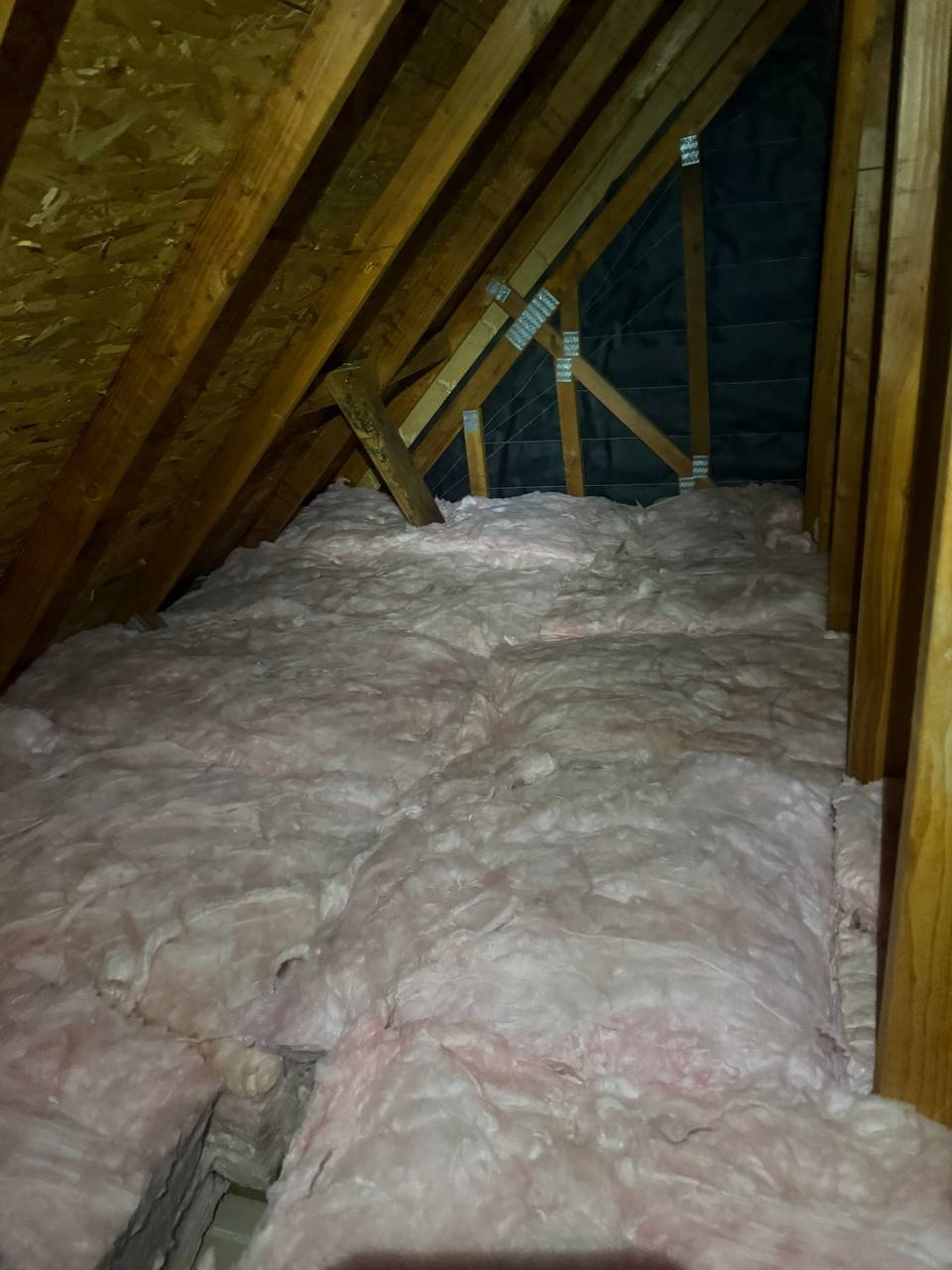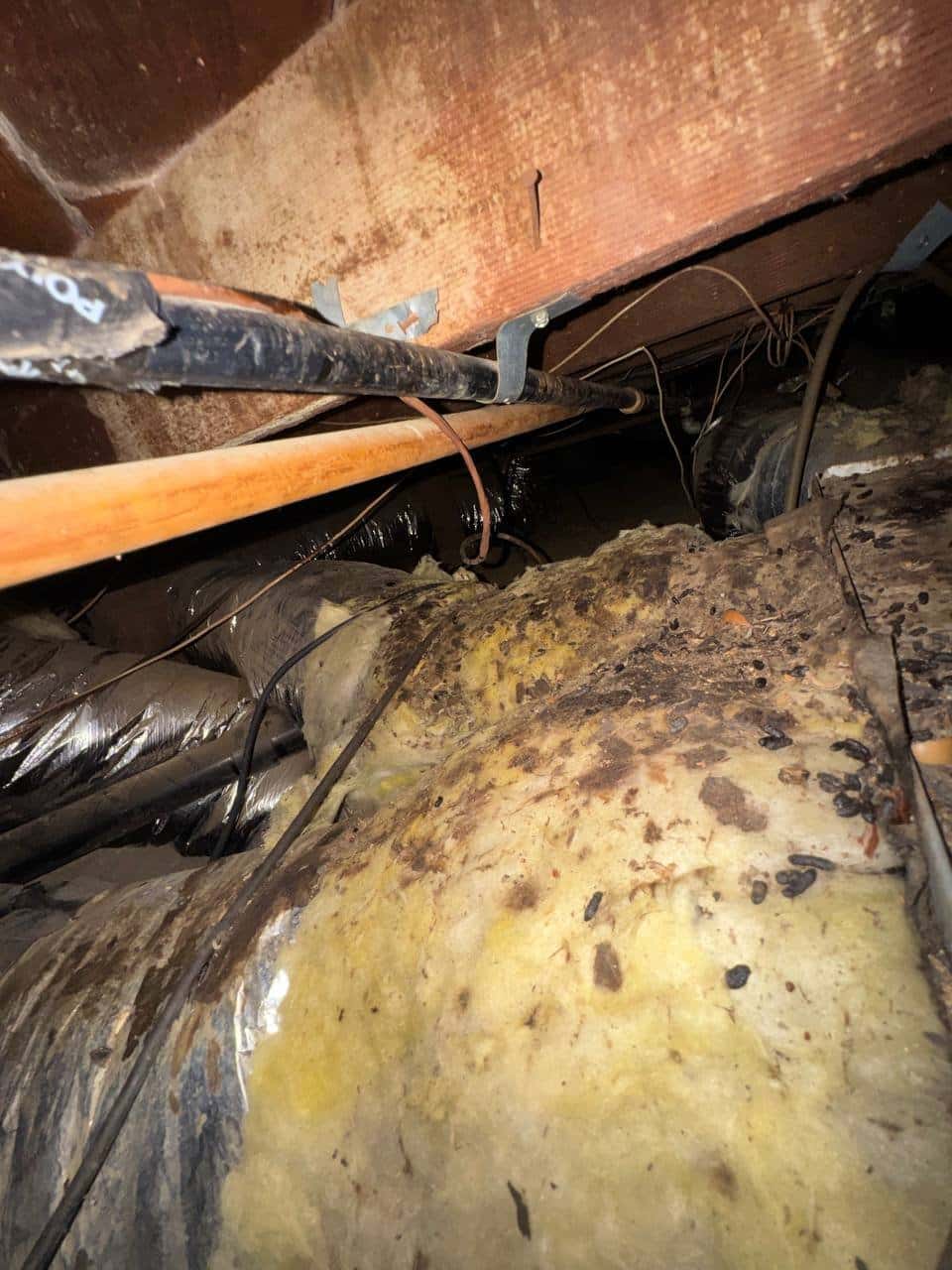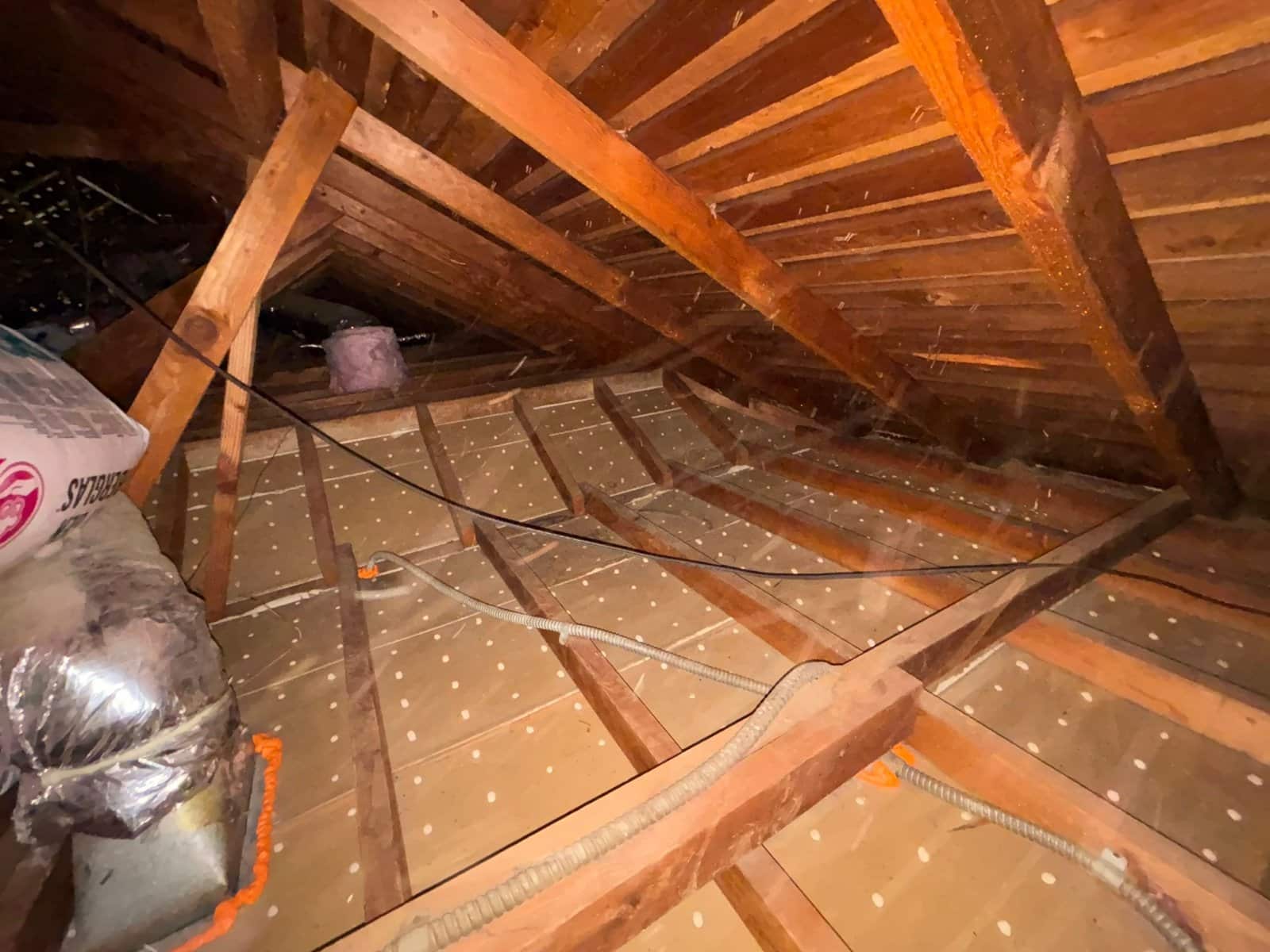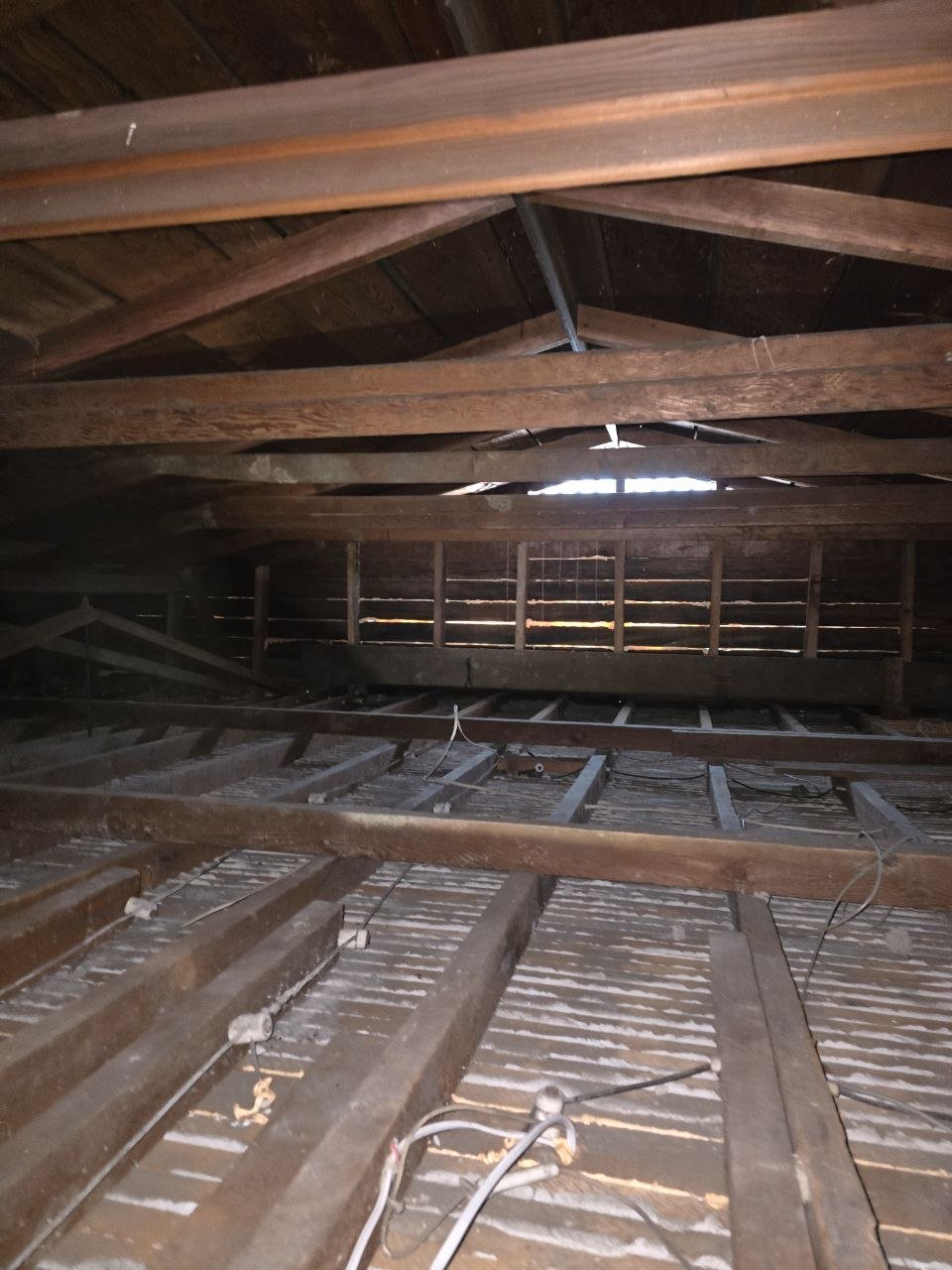
If you found rodent droppings and need Roseville attic cleanup, leave the droppings where they are. Don’t sweep or vacuum them yourself. If rodents are still active, a licensed pest control provider removes them first. Then an attic restoration company cleans out the droppings and contaminated insulation, sanitizes the space when needed, seals the entry points and reinstalls insulation.
AtticareUSA does that second part as one project for Roseville homeowners. One licensed contractor handles the cleanup, entry-point sealing and new insulation. The rodent proofing carries a 1-year warranty and is a one-time fix, not a recurring service plan.
This guide covers what to do right now, who handles each part of the fix, and the order that makes the work last.
At a glance
- Leave the droppings alone: sweeping or vacuuming can stir particles into the air, so keep the attic closed and follow CDC guidance.
- Call pest control for live rodents: a licensed pest control provider removes active rodents before any cleanup starts.
- Bring in restoration next: our Roseville attic cleanup removes waste and contaminated insulation, sanitizes when needed and seals entry points as one project.
- Install insulation last: new insulation never goes over an unresolved rodent or contamination problem.
- Seal once, with no subscription: our rodent proofing carries a written 1-year limited warranty and needs no recurring plan.
What to Do in the First Hour After Finding Droppings
Short answer: Leave the droppings alone, close the attic access, and keep people and pets out. Do not dry-sweep or vacuum. Follow CDC clean-up guidance, and have the attic inspected before anyone starts pulling material out.
Finding droppings is unsettling, and the natural reaction is to clean them up right away. Wait. The CDC advises against sweeping or vacuuming rodent droppings, urine or nesting materials, because doing so can stir particles into the air [1].
A calm first hour looks like this:
- Close the attic hatch and leave the droppings in place.
- Keep children and pets away from the attic and the access area.
- Don’t move stored boxes or disturb the insulation.
- If you must open the attic, CDC clean-up guidance calls for airing out an enclosed space before any cleanup starts [1]. Look, but don’t touch.
- Write down what you saw and where: droppings near the hatch, along the attic edges, on top of the insulation, chewed material, sounds at night. Those notes make the inspection faster.
Rodent droppings, urine, saliva, dead rodents and nesting materials should be handled carefully. The CDC’s hantavirus prevention guidance is built around the same caution: avoid stirring up or touching rodent waste and nesting material [2]. That is a reason to leave the cleanup to a crew with the right equipment. It is not a reason to panic.
Who Does What: Pest Control vs. Attic Restoration
Short answer: Pest control removes live rodents. Attic restoration cleans, seals and reinsulates the attic. Many attics with droppings need both, in that order, and the two jobs are often done by two different companies.
If you’ve seen rodent droppings in your attic, you already know it’s not just a pest problem. It’s a contamination problem. That is why the fix has two halves, and why it helps to know which company handles which half before you start calling.
| The job | Who does it | What it covers |
|---|---|---|
| Removing live rodents | A licensed pest control provider | Trapping and removing rodents still in the home |
| Cleanup and restoration | An attic restoration contractor such as AtticareUSA | Removing droppings, nests and contaminated insulation, sanitizing, sealing entry points, installing new insulation |
We don’t trap, bait or remove live rodents. Our work is rodent exclusion (sealing entry points), attic cleaning, sanitation and restoration. If you still hear activity, call a licensed pest control provider first. In the meantime, we can send you an estimate by email, so the cleanup is ready to schedule as soon as the pest work is done.
Why not stop at trapping? Because trapping alone does not address how rodents entered. It also leaves the droppings, urine and nesting debris sitting in your insulation. Removing the animals is one job. Fixing the attic is another.
How to Choose the Companies to Call in Roseville
Short answer: Call a licensed pest control provider for active rodents. Then call an attic restoration contractor that handles dropping removal, sanitation, entry-point sealing and insulation replacement as one project. Ask each company exactly what its price includes and what its warranty depends on.
Plenty of companies say they handle rodents. The useful question is which part of the job each one actually does. These questions sort that out quickly.
Questions for the pest control provider:
- Are you licensed by California’s Structural Pest Control Board, the state agency that licenses structural pest control companies? [3]
- How will we confirm the rodents are gone?
- Does your quote include attic cleanup and insulation, or only trapping and removal?
Questions for the attic restoration contractor:
- Do you remove droppings and contaminated insulation, or only treat the surface?
- Do you sanitize and deodorize the attic after the waste is out?
- Do you find and seal the entry points, and with what materials?
- Will new insulation go in only after cleanup and sealing are finished?
- Is your rodent-proofing warranty a one-time warranty, or does it depend on staying on a service plan?
- Are before-and-after photos available?
- What is your contractor license number?
Here is where AtticareUSA stands on those questions. We have been in business since 2012. We are licensed, insured and bonded (CA #1051462), BPI-certified and Diamond Certified, and highly rated with 1400+ reviews. Before-and-after photos are available upon request. Our proposals arrive by email with exact prices, each service listed separately, and no hidden charges or upfront fees.
We work in Roseville and in nearby cities including Sacramento, Citrus Heights, Antelope, Rancho Cordova and Folsom, and the same process applies in each of them.
The Order of Work for Roseville Attic Cleanup
Short answer: Remove live rodents, inspect, protect the home, remove waste and contaminated insulation, sanitize when needed, seal the entry points, then install new insulation. New insulation always goes in last.
The order matters because each step protects the one after it. New insulation laid down before the attic is clean and sealed can end up soiled the same way the old insulation was. Here is how a full Roseville attic cleanup runs. For a closer look at the method, see our 5-step restoration process for rodent droppings.
- Live rodents are handled first. If rodents are still active, a licensed pest control provider removes them first, then AtticareUSA does the cleanup, entry-point sealing and insulation.
- Inspection. We check the attic for rodent activity and possible entry points, and we report the findings to you. Removing the old insulation later can expose more issues that were hidden under it.
- Protecting your home. Before work starts, our crew covers floors in the work area with protective barriers as needed. Where required, we set up plastic partition walls or dust-barrier tunnels.
- Removing waste and contaminated insulation. We remove old and contaminated insulation with a heavy-duty vacuum, along with rodent droppings, nests and debris, then haul it away for disposal. The crew then vacuums any remaining droppings, nests and debris from the exposed attic surfaces.
- Sanitizing, when needed. We can treat the work area with OdoBan disinfectant and odor eliminator to address rodent odors and pheromones. This helps cut the leftover scent trails that draw new rodents back.
- Sealing the entry points. We seal entry points with wire mesh, polyurethane foam and cement as needed. Our rodent proofing is pesticide-free.
- New insulation, installed last. We air seal gaps around fixtures, piping, wiring and vents on the attic floor with foam and caulk. Then new insulation goes in, installed to the depth and R-value the home needs.
To see why this sequence decides whether the fix lasts, read our guide to the attic cleanup order of operations.
What the Droppings Say About the Insulation Underneath
Short answer: Droppings on the surface often mean more below. The insulation is often where the evidence is hiding: urine staining, nesting debris, and chewed or compressed material. The inspection decides whether the insulation should come out.
What you can see from the hatch is usually only part of the picture. Rodents often tunnel and nest inside insulation, so urine, nesting material and odor can sit deep in the layer where you can’t see them. A cleaner attic starts with knowing what is under the insulation.
AtticareUSA removes insulation that has droppings, urine staining or nesting debris in it. We also remove insulation that has been chewed or heavily compressed. Rodent-contaminated insulation is replaced, not topped up, because a new layer on top leaves the odors and contamination in place.
That does not mean every attic needs a full removal. We don’t treat every attic as a removal project. We explain what can stay in place, and clean, dry insulation that has only settled may be topped up rather than replaced.
One rule doesn’t bend: do not cover the problem with new insulation. New insulation should not be installed over an unresolved rodent or contamination problem. If we find signs of moisture, we replace wet insulation only after the moisture source is fixed. If we find suspicious materials, those may need evaluation by a specialist before work continues.
Why Sealing Is the Step That Stops the Return
Short answer: Sealing entry points helps reduce the chance of future rodent entry. AtticareUSA’s rodent proofing is a one-time, subscription-free fix with a written 1-year limited warranty, unlike an exterminator’s recurring service contract.
A clean attic can become contaminated again if the entry points are left open. That is why the job is not complete until the path back in has been addressed. Sealing goes after the cause, not the symptoms.
Our rodent proofing comes with a written 1-year limited warranty on the treated areas (not living spaces or garages). If new rodent entry points are found within the year, we seal them at no additional charge, subject to the listed exclusions. The warranty transfers to the next owner if the home is sold.
Our warranty does not depend on a monthly or quarterly plan, because the sealing is done once. When you compare quotes, ask each company what keeps its warranty active.
A Nearby Example: Sacramento Attic Restoration
On an August 2026 job in Sacramento (95821), AtticareUSA found severe rodent activity. Our crew removed 932 sq ft of contaminated insulation, sanitized the attic, sealed the entry points and installed new R-38 batts.
This was a Sacramento job, not a Roseville one, but it followed the same sequence a Roseville attic would. We removed 932 square feet of contaminated insulation and sanitized the space. We sealed the entry points with wire mesh, polyurethane foam and cement. New R-38 batts went in last, after the attic was clean and sealed.
That is the full attic restoration in practice: clean, seal, and restore, with insulation as the final layer rather than a shortcut.
Frequently Asked Questions
Who should I call after finding rodent droppings in my attic in Roseville?
If rodents are still active, call a licensed pest control provider first to remove them. Then call an attic restoration contractor for the cleanup, sanitation, entry-point sealing and new insulation. AtticareUSA handles that restoration work in Roseville as one project.
Should I clean up rodent droppings in my attic myself?
It’s best not to. The CDC advises against sweeping or vacuuming droppings because it can stir particles into the air [1]. Droppings in an attic can also be spread through the insulation, which makes the job larger than it looks from the hatch. Professional cleanup removes the waste and the contaminated material together, using containment and a heavy-duty vacuum.
Who removes live rodents from my attic?
A licensed pest control provider. AtticareUSA does not trap or remove live rodents. We start the cleanup, sealing and insulation work once the active rodents are gone.
Do I need new insulation after finding rodent droppings?
Only if the inspection finds it soiled or damaged. We remove and replace insulation with droppings, urine staining, nesting debris, chewing or heavy compression. Clean, dry insulation that has only settled may be topped up instead.
Can I put new insulation over the old insulation?
Not over rodent-contaminated insulation, because a new layer on top leaves the odors and contamination in place. New insulation goes in only after the attic is cleaned and sealed.
Do I need a subscription to keep rodents out?
No. Our rodent proofing is a one-time, subscription-free fix with a 1-year warranty. Sealing entry points helps reduce the chance of future rodent entry, and the warranty does not require an ongoing service contract.
How do I get an estimate for Roseville attic cleanup?
Book a free inspection, or ask us for an estimate sent without an in-person visit. Price depends partly on the square footage of the attic, and our on-site estimator takes measurements. Either way, you receive a transparent proposal by email with exact prices and each service listed separately.
Get a Clear Attic Cleanup Plan Before You Replace Anything
If you found droppings this week, you don’t need to solve everything today. Keep the attic closed, and call a licensed pest control provider if you still hear activity. Then get a clear plan for the attic itself.
AtticareUSA offers a free inspection for homeowners in Roseville and nearby cities. We check for rodent activity, entry points and contaminated insulation, and we report what we find. If you would rather start without a visit, we can send an estimate by email. Your proposal lists exact prices for each service, with no hidden charges or upfront fees, so you can decide what makes sense before any work begins.
Contact us to book a free attic inspection.
Sources
- Centers for Disease Control and Prevention. Rodent control: cleaning up after rodents. https://www.cdc.gov/healthy-pets/rodent-control/clean-up.html
- Centers for Disease Control and Prevention. Hantavirus prevention. https://www.cdc.gov/hantavirus/prevention/index.html
- California Structural Pest Control Board. https://www.pestboard.ca.gov/