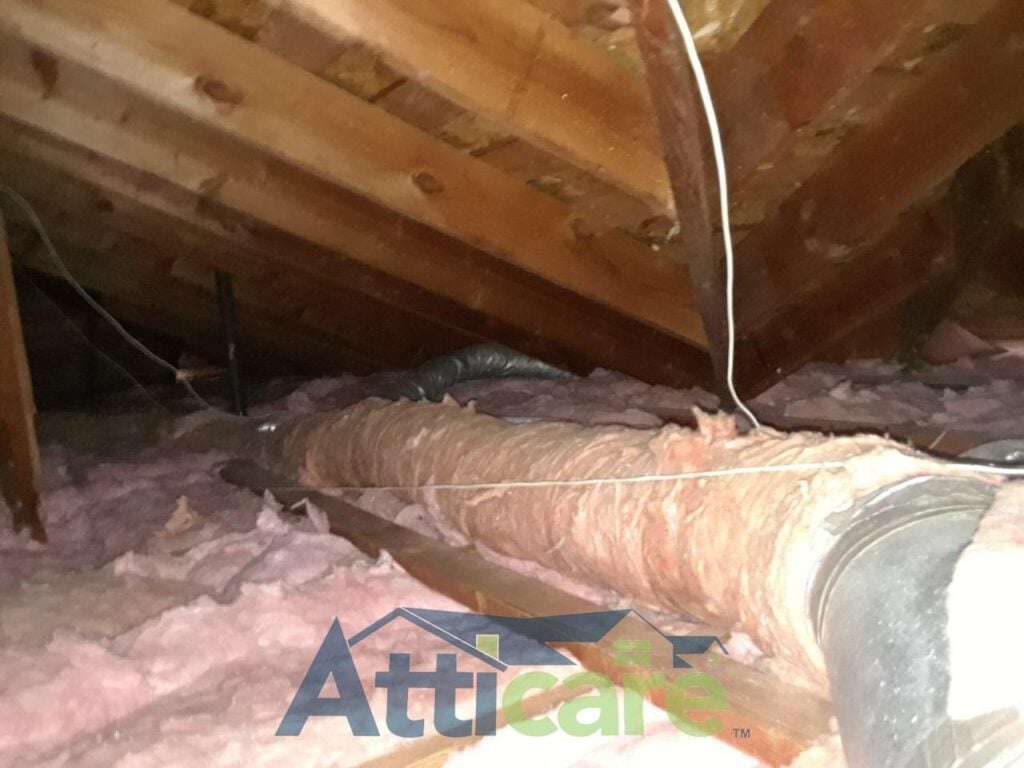
Attic cleanup after rodents is not a single task—it’s a sequence of tasks that must happen in the right order. Skip a step, reverse the order, or install new insulation before the underlying problems are addressed, and the fix will not last. Rodents return. Odors persist. Contamination stays buried. You pay twice.
The insulation is often where the evidence is hiding. And the evidence tells you more than whether rodents were present—it tells you whether the problem was actually solved or just covered up.
At a glance
- Inspect first — you cannot find every entry point or assess damage until the attic is visible.
- Remove contaminated insulation — droppings, urine, and nesting material must come out before cleanup can be effective.
- Clean and sanitize — vacuuming debris and treating surfaces eliminates odors and addresses what contamination left behind.
- Seal and rodent-proof — closing entry points prevents the next generation from following the same path in.
- Install new insulation last — only after the attic is clean, sanitized, and sealed should fresh insulation go in.
The Short Answer: The Correct Order for Attic Cleanup After Rodents
The correct order is: inspect, remove contaminated insulation, clean and sanitize, seal and rodent-proof, then install new insulation.
New insulation is always the last step—never the first. The attic must be clean, sanitized, and sealed before fresh insulation goes in. Otherwise, you are covering the problem, not solving it.
This sequence exists because each step reveals information and access needed for the next. You cannot find every entry point until the insulation is removed. You cannot sanitize effectively if contaminated material is still in place. You cannot seal properly if you cannot see the attic floor. And you should not insulate until rodents have no path back in.
The order matters. Do not cover the problem with new insulation.
What Happens When Steps Are Skipped or Done Out of Order
Most attic rodent problems that “don’t stay fixed” failed because of sequence errors. Here are the three most common patterns.
Installing New Insulation Before Cleanup
When new insulation is blown over contaminated material, the droppings, urine, and nesting debris remain in place. Odors continue. The contamination spreads into the new layer. In hot climates like Los Angeles—where attics reach 140–160°F in summer—heat accelerates decomposition and intensifies smells.
The homeowner notices improvement for a few weeks. Then the odor returns, sometimes worse than before.
Sealing Entry Points Before Removing Contaminated Material
If a contractor seals gaps while soiled insulation is still in the attic, two problems occur. First, the contamination is trapped inside. Second, the crew likely missed entry points hidden under the insulation. Incomplete sealing means rodents find their way back in.
Cleaning Without Sealing Entry Points
This is the most common failure. The attic gets vacuumed, debris removed, new insulation installed—but no one addressed how the rodents got in. Within weeks or months, new droppings appear. The cycle repeats.
Cleanup without exclusion is temporary. Exclusion without cleanup leaves contamination in place. Only the full sequence delivers a lasting result.
The Complete Process for Attic Rodent Restoration
Atticare USA follows a specific process because the order is what makes the fix durable. Here is what each step involves and why it must come in this sequence.
Step 1 — Inspect the Attic
A proper inspection assesses more than “yes, there are rodents.” It documents the type and extent of evidence (droppings, nesting, gnaw marks), the condition of the insulation, any damage to ducts or wiring, moisture indicators, and—most importantly—how rodents are entering.
The challenge: you often cannot see everything until the insulation comes out. Old insulation hides entry points, damage, and the true extent of contamination. That is why inspection continues throughout the process, not just at the beginning.
Step 2 — Remove Contaminated Insulation
If insulation is saturated with urine, packed with droppings, or compressed from rodent activity, it needs to come out. Removal serves two purposes: it eliminates the contaminated material, and it exposes the attic floor so the crew can see what they are working with.
During removal, the home is protected—floors are covered, access paths are shielded, and commercial vacuum equipment removes material directly without carrying debris through living spaces.
After removal, the full picture becomes visible: entry points, duct damage, gaps around fixtures, and areas that need attention.
Step 3 — Clean and Sanitize
With the insulation out, the attic floor and surfaces are vacuumed to remove remaining droppings, debris, and nesting material. Sanitization follows—treating surfaces to address odors and contaminants left behind.
According to the CDC’s guidance on cleaning up after rodents, droppings, urine, and nesting materials should be handled carefully to avoid disturbing materials that may contain harmful pathogens. Proper protective equipment and ventilation are recommended.
This step is not optional. Skipping sanitization means odors persist and the attic remains a contaminated environment—even if it looks clean.
Step 4 — Seal and Rodent-Proof
Once the attic is clean and visible, the crew can identify and seal every accessible entry point: gaps at the roofline, cracks around vents, utility penetrations, construction gaps, and any other opening rodents used to enter. After sealing, rodent-proofing measures ensure those openings stay closed.
This is exclusion work—sealing the path in. It is not trapping, baiting, or extermination.
Important distinction: If rodents are still active in the attic (you hear movement, find fresh droppings, or suspect live animals are present), those animals need to be removed first. Atticare USA does not perform trapping or extermination—that is handled by a licensed pest control provider. In the Los Angeles area, PestCare (Atticare USA’s sister company) handles this work. Once live animals are out, Atticare USA completes the exclusion, cleanup, sanitization, and restoration.
Step 5 — Install New Insulation
Only after the attic is clean, sanitized, and sealed should new insulation be installed. At this stage, air sealing can also be completed—addressing gaps around fixtures, wiring, and piping that allow conditioned air to escape and unconditioned attic air to enter.
According to ENERGY STAR’s attic air sealing guidance, air sealing should be completed before or during insulation installation for best performance—sealing the gaps first prevents air leakage that reduces insulation effectiveness.
Installing insulation last ensures the material goes into a prepared space. No contamination underneath. No open entry points. No hidden problems waiting to resurface.
What About Live Rodents? Understanding the Difference Between Pest Control and Attic Restoration
Homeowners often ask: “Should I call pest control first, or an attic restoration company?”
The answer depends on whether rodents are still active.
If you are hearing scratching, finding fresh droppings, or seeing movement, live animals are present. A licensed pest control provider should handle removal first. Trying to seal an attic with rodents still inside creates worse problems—trapped animals cause additional damage and may die in walls or inaccessible areas.
Atticare USA’s scope is exclusion (sealing entry points), cleanup, sanitization, and restoration—not trapping or extermination. The company works alongside pest control when needed, then handles the restoration sequence once animals are out.
This is a meaningful distinction. Many homeowners hire an exterminator, get a few traps set, and assume the problem is solved. But trapping alone does not address how rodents entered, does not remove contaminated insulation, and does not prevent the next generation from following the same path in.
A complete solution requires both: pest control if animals are active, followed by exclusion, cleanup, and restoration.
How Long Does the Process Take?
Timeline varies by severity, but homeowners should expect a phased process rather than a single-visit fix.
Initial inspection can happen quickly—often within a few days of scheduling. If live animals are present, pest control happens first, which may take one to several weeks depending on infestation level.
Insulation removal, cleaning, and sanitization typically happen together. Sealing and rodent-proofing may occur the same day or in a follow-up visit, depending on the number and complexity of entry points.
Insulation installation is usually the final visit, scheduled after the space is fully prepared.
When Full Restoration Is Necessary vs. Partial Cleanup
Not every attic with rodent evidence requires full insulation removal and restoration. But many do.
Signs that typically indicate full restoration is needed:
- Heavy droppings throughout the attic (not just isolated areas)
- Visible urine staining or saturated insulation
- Persistent odor that does not improve with ventilation
- Compressed, matted, or damaged insulation
- Evidence of nesting in multiple locations
- Duct damage or gnaw marks on wiring
Signs that partial cleanup may be appropriate:
- Isolated droppings in one section
- No odor or visible damage
- Insulation in good condition overall
- Recent infestation caught early
The honest answer: you often cannot know until the attic is inspected and, in some cases, until insulation is removed enough to see what is underneath. That is why an inspection is an important early step: a phone conversation can get you a ballpark range to start from, and an actual look at the attic is what confirms the true scope.
Why This Matters in Los Angeles and the Bay Area
In Los Angeles and across Southern California, attics get extremely hot during the long cooling season—reaching 140–160°F in summer. That heat accelerates decomposition of organic material, intensifies odors, and makes contamination problems worse over time. A rodent problem that might stay manageable for months in a cooler climate becomes urgent within weeks here.
Hot climates also mean year-round rodent pressure. There is no winter die-off. Wildlife stays active all year, looking for entry points, water, and shelter. A gap that might go unused for months in a colder climate is discovered quickly in Greater LA.
In the Bay Area, moisture conditions in crawl spaces can compound the problem. Rodent contamination combined with damp conditions creates additional concerns that require careful assessment. Older Bay Area homes often have crawl space access that makes entry points harder to identify without proper inspection.
For homeowners in either region, the takeaway is the same: complete attic cleanup after rodents cannot wait, and exclusion is non-negotiable if you want the fix to last.
Questions Homeowners Ask
Should I call pest control or an attic restoration company first?
If rodents are still active (fresh droppings, sounds, movement), pest control should handle removal first. Once animals are out, attic restoration handles exclusion, cleanup, sanitization, and insulation.
Do I need to remove all my attic insulation after rodents?
It depends on the extent of contamination. Heavily soiled or saturated insulation typically needs removal. A proper inspection determines what is actually necessary.
Why do rodents keep coming back to my attic after treatment?
Usually because entry points were never sealed. Trapping removes current rodents but does not prevent new ones from using the same paths.
Is it safe to clean rodent droppings myself?
The CDC recommends specific precautions when cleaning rodent droppings, including ventilating the space, avoiding sweeping or vacuuming dry droppings (which can release particles into the air), and using wet cleaning methods with disinfectant. For significant contamination, professional cleanup with proper equipment is recommended.
What to Do Next
If you have found rodent evidence in your attic—droppings, sounds, damage, or odor—the right first step is a professional inspection—an actual look at the attic to determine the scope, identify entry points, and assess whether your insulation is compromised. A phone call can get you a ballpark range to start from; the inspection is what confirms it.
Atticare USA has helped over 11,000 homeowners since 2012. The company holds Diamond Certified status, maintains 1,400+ reviews, and is fully licensed, insured, and bonded (CA #1051462).
After inspection, you will receive a written proposal outlining the recommended scope of work and pricing. Before-and-after photos are available upon request.
Book a free attic inspection to find out what is actually happening in your attic—and what sequence of work will fix it for good.
Sources
- Centers for Disease Control and Prevention. “Cleaning Up After Rodents.” https://www.cdc.gov/healthy-pets/rodent-control/clean-up.html
- ENERGY STAR. “Attic Air Sealing Project.” https://www.energystar.gov/saveathome/seal_insulate/attic-air-sealing-project
Recent Atticare USA projects in and near Los Angeles
- Attic Insulation Replacement and Rodent Proofing in Los Angeles, CA (Los Angeles, August 2026)
- Attic Insulation Replacement & Rodent Proofing in Los Angeles, CA (Los Angeles, December 2025)
- Attic Insulation Replacement, Rodent Proofing & Air Duct Work in Los Angeles, CA (Los Angeles, April 2026)
- Attic Insulation Replacement and Rodent Proofing in Los Angeles, CA (Los Angeles, August 2026)