If a roofer, home inspector or pest control company found rodent damage in your attic, you need attic cleanup after rodents from one company that can clean it out, close the gaps and put insulation back. In San Jose and Milpitas, AtticareUSA does all three as one project from our San Jose location. Below is what the job includes, the order the work happens in and why, and a checklist for comparing any written proposal.
At a Glance
- Start with a free inspection: it checks for rodent activity, damage and possible entry points.
- Clear live rodents first: if rodents are still active, a licensed pest control provider removes them before cleanup starts.
- Clean before you seal: contaminated insulation, droppings and nests come out, and the attic is sanitized while it is open.
- Seal before you insulate: entry points and attic floor gaps get closed so new insulation does not bury them.
- Insulate last, with one contractor: one licensed team handling every step keeps each step from undoing the last.
Who Does Attic Cleanup After Rodents in San Jose and Milpitas?
Short answer: AtticareUSA handles attic cleanup, rodent exclusion, air sealing and new insulation as one project for homes in San Jose, CA, Milpitas, CA and nearby cities. We work from our San Jose location at 900 E Hamilton Ave., San Jose, CA 95008. We are licensed, insured and bonded (CA #1051462), Diamond Certified and BPI-certified, and we have been in business since 2012.
We serve San Francisco and the rest of the Bay Area from offices in San Leandro, San Jose, San Rafael and Petaluma. Near our San Jose location, we serve Milpitas, Santa Clara, Sunnyvale, Campbell, Cupertino, Los Gatos, Saratoga, Mountain View, Morgan Hill and nearby cities.
The difference is scope. One licensed contractor handles the full attic project:
- Inspection for rodent damage, entry points and damage to pipes and electrical wires
- Removal of rodent-contaminated insulation, droppings, nests and debris
- Sanitizing, deodorizing and decontamination of the work area when needed
- Pesticide-free rodent proofing of entry points
- Air sealing of the attic floor
- New insulation installed to the depth and R-value the home needs
We are highly rated with 1400+ reviews and have helped over 11,000 clients. For more on the service itself, see our page on attic cleaning in the Bay Area.
When Someone Else Finds the Damage: Roofers, Inspectors and Pest Control
Short answer: Many San Jose and Milpitas homeowners hear about rodent damage from another trade: a roofer working on the roof, a home inspector during a sale, or a pest control company that removed the rodents. Each can point out the problem, but the cleanup, sealing and new insulation are usually left to someone else. That is the job AtticareUSA does.
Here is how it usually shows up:
- The roofer. During a repair or replacement, the crew sees flattened, stained insulation, droppings along the rafters or gaps at the roofline. They tell you the insulation is ruined, but cleaning it out and replacing it is usually not part of a roofing job.
- The home inspector. A pre-sale or pre-purchase report notes evidence of rodent activity in the attic. Now there is a deadline, and you need a written proposal you can act on.
- The pest control company. The rodents are gone, but the droppings, nests, urine-soaked insulation and open entry points are still there. Removing the animals and restoring the attic are two different jobs.
In each case the next step is the same: an inspection that checks for rodent activity, damage and possible entry points, and shows what needs to be removed, sealed and replaced. We do that inspection free. Bay Area housing includes older homes, additions and attics with tight access, and rodents can get in through vents, roofline gaps, utility penetrations and construction openings. That is why we look at the whole attic, not only the spot someone else flagged.
If rodents are still active, a licensed pest control provider removes them first, then we do the cleanup, entry-point sealing and insulation. We do not trap or remove live rodents.
Why Cleanup, Sealing and Insulation Belong in One Project
Short answer: The three jobs depend on each other. New insulation over contaminated material leaves the odors and contamination in place. A clean attic with open entry points can be contaminated again. Insulation installed before the attic floor is sealed buries the gaps you meant to close. Doing all three as one project, in order, keeps each step from undoing the last.
When the work is split across several companies, the gaps between them are where problems hide. A cleaning crew removes the insulation but leaves the entry points for someone else. An insulation installer shows up before the sealing is done. You end up coordinating schedules and comparing scopes that do not quite line up.
Rodent-contaminated insulation is replaced, not topped up, because a new layer on top leaves the odors and contamination in place. New insulation goes in only after the attic is cleaned and sealed. We can hold to that rule because our team owns every step.
There is a practical reason too. Rodent droppings, urine and nesting material should be handled carefully, and the CDC publishes guidance on cleaning up after rodents covering droppings, urine, dead rodents and nesting materials. When one crew removes the material, cleans the exposed surfaces and then seals the attic, that handling stays inside one controlled process.
The Attic Restoration Sequence, Step by Step
Short answer: AtticareUSA follows a fixed order: inspect and measure, remove contaminated insulation and debris, sanitize the work area, seal rodent entry points, air seal the attic floor, then install new insulation. The order matters because each step gets the attic ready for the next one.
Step 1: Inspection, measurement and findings
We check the attic for rodent activity and possible entry points, and we report the findings to you. We also look for rodent damage and for damage to pipes and electrical wires. Our on-site estimator takes measurements, because price depends partly on the square footage of the attic and its condition.
Why it comes first: you cannot plan or price the job without knowing how far the contamination goes and where the rodents are getting in.
Step 2: Protecting the home and removing contaminated insulation
Before work starts, our crew covers floors in the work area with protective barriers as needed and sets up plastic partition walls or dust-barrier tunnels where required. Then the old and contaminated insulation comes out with a heavy-duty vacuum, along with rodent droppings, nests and debris, and we haul it away for disposal.
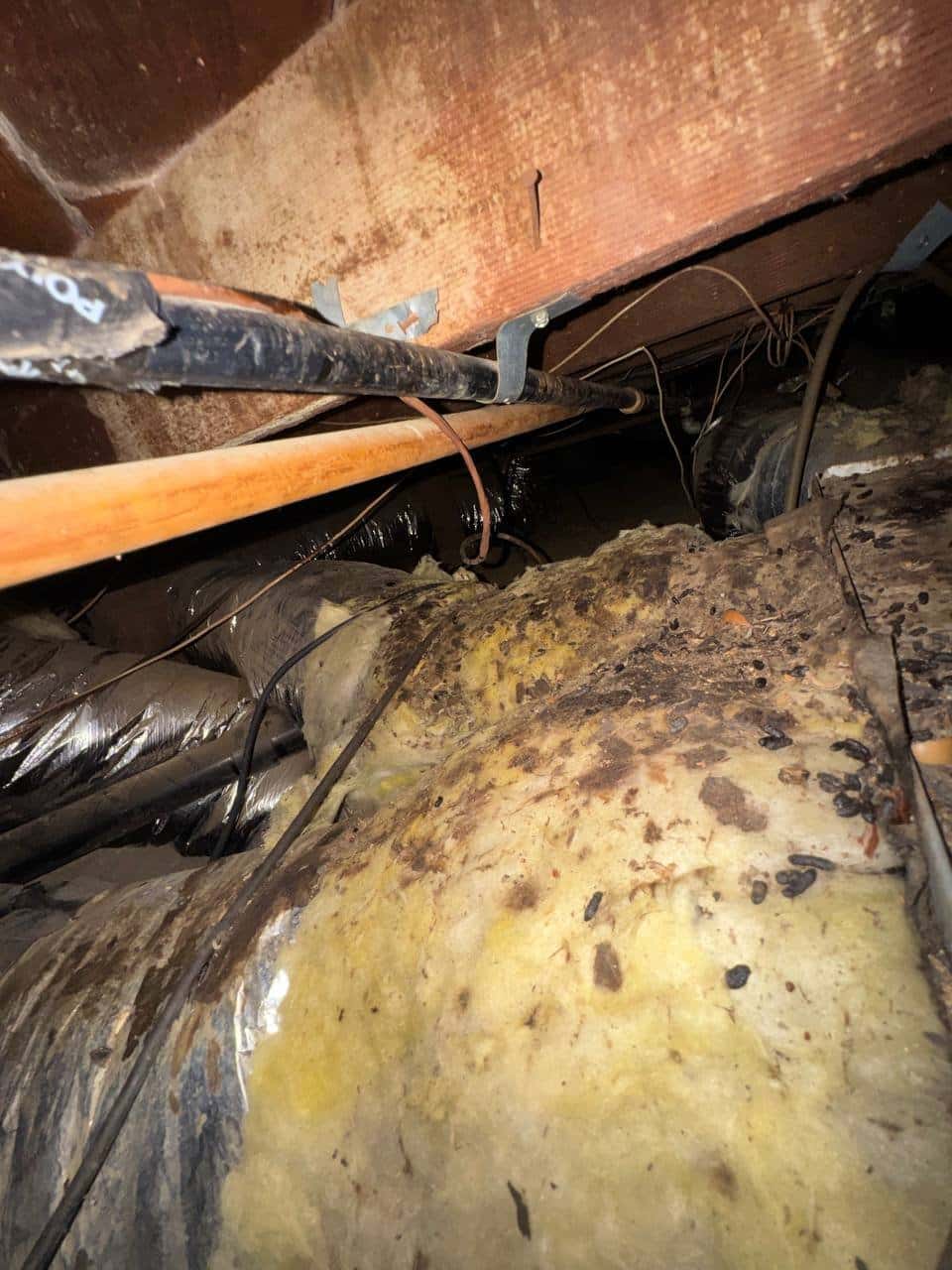
We remove insulation with droppings, urine staining or nesting debris, and insulation that has been chewed or heavily compressed. Taking the old insulation out also exposes what was hidden under it, including entry points and wiring or pipe damage along the attic floor.
Why it comes second: the evidence is usually under the insulation. Until it is out, nobody can see the attic floor clearly or clean it.
Step 3: Cleaning, sanitizing and deodorizing
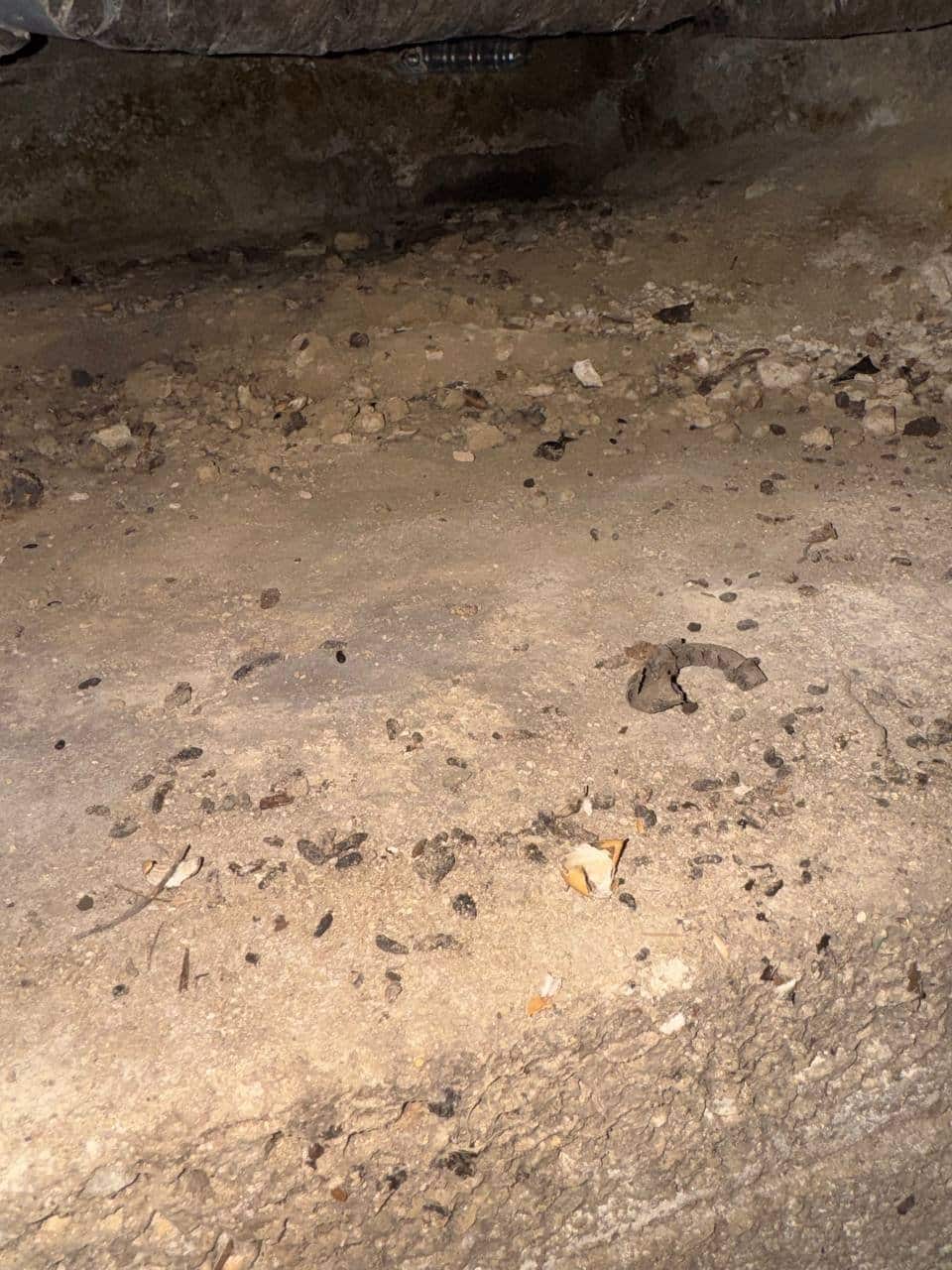
Once the old insulation is out, our crew vacuums the remaining droppings, nests and debris from the exposed attic surfaces. Cleanup includes removing rodent carcasses and rodent waste, with deodorizing to address odors. We can treat the work area with OdoBan disinfectant and odor eliminator to address rodent odors and pheromones, which helps cut the leftover scent trails that draw new rodents back.
Why it comes before sealing: the attic is easiest to clean while it is open, before anything is closed up or covered.
Step 4: Pesticide-free rodent proofing
Our rodent proofing is pesticide-free: we seal entry points with wire mesh, polyurethane foam and cement as needed. Sealing entry points helps reduce the chance of future rodent entry. It is a one-time, subscription-free fix, unlike an exterminator’s recurring service contract. More detail is on our page on Bay Area rodent proofing.
Why it comes before insulation: a clean, newly insulated attic can be contaminated again if the way in stays open.
Step 5: Air sealing the attic floor
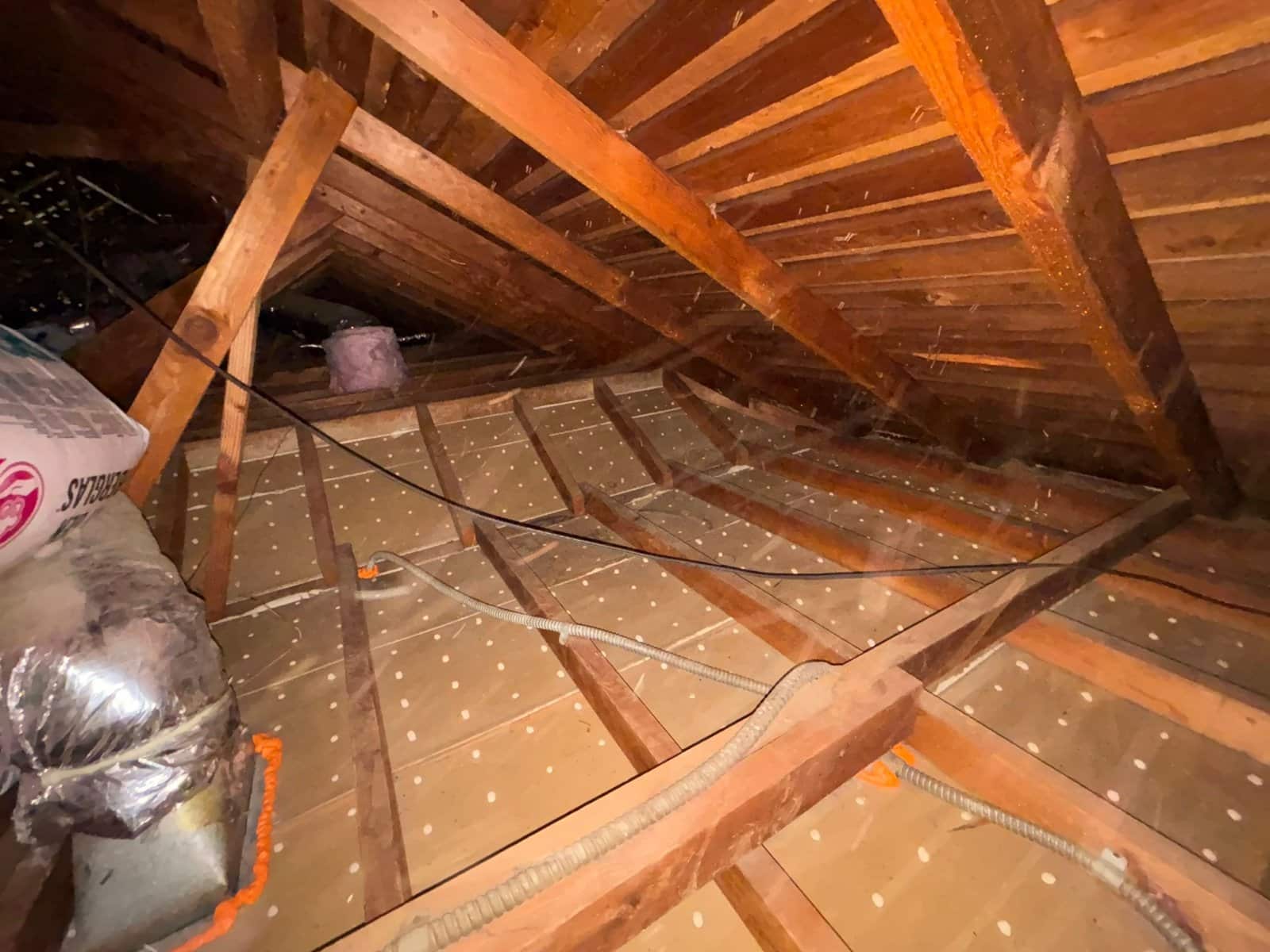
We close gaps and cracks around fixtures, piping, wiring and vents on the attic floor with foam and caulk before any insulation goes in. When we remove old attic insulation, we seal and caulk the gaps between the attic and living space to comply with California’s Title 24 building code. Air sealing helps reduce uncontrolled air movement between the living space and the attic, and ENERGY STAR’s attic air sealing guidance treats sealing the attic floor as a step to finish before adding insulation.
Why it comes before insulation: once new insulation is down, those gaps are buried and hard to reach.
Step 6: New insulation, installed last
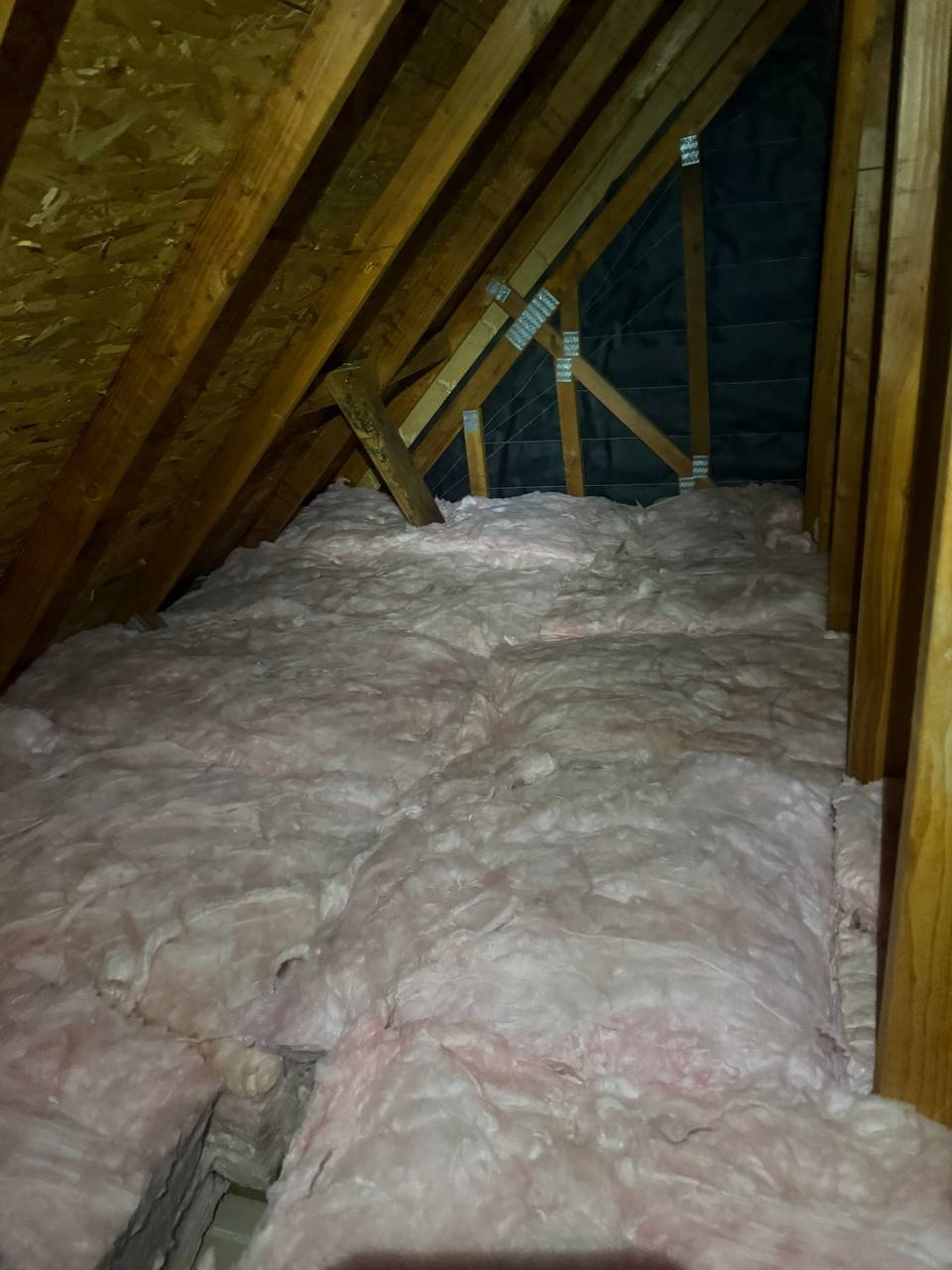
New insulation goes in last, after cleanup and sealing, and we install it to the depth and R-value the home needs. Comfort needs vary across Bay Area microclimates, from warmer inland areas to cooler spots closer to the coast, and the inspection sets the depth and R-value for each home. Insulation and air sealing together can support comfort and energy efficiency. ENERGY STAR’s guide to recommended insulation R-values explains how insulation levels are rated. For more on insulation choices, see Attic Insulation in San Jose.
Why it comes last: insulation is the final layer of the attic, not a cover for the problems underneath it.
What to Require in a San Jose or Milpitas Attic Cleanup Proposal
Short answer: A written proposal for attic cleanup after rodents should list removal of contaminated insulation, removal of droppings and nesting debris, vacuuming and sanitizing, entry-point sealing, attic floor air sealing, and new insulation to a stated R-value, with a separate fee for each service. It should also show the contractor’s license number and put any warranty in writing.
Use this checklist with any San Jose or Milpitas contractor, including AtticareUSA:
- Removal of contaminated insulation. Does the proposal say the old insulation comes out, or only that new insulation goes in?
- Droppings, nests and debris. Is removal of rodent waste and nesting material listed, with haul-away and disposal?
- Vacuuming and sanitizing. Is cleaning of the exposed attic surfaces included, and is sanitizing or deodorizing listed when needed?
- Entry-point sealing. Does it say how entry points will be sealed and with what materials?
- Air sealing. Are gaps around fixtures, wiring, piping and vents on the attic floor sealed before insulation?
- New insulation to a stated R-value. Is the target depth or R-value written down?
- Order of work. Does insulation go in after cleanup and sealing, not before?
- Separate fees. Is each service priced on its own line so you can see what you are paying for?
- Live rodents. If rodents are still active, who removes them, and when does the cleanup start?
- Warranty terms. What is warranted, for how long, and is it in writing?
- License number. Is the contractor’s California license number on the proposal?
Our estimates list the fee for each service separately, with no hidden fees. The proposal comes by email with exact prices and service details, and there are no upfront fees.
Comparing San Jose Attic Cleaning Companies: Licensing, Reviews and Warranties
Short answer: When you compare San Jose or Milpitas attic cleaning companies, check four things: an active California contractor license, reviews from more than one independent source, whether the full job (cleanup, sealing, insulation) is in scope, and what the warranty covers in writing. AtticareUSA is licensed, insured and bonded (CA #1051462), Diamond Certified, and highly rated with 1400+ reviews.
License. You can look up any California contractor by license number with the Contractors State License Board, the state agency that licenses contractors. Our license is CA #1051462.
Reviews from more than one place. Customers review us on Google, Yelp and Angi, and we are Diamond Certified after an independent survey of past customers. Reviews often mention professional, on-time crews, clear explanations with photos, and a protected, clean job site.
Full scope. Ask whether one company handles cleanup, entry-point sealing, air sealing and new insulation, or whether you will need to hire others to finish.
Warranty in writing. Our rodent proofing has a written 1-year limited warranty on the treated areas (not living spaces or garages): new rodent entry points found within the year are sealed at no additional charge, subject to the listed exclusions, and the warranty transfers to the next owner if the home is sold.
Proof of the work. Our crews take before-and-after photos on the job, and they are available upon request.
Already have a quote? If you have another contractor’s quote, we offer a free second-opinion inspection and a written proposal you can compare. You can also attach the quote to the AttiCare Better Quote Tool for one of our specialists to review.
Recent AtticareUSA Projects in San Jose
These are real jobs our crews completed nearby. Each project page has the details and photos from the job.
- San Jose, CA (August 2026): attic cleanup, rodent proofing and new R-38 blown fiberglass insulation.
- San Jose, CA (September 2026): attic cleanup and rodent proofing only, with no new insulation needed.
Frequently Asked Questions About Attic Cleanup in San Jose and Milpitas
Common questions from San Jose and Milpitas homeowners after rodent damage turns up in the attic.
Do I need pest control before attic cleanup?
Only if rodents are still active. If they are, a licensed pest control provider removes them first, then AtticareUSA does the cleanup, entry-point sealing and insulation. If the rodents are already gone, we can schedule the cleanup after the inspection.
Can I put new insulation over the old insulation?
Not when it is contaminated; it has to come out first. AtticareUSA does not treat every attic as a removal project, though: clean, dry insulation that has only settled may be topped up rather than replaced, and we explain what can stay in place.
Do I need to remove insulation after mice or rats?
Usually, if the insulation has droppings, urine staining or nesting debris, or has been chewed or heavily compressed. Those are the conditions under which AtticareUSA removes it. The inspection shows which areas are affected.
Does AtticareUSA work in Milpitas?
Yes. AtticareUSA serves Milpitas, along with San Jose, Santa Clara, Sunnyvale and nearby cities, from our San Jose location.
What does attic cleanup cost?
It depends on the size and condition of the attic and on any added issues you choose to fix. Our on-site estimator takes measurements, and the proposal lists each service with its own fee. We can also send an estimate without an in-person inspection.
How do I stop rodents from coming back?
Find and seal the entry points, clean out the material that holds their scent, and only then reinstall insulation. Sealing entry points helps reduce the chance of future rodent entry, and AtticareUSA’s rodent proofing carries a written 1-year limited warranty on the treated areas.
Schedule a Free Attic Inspection in San Jose or Milpitas
Short answer: Book a free attic inspection with AtticareUSA to find out how far the damage goes, where rodents may be getting in, and what the full cleanup, sealing and insulation project includes. If you already have another contractor’s quote, ask for a free second-opinion inspection and a written proposal you can compare.
Someone has already told you the attic needs work. What you need now is a clear plan for attic cleanup after rodents from one licensed contractor who will clean it, seal it and restore it in the right order. We have been in business since 2012.
Schedule a free inspection before covering the problem with new insulation. Contact us to book your free attic inspection in San Jose, Milpitas or anywhere in the South Bay.
Sources
- Centers for Disease Control and Prevention, “Cleaning Up After Rodents”: https://www.cdc.gov/healthy-pets/rodent-control/clean-up.html
- ENERGY STAR, “Attic Air Sealing Project”: https://www.energystar.gov/saveathome/seal_insulate/attic-air-sealing-project
- ENERGY STAR, “Recommended Home Insulation R-Values”: https://www.energystar.gov/saveathome/seal_insulate/identify-problems-you-want-fix/diy-checks-inspections/insulation-r-values
- California Contractors State License Board: https://www.cslb.ca.gov/