A California attic contractor should be easy to verify before you hire them for attic cleaning, insulation removal, air sealing, or new insulation. Check the license, make sure the classification fits the quoted work, ask what insurance coverage applies, and read recent project-specific reviews—not only the star average.
At a glance
- Check the CSLB record — confirm the business identity, license status, classifications, and available public information before you approve work.
- Match the scope to the license — attic cleanup, sealing, air sealing, and insulation can involve different work, so ask what the proposal actually includes.
- Confirm insurance coverage — understand whether general liability and workers’ compensation coverage apply to the crew and project.
- Read reviews for patterns — recent, detailed feedback and customer photos are more useful than a star average alone.
- Verify the order of work — when attic conditions require restoration, the path is inspect, clean, sanitize, seal, rodent-proof, then insulate.
That process matters because attic work is rarely just about adding insulation. If there are rodent droppings, damaged insulation, air leaks, odors, or open entry points, the right service plan may involve cleanup and preparation before insulation is installed.
Start With the CSLB License Check for a California Attic Contractor
Short answer: Use the California Contractors State License Board (CSLB) lookup to review a contractor’s license status, business information, classifications, bond information, workers’ compensation information where shown, and public disciplinary history before approving work. The CSLB license-check tool provides consumer-facing contractor record information.[^1]
A website badge or review profile can be useful. But the CSLB record is where you begin verifying the legal business behind the marketing.
Ask for the California license number. Then compare the result with the company name on the proposal. The business name, license number, and quoted work should line up. If a company uses a trade name online, do not stop there. Check the legal name associated with the license record.
Atticare USA lists California license #1051462. Homeowners can look it up themselves before scheduling work or signing a proposal. Atticare USA also states that it is licensed, insured, and bonded.[^2]
This is not about trying to catch a contractor in a mistake. It is about knowing who will be working in your attic and whether the company is set up for the work it is quoting.
Make Sure the License Classification Fits the Work
Short answer: An active license matters, but the classification still needs to fit the work on your quote. Ask what is included, then compare that scope with the contractor’s listed California classifications. CSLB classifications define categories of work for licensed contractors.[^3]
Attic projects are often more involved than they first appear. A quote may include insulation removal, attic cleaning, sanitization, air sealing, rodent-entry-point sealing, new insulation, or related repairs. You should know which parts of that work the company is proposing and why.
Atticare USA lists California classifications C-2 and C-61 under license #1051462.[^2] CSLB identifies C-2 as the insulation and acoustical classification and C-61 as the limited specialty classification.[^3][^4] Compare the official scope descriptions with the actual work listed in your proposal.
The practical question is simple: does the license fit what the company says it will do in your home?
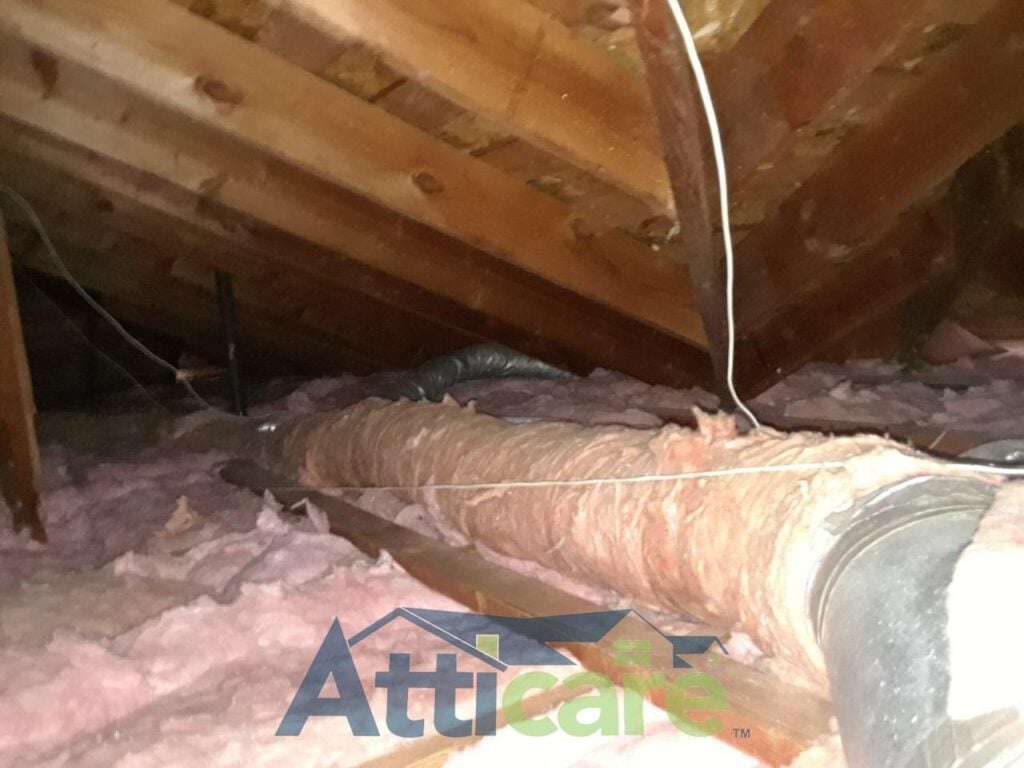
If rodents have been active in the attic, the job may need more than an insulation top-up. Old insulation can hide droppings, nesting material, gaps, damaged ducts, and other conditions that are hard to see from the attic opening. The CDC advises care when cleaning rodent urine, droppings, dead rodents, and nesting materials.[^5]
A good proposal should explain the attic you have—not treat every attic as the same project.
What “Licensed and Insured” Should Mean in Practice
Short answer: “Licensed and insured” should mean more than a phrase on a website. Ask whether the company has general liability coverage and workers’ compensation coverage that applies to the people performing the quoted work.
General liability insurance and workers’ compensation do different jobs.
General liability insurance may help address certain covered property damage or injury claims connected to business operations, subject to policy terms and exclusions. Workers’ compensation is a separate system that provides benefits for eligible work-related employee injuries or illnesses.[^6]
That matters in attic work because crews may be moving equipment through your home, working above living areas, accessing tight spaces, and handling old insulation or debris. You should understand what coverage applies before work begins.
You do not need to make the conversation awkward. Ask a direct question:
“What insurance coverage applies to this project, and can you confirm it before work begins?”
Atticare USA states that it is licensed, insured, and bonded.[^2] That is a useful trust signal. You should still feel comfortable asking how the company’s coverage applies to your project.
Credentials, Ratings, and Reviews Are Not the Same Thing
Short answer: A license, insurance policy, technical certification, third-party rating, BBB standing, and customer review score each tell you something different. Use them together instead of treating one badge or star average as the whole answer.
A license is about legal authorization and classifications. Insurance is about coverage. Certification can reflect training and technical knowledge. A third-party rating program may measure customer satisfaction. Reviews show what customers say about their experience.
Those signals can support each other. They are not interchangeable.
BPI Certification
BPI certification is associated with residential building performance and building-science knowledge. The Building Performance Institute offers professional credentials for home performance and energy-efficiency work.[^7]
That can matter when a company is discussing insulation, air sealing, attic conditions, and home comfort as parts of the same system. It is not a review score, and it does not replace a CSLB license check or insurance confirmation.
Diamond Certified
Diamond Certified is a survey-based rating program focused on customer satisfaction. Its rating process includes customer-satisfaction research and qualification requirements for participating companies.[^8]
It can be helpful when you are comparing similar companies. It does not replace a license, insurance, or a clear written scope.
BBB Accreditation and Rating
BBB accreditation and BBB ratings are separate from state licensing, insurance, technical credentials, and review-platform ratings. BBB says accreditation is based on meeting its Standards for Trust, while business ratings reflect BBB’s opinion about how a business is likely to interact with customers.[^9]
Atticare USA has been in business since 2012 and is BPI-certified, Diamond Certified, and A+ BBB.[^2] Those are checkable signals. They do not mean every attic needs the same solution.
The better question is whether the company’s qualifications, customer history, and proposed scope point in the same direction.
How to Read Attic Cleaning and Insulation Reviews Critically
Short answer: Look for a pattern of recent, detailed reviews from homeowners with similar attic problems. A high star average matters, but review volume, recency, project details, and photos often tell you more.
One five-star review can be encouraging. One one-star review can be concerning. Neither should make the decision on its own.
Start with volume and recency. A longer review history gives you more information than a small handful of ratings. Recent feedback helps you understand what customers experienced with the current team, communication process, and service standards.
Then read past the headline. Look for reviews that mention actual work:
- Attic cleaning or insulation removal
- Rodent evidence or contaminated insulation
- Entry-point sealing and exclusion
- Air sealing or insulation installation
- Communication about what was found
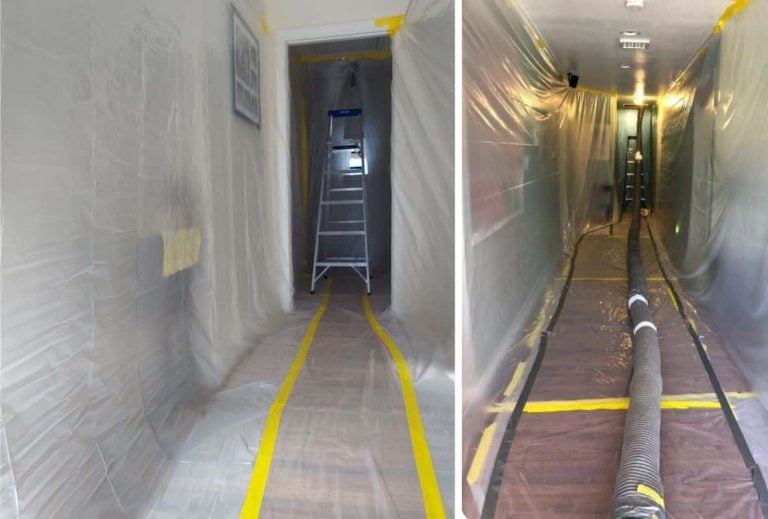
- Protection of floors, access paths, and living areas
- Whether the proposal and project scope were explained clearly
Pay attention to patterns. One unhappy customer may have had an unusual situation. Repeated complaints about unclear scope, missed communication, pressure tactics, or unresolved issues deserve closer attention.
Photos can be more useful than generic praise. A customer photo may show the attic condition, old insulation, access limitations, or visible work. It does not prove every detail of a project. But it can provide more context than a short review that says only, “Great job.”
Atticare USA states it has 1,400+ reviews and has served 11,000+ clients.[^2] Use that as a starting point, then read the reviews yourself. Look for recent, detailed feedback from homeowners with projects like yours.
Verify the Scope, Not Just the Company
Short answer: The best-reviewed company is not automatically the right fit if the proposal skips the underlying attic problem. Ask what will be inspected, cleaned, sanitized, sealed, rodent-proofed, and restored before new insulation is installed.
This is where contractor verification becomes more than paperwork.
If an attic has old insulation but no signs of damage, contamination, or hidden issues, the scope may be straightforward. But if rodents have been active, insulation is damaged, odors are present, or entry points are open, simply adding insulation may not address what is underneath.
When an attic needs restoration, Atticare USA’s service order is clear:
- Inspect the attic.
- Clean the affected area.
- Sanitize the affected area.
- Seal accessible gaps and entry points.
- Rodent-proof through exclusion.
- Install new insulation last.
Contaminated insulation may need to be removed as part of preparing the space, but it does not change the order: inspect, clean, sanitize, seal, rodent-proof, then insulate.
New insulation should not be installed over an unresolved rodent or contamination problem. DOE and ENERGY STAR guidance describe air sealing and insulation as connected attic improvements that require appropriate assessment and preparation.[^10][^11]
This does not mean every attic needs every service. It means the recommendation should fit the condition of your home.
Atticare USA provides attic cleaning, insulation removal, rodent exclusion, air sealing, and insulation restoration when the project calls for those services.[^12][^13][^14] The goal is not simply to add material. The goal is to prepare the attic for a cleaner, better-performing system.
A Phone Ballpark Can Help—But Confirm the Final Scope
Short answer: A phone ballpark or early estimate can be useful for comparison. Before hiring, confirm the written proposal outlining the recommended scope of work and pricing, the conditions that may affect it, and whether the contractor’s qualifications match the work.
You do not need to treat a phone conversation or ballpark estimate as a warning sign. It can help you understand the likely range of work and decide which companies belong on your shortlist.
But an attic is a hidden space. The final recommendation may depend on what is visible inside: insulation condition, rodent evidence, entry points, access limits, air leaks, ducts, and other conditions that affect the project.
Ask each company the same questions:
- What work is included in the proposal?
- Is insulation removal needed, and why?
- Will the attic be cleaned and sanitized before new insulation?
- Are accessible entry points being evaluated if rodent evidence is present?
- Is air sealing included, recommended, or excluded?
- What credentials and insurance coverage apply to this work?
- Can you explain the order of the project in plain language?
Atticare USA states that it provides a written proposal by email outlining recommended service details and pricing, with no hidden charges or upfront fees.[^2]
For homeowners comparing more than one proposal, the Atticare Better Quote Tool can help organize the questions that matter.
Your 10-Minute Pre-Hire Checklist
Short answer: Before hiring a California attic contractor, verify the license, check that the classifications fit the scope, ask about insurance, compare credentials correctly, read current detailed reviews, and make sure the proposal addresses the actual attic problem.
Use this checklist before making a final decision:
-
Look up the CSLB license.
Confirm the business identity, license status, classifications, and available public record details.[^1] -
Match the license to the quote.
Ask what work the company will perform and verify that its classifications fit that scope.[^3] -
Ask about insurance.
Confirm general liability and workers’ compensation coverage relevant to the project.[^6] -
Separate credentials from ratings.
Treat licensing, BPI certification, Diamond Certified recognition, BBB standing, and review scores as different forms of evidence. -
Read reviews for patterns.
Look for recent, detailed feedback and project photos where available. -
Compare the scope, not only the price.
If attic restoration is needed, confirm the proposed sequence is inspect, clean, sanitize, seal, rodent-proof, then insulate. -
Get the recommendation explained clearly.
You should understand what the contractor found, what work is proposed, and what the project is intended to solve.
For related guidance, see professional attic cleaning services, insulation services, and professional rodent proofing services.
FAQ: Verifying an Attic Contractor
How do I verify a California contractor license for attic work?
Use the CSLB contractor license lookup and compare the record with the company name and license number on the proposal. Review the license status, classifications, and other available public details.[^1]
What do C-2 and C-61 mean on a California contractor license?
They are California contractor license classifications. CSLB identifies C-2 as insulation and acoustical work and C-61 as limited specialty work. Review the official descriptions, then compare them with the work listed on your attic proposal.[^3][^4]
Does an attic cleaning contractor need insurance?
Ask what general liability and workers’ compensation coverage applies to the work. These are different forms of coverage, and both are worth understanding before a crew begins working in your home.[^6]
Is BPI certification better than Diamond Certified or BBB?
They measure different things. BPI certification relates to building-performance knowledge, Diamond Certified is survey-based, and BBB standing is a separate business-trust signal.[^7][^8][^9]
How many reviews should an attic contractor have?
There is no single number that guarantees quality. Look for meaningful review volume, recent feedback, detailed descriptions of similar projects, and patterns in both positive and negative comments.
Should I hire an insulation company if rodents damaged my attic insulation?
Ask whether the company can evaluate the full condition of the attic. When attic restoration is appropriate, the work should follow the same order: inspect, clean, sanitize, seal, rodent-proof, then insulate. The CDC provides rodent-cleanup guidance, while DOE and ENERGY STAR explain the importance of addressing attic conditions as part of insulation and air-sealing work.[^5][^10][^11]
If you want a clear attic cleanup or insulation plan before you decide what to replace, contact Atticare USA to book a free attic inspection.
[^1]: California Contractors State License Board, “Check a License”
[^2]: Atticare USA
[^3]: California Contractors State License Board, “C-2 Insulation and Acoustical”
[^4]: California Contractors State License Board, “C-61 Limited Specialty”
[^5]: Centers for Disease Control and Prevention, “Cleaning Up After Rodents”
[^6]: California Department of Industrial Relations, Division of Workers’ Compensation
[^7]: Building Performance Institute, Certification
[^8]: Diamond Certified, “Our Rating Process”
[^9]: Better Business Bureau, “BBB Accreditation Standards”
[^10]: U.S. Department of Energy, “Insulation”
[^11]: ENERGY STAR, “Attic Air Sealing Project”
[^12]: Atticare USA Attic Cleaning
[^13]: Atticare USA Insulation Services
[^14]: Atticare USA Rodent Proofing
Related reading
- Best Attic Companies With a Rodent Proofing Warranty: How to Compare Reviews, Guarantees, and Service Contracts
- How to Compare Attic Insulation Estimates in the Bay Area
- Do You Need Attic Cleaning or Insulation Replacement?
Recent Atticare USA projects in the Bay Area
- Attic Insulation Replacement & Rodent Proofing in San Rafael, CA (San Rafael, September 2026)
- Attic Insulation Replacement & Rodent Proofing in Oakland, CA (Oakland, September 2026)
- Attic Insulation Replacement & Rodent Proofing in Danville, CA (Danville, September 2026)
- Attic Insulation Replacement, Rodent Proofing & Whole House Fan in Sunnyvale, CA (Sunnyvale, September 2026)