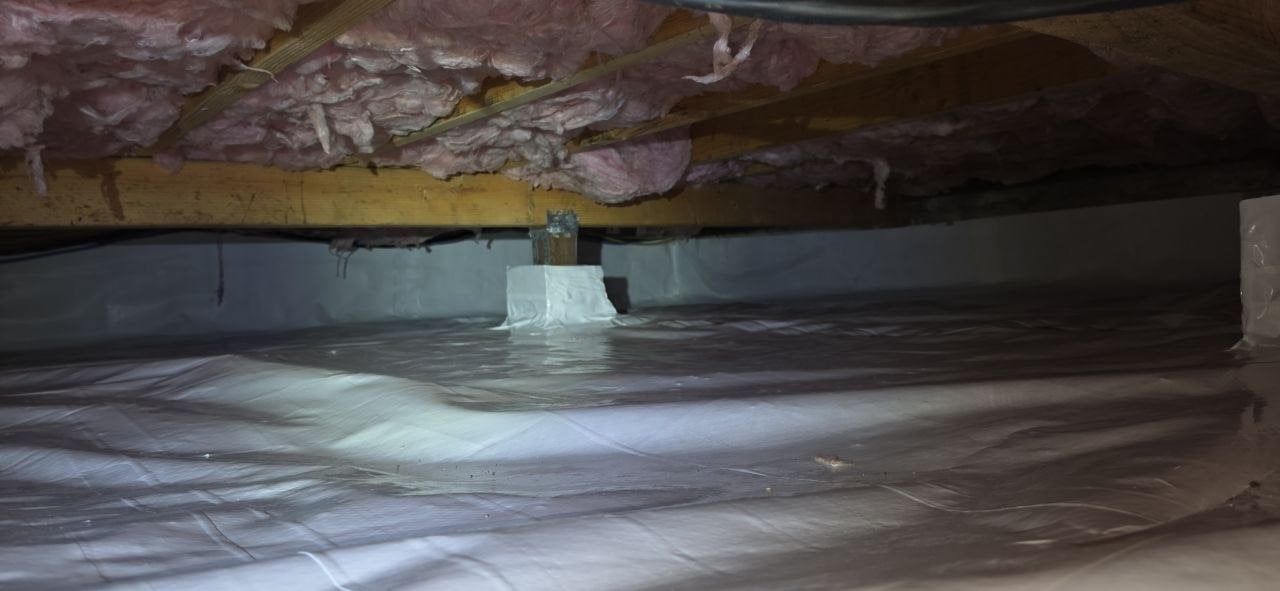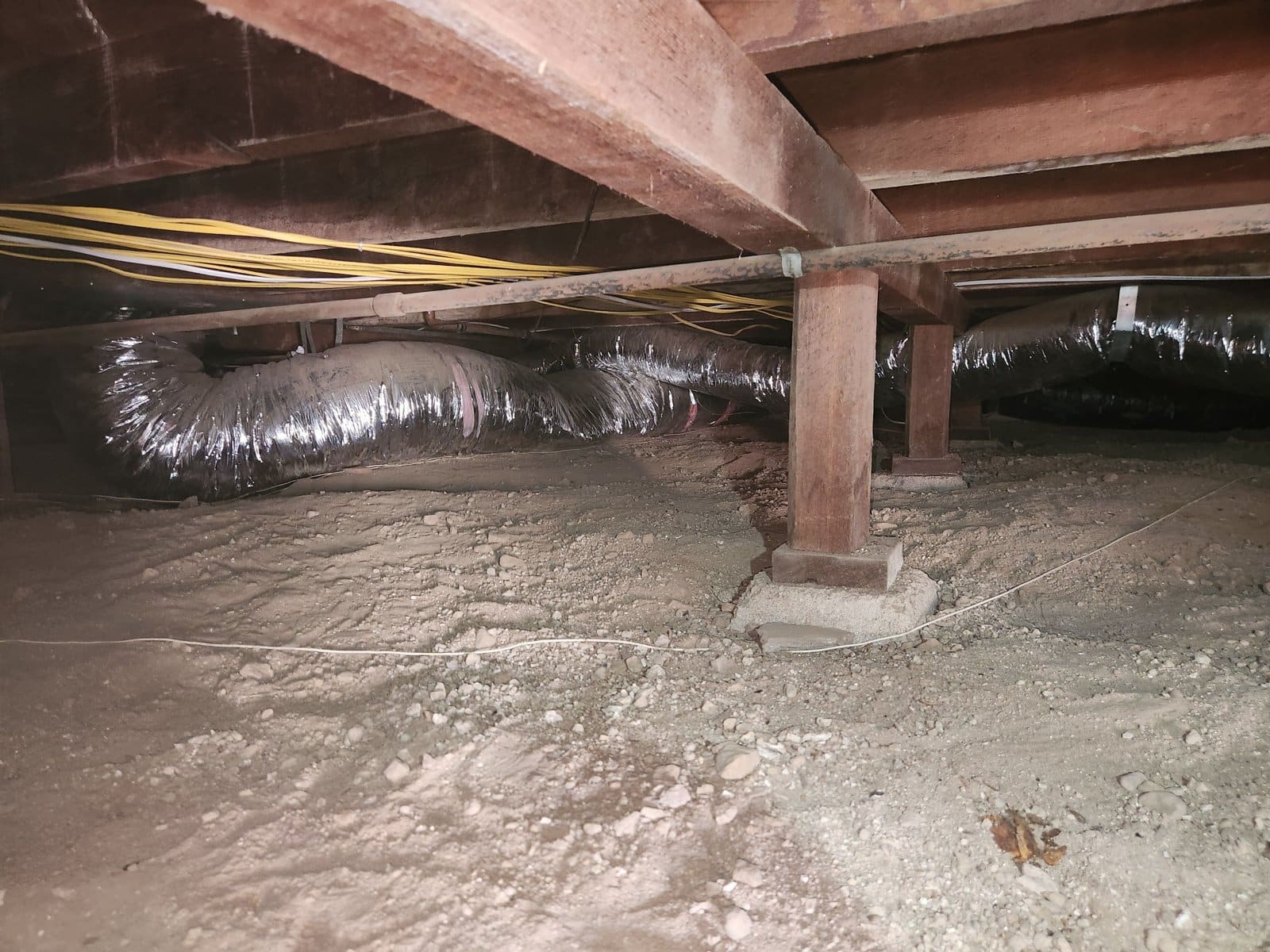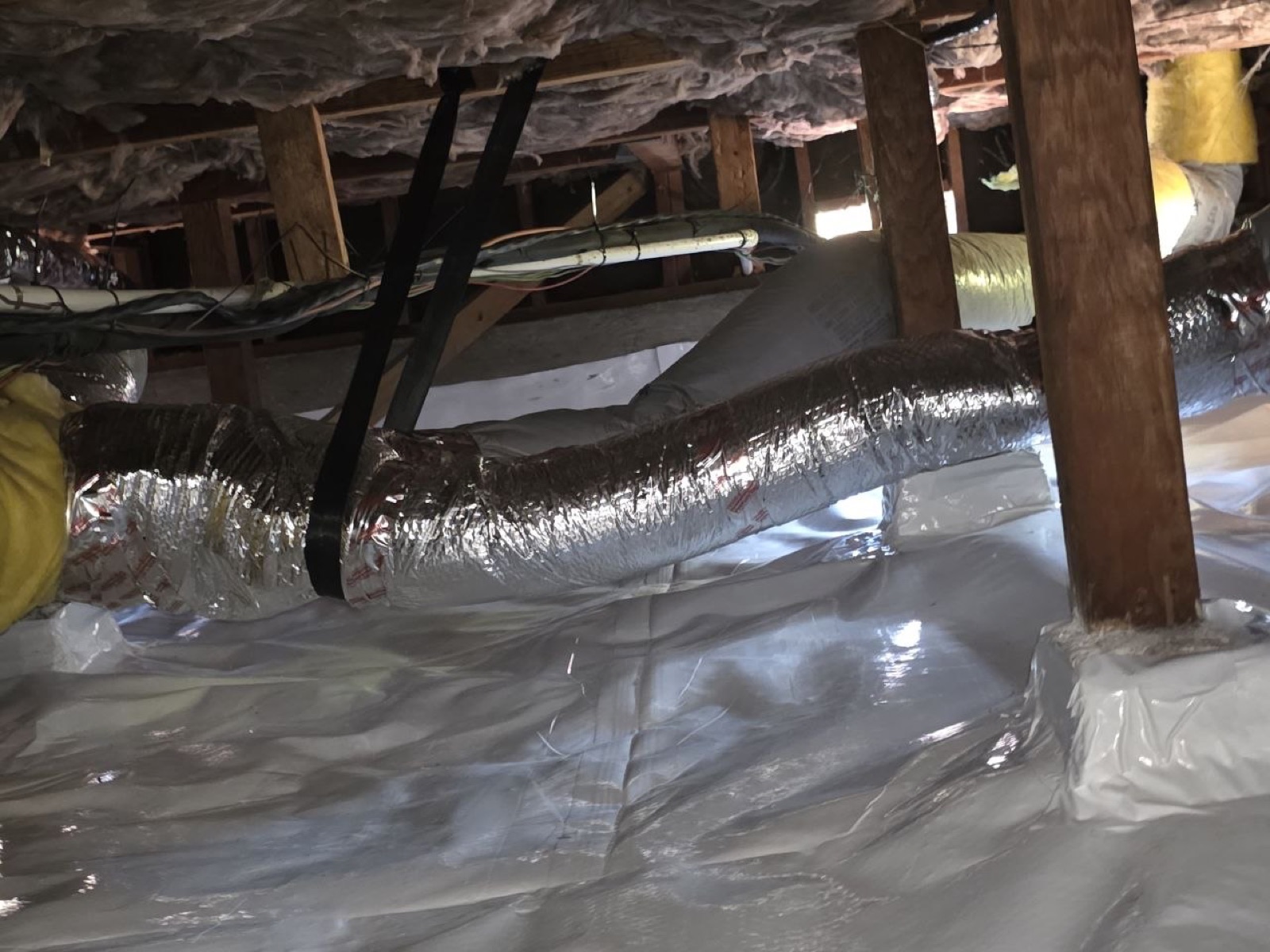
If your floors feel cold over a crawl space, the crawl space insulation under them has usually fallen, sagged, gotten wet, been compressed or been damaged by rodents, and adding more insulation on top will not fix it. AtticareUSA fixes this for homeowners in Fremont, Hayward, Oakland, Alameda, Walnut Creek and San Ramon from our Bay Area office in San Leandro. We inspect first, take out what failed, clean and seal the space, and install new insulation last.
At a Glance
- Find the cause first: cold floors over a crawl space usually mean the insulation has fallen, flattened, gotten wet or been damaged by rodents.
- Take the failed insulation out: topping up leaves the gaps, the contamination and the entry points in place.
- Clean, seal and protect the space: we clean the surfaces, seal any rodent entry points we find and add a vapor barrier where moisture protection is recommended.
- Install new insulation last: it goes between the floor joists only once the space is ready for it.
- Fix water problems separately: standing water or active leaks go to a waterproofing specialist first.
A crawl space is easy to ignore because you do not walk through it every day. Usually the first sign of trouble is a cold kitchen floor in January or a draft along the baseboards. This guide explains what is usually going on under the floor, why the old material has to come out first, and when the problem is water rather than insulation.
Why Crawl Space Insulation Fails and Leaves East Bay Floors Cold
Short answer: Insulation under a floor only works while it stays in place, dry and intact. Once it drops away from the subfloor, absorbs moisture, flattens or gets torn apart by rodents, cooler crawl space air reaches the underside of your floor, and you feel it in your feet.
You probably never see the insulation under your house. You notice the result instead: a room that never warms up, a floor that feels colder than the rest of the house, or a draft near the edges of a room.
Gravity, Air Movement and Gaps Between the Joists
Floor insulation sits between the floor joists on the underside of the floor. Unlike attic insulation, which rests on the attic floor, it has to be held up. Over the years it can sag, slip out of place or fall to the soil. That leaves gaps between the joists where nothing is insulating the floor at all.
Insulation also depends on keeping its full thickness. Insulation that has been flattened or crushed does not provide its full rated resistance to heat flow. A batt that is still technically “there” but hanging loose or pressed flat may be doing very little.
Moisture and Wet Insulation
Damp insulation under a floor is a warning sign, not something to cover up. Moisture can’t be judged without looking at the space. Our inspection looks at the condition of the insulation and the space, and we report what we find. New insulation goes in only after the moisture source is fixed, because new insulation installed into an ongoing water problem starts out in the same conditions that ruined the old insulation.
Rodent Intrusion and Contaminated Insulation
Mice and rats nest in insulation, tunnel through it and leave droppings and urine behind. Once that happens, the material is no longer doing its job, and it is no longer something you want under your living space. We remove insulation with droppings, urine staining or nesting debris, and insulation that has been chewed or heavily compressed.
Rodent droppings, urine and nesting material should be handled with care (CDC, Cleaning Up After Rodents). That is one reason removal is a job for a crew with the right equipment, not a weekend project.
Why You Should Not Put New Insulation Over Old Crawl Space Batts
Short answer: When the old insulation has fallen, gotten wet or been damaged by rodents, it has to come out before new insulation can work. Covering it leaves the contamination, the gaps and the entry points in place, and the new material inherits the same problems.
Topping up is the shortcut most people ask about first, so here is why it usually fails under a floor:
- Fallen batts do not help where they land. Insulation lying on the soil is not insulating your floor, and new batts installed above it do not change what is lying below.
- Contamination stays. Rodent-contaminated insulation is replaced, not covered, because a new layer leaves the odors and contamination in place.
- Problems stay hidden. Old insulation can cover rodent entry points and damage on the underside of the floor. Taking it out lets the crew see and address what was buried.
- Moisture keeps working. If the old material is damp, new insulation pressed against it starts out in the wrong conditions.
The order matters. Do not cover the problem with new insulation.
That does not mean every crawl space needs every step. AtticareUSA explains which steps your space needs (removal, cleaning, rodent proofing, a vapor barrier, new insulation) and works out the approach with you. If the inspection shows a step is not needed, we tell you that too.
The AtticareUSA Crawl Space Process, Step by Step
Short answer: Inspect, remove, clean, seal, protect, then insulate. Each step prepares the space for the next one, and new insulation always goes in last.
Step 1: Thermal Imaging Crawl Space Inspection
We start by checking how well the existing insulation is working. Our technician uses a thermal imaging camera to find drafts and heat loss under the floor, and looks for rodent activity and possible entry points. We report the findings to you, and our on-site estimator takes measurements for the proposal. Here is more on how we run thermal imaging crawl space inspections.
Step 2: Removal of Old Insulation, Dirt and Debris
When the inspection shows it is needed, our crew removes the old insulation along with dirt, debris and undesirable waste. Before work starts, we cover floors in the work area with protective barriers as needed. The removed material is hauled away and disposed of. The rest of the job depends on this step, because it clears out what was failing and exposes what was hidden behind it.
Step 3: Surface Cleaning of the Crawl Space
With the old material out, we clean the surfaces of the crawl space. New materials should go into a clean space, not on top of what was just removed. Our crawl space cleaning services in the Bay Area cover this part of the work in more detail.
Step 4: Rodent Proofing Where Entry Points Are Found
If the inspection finds entry points, we offer rodent proofing as part of the job. Rodents can get in through vents, crawl space openings, utility penetrations and construction gaps. Our sealing is pesticide-free: we close entry points with wire mesh, polyurethane foam and cement as needed. Sealing entry points helps reduce the chance of future rodent entry.
If rodents are still active, a licensed pest control provider removes them first. We do not trap or remove live rodents. Once the activity is handled, we do the cleanup, entry-point sealing and insulation. Rodent proofing carries a written 1-year limited warranty on the treated areas, and that warranty covers the sealing work. See rodent proofing in the Bay Area for how we seal a home.
Step 5: Vapor Barrier Where Moisture Protection Is Recommended
Where the inspection recommends moisture protection, we install a vapor barrier. The installation starts with removing old insulation, dirt and debris and cleaning the space, which is why it comes after steps 2 and 3. Our crew lays polyethylene sheeting along the ground and secures it to the base of the foundation walls. More detail is on our crawl space vapor barrier installation page.
Step 6: New Insulation Between the Floor Joists
New insulation goes in last, after cleanup and sealing. We install it between the floor joists to the depth and R-value the home needs. Because the space is already clean, sealed and protected, the new material does not start out over contamination or an open path for rodents. Insulation and air sealing can support comfort and energy efficiency. Our crawl space insulation service page covers the installation itself.
Our crews take before-and-after photos on the job, and they are available upon request.
Where We Install Crawl Space Insulation in the East Bay
Short answer: AtticareUSA serves Fremont, Hayward, Oakland, Alameda, Walnut Creek and San Ramon from our San Leandro office. Every city gets the same inspection-first process and the same transparent proposal.
The East Bay has a lot of older homes, homes with additions and crawl spaces with tight access. Comfort complaints vary by microclimate too, from warmer inland areas to cooler spots closer to the bay, where moisture under the house is a fair question to ask. What stays the same is our method: find out why the floor is cold before deciding what to install.
- Fremont: If you have cold floors over a crawl space, you can book a free inspection, and our crew comes out from San Leandro.
- Hayward: We serve Hayward from our San Leandro office and handle the full crawl space sequence here, from inspection to new insulation.
- Oakland: Insulation removal and replacement after rodent damage is a core part of what we do, including sealing entry points before new insulation goes in.
- Alameda: Homes close to the bay raise questions about drafts, cold floors and whether a vapor barrier makes sense. The inspection answers that for your house, not a general rule.
- Walnut Creek: Inland homes get the same thermal imaging inspection and remove-first approach, and the proposal prices each step separately.
- San Ramon: We have completed attic projects in San Ramon, and crawl space work follows the same inspection and the same order of work.
Why East Bay homeowners hire us:
- In business since 2012.
- Family-owned.
- Licensed, insured and bonded (CA #1051462).
- Diamond Certified.
- BPI-certified.
- Highly rated with 1400+ reviews.
When Your Crawl Space Needs a Waterproofing Specialist First
Short answer: Insulation and a vapor barrier are not the fix for water coming into the crawl space. If there is standing water or active water intrusion, a waterproofing specialist should deal with it before any new insulation goes in.
AtticareUSA does not install sump pumps or French drains, and we do not do structural waterproofing. Homes with active water intrusion go to a waterproofing specialist. If the water is coming from a leaking pipe, that repair comes first too. Once the water problem is fixed, we can remove the wet material, clean the space and reinsulate.
Many homeowners also worry about being pushed into a large, expensive system. If the inspection finds failed insulation in a crawl space without active water problems, the work in this guide may be the whole job: remove what failed, clean the space, seal entry points, add a vapor barrier where moisture protection is recommended, and install new insulation.
If we find mold-like staining or materials that look hazardous, those need a specialized evaluation. We do not perform mold remediation or hazardous material removal.
Recent AtticareUSA Projects in Alameda and Walnut Creek
These are real jobs our crews completed nearby. Each project page has the details and photos from the job.
- Alameda, CA (August 2026): attic and crawl space cleanup, rodent proofing and a new vapor barrier across 1,000 sq ft of crawl space.
- Walnut Creek, CA (August 2026): attic and crawl space cleanup with whole-house rodent proofing.
Frequently Asked Questions
Who installs crawl space insulation in Fremont for cold floors?
AtticareUSA does, from our Bay Area office in San Leandro. The job starts with a free thermal imaging inspection to find out why the floor is cold. Then we remove failed insulation and debris, clean the space, seal entry points if we find them, add a vapor barrier where recommended, and install new insulation between the joists.
Who installs crawl space insulation in Walnut Creek?
AtticareUSA serves Walnut Creek from our San Leandro office, with a free inspection and estimate. Our estimator measures the crawl space on site, so the proposal reflects your actual space.
Who installs crawl space insulation in San Ramon?
AtticareUSA serves San Ramon from San Leandro, with a free inspection and estimate, and has completed attic projects in San Ramon. Price depends partly on the crawl space’s square footage and condition, so the proposal reflects your actual space.
Who is the best contractor for crawlspace insulation removal and replacement in Oakland after pest damage?
Look for a contractor that removes the damaged insulation, cleans the space and seals entry points before installing anything new. AtticareUSA does all of that as one project. If rodents are still active, a licensed pest control provider removes them first. We then clean, seal with wire mesh, foam and cement as needed, and reinsulate. The sealing carries a 1-year limited warranty on the treated areas.
Who installs crawl space insulation in Alameda for cold floors and drafts?
AtticareUSA serves Alameda from San Leandro. Our thermal imaging camera shows where drafts and heat loss are happening under the floor, and the inspection shows whether a vapor barrier is recommended for your crawl space.
Who installs crawl space insulation in Hayward?
AtticareUSA, from our Bay Area office in nearby San Leandro. One licensed contractor handles the inspection, removal, cleaning, rodent proofing, vapor barrier and new insulation as a single project. Active rodents or water problems are handled first by a pest control provider or a waterproofing specialist.
Can I put new insulation over old insulation in my crawl space?
Not when the old material has fallen, gotten wet or been damaged by rodents, because covering it leaves contamination, gaps and entry points in place. The inspection shows what condition your insulation is in, and AtticareUSA explains what the space needs before recommending work.
Do I need a vapor barrier?
Not every crawl space does. AtticareUSA installs a vapor barrier where the inspection recommends moisture protection. Our crew lays polyethylene sheeting on the ground and secures it to the base of the foundation walls once the space has been cleared and cleaned.
What if there is standing water in my crawl space?
Standing water or active leaks need a waterproofing specialist (or a plumber, if a pipe is leaking) before any insulation work. AtticareUSA does not install sump pumps or drains. Once the water problem is fixed, we can remove wet material, clean the space and reinsulate.
Schedule a Free Crawl Space Inspection
Short answer: The first step is a free inspection. Our estimator measures your crawl space on site, and you receive a proposal by email with exact prices, each service listed separately, and no hidden fees or upfront fees.
Cold floors are a sign that something under the house has stopped working. The inspection tells you what it is: fallen or flattened insulation, rodent damage, moisture, or a mix. It also tells you which steps your home actually needs, and the proposal shows what each one costs. If you would like the attic looked at too, ask about it during the same visit.
Book a free inspection to understand what is happening under your home. Contact AtticareUSA to schedule your free crawl space inspection in Fremont, Hayward, Oakland, Alameda, Walnut Creek or San Ramon.
Sources
- ENERGY STAR, “Recommended Home Insulation R-Values”: https://www.energystar.gov/saveathome/seal_insulate/identify-problems-you-want-fix/diy-checks-inspections/insulation-r-values
- Centers for Disease Control and Prevention, Cleaning Up After Rodents. https://www.cdc.gov/healthy-pets/rodent-control/clean-up.html