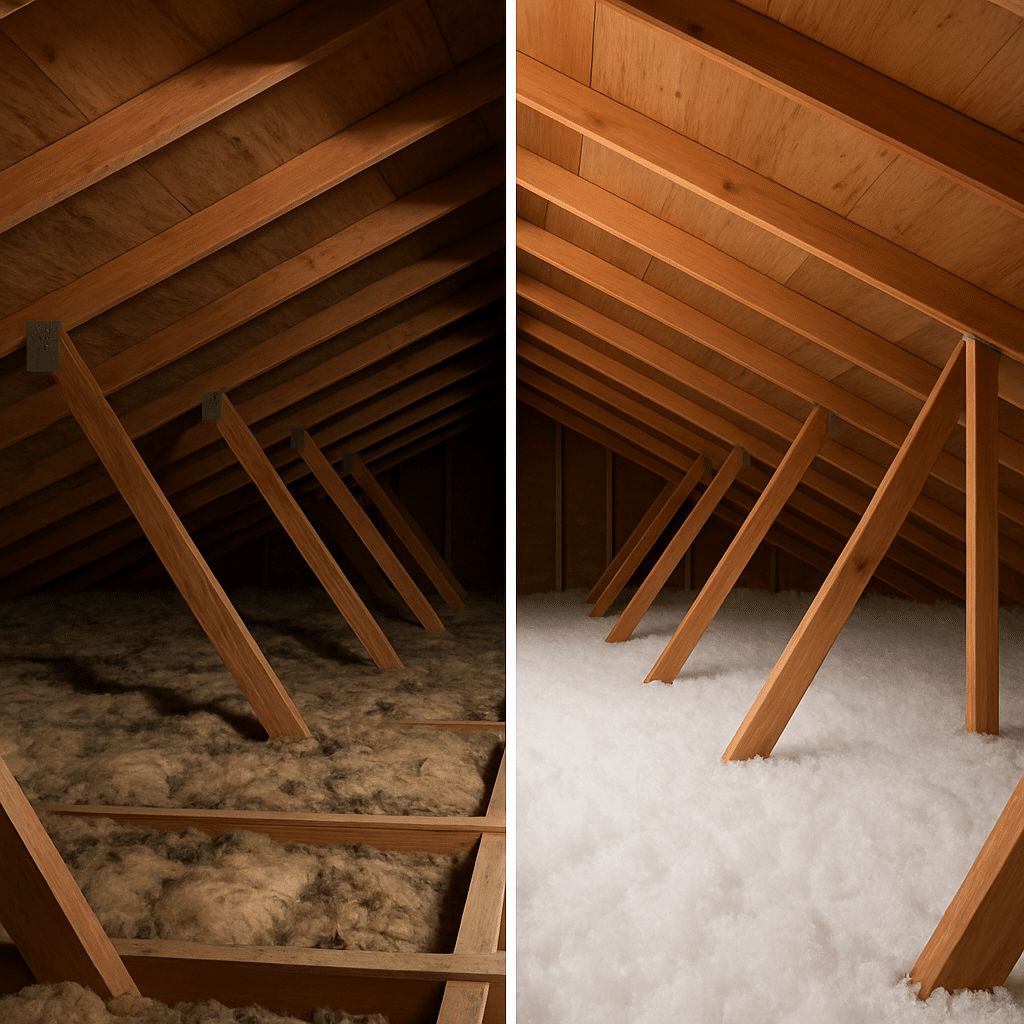
Crawl space cleaning is the first step when old fallen insulation, debris, contaminated material, or other hidden conditions are keeping you from understanding what is happening under your home.
At a glance
- Inspect first — The crawl space must be evaluated before anyone recommends a vapor barrier, new insulation, or a larger moisture-control project.
- Clean and sanitize next — Old fallen insulation, debris, and contaminated material may need to be removed so the actual underfloor condition is visible.
- Seal, then rodent-proof — Accessible gaps may need sealing before exclusion-oriented rodent-proofing can help reduce future entry.
- Use a vapor barrier for the right job — It helps limit moisture vapor from exposed soil, but it does not fix an active leak, drainage issue, or structural concern.
- Insulate last — New crawl space insulation belongs only after the area is clean, sanitized, sealed, rodent-proofed when needed, and ready for restoration.
For Bay Area homeowners—especially those in older homes—the goal is not to sell the largest possible project. It is to clean, seal, and restore the space based on what is actually found under the home.
What Crawl Space Cleaning and Vapor Barrier Installation Actually Mean
Short answer: Crawl space cleaning prepares the area under your home by removing old fallen insulation, debris, and contaminated material when needed. Vapor barrier installation adds a ground cover that helps control moisture vapor from exposed soil, but it does not solve every moisture problem.
These services are often recommended together because they address different conditions.
Cleaning is about making the crawl space visible and ready for the next decision. Old insulation can fall away from the subfloor. Debris can settle over years. Rodent evidence or other contamination may be present. In an older home, those conditions can hide the ground, framing, ducts, plumbing, and accessible openings that need attention.
A vapor barrier is a moisture-control layer installed over exposed soil when ground-moisture protection is recommended. The U.S. Department of Energy explains that moisture-control strategies can include vapor retarders and that moisture problems should be considered as part of the home’s overall building system. Learn more from DOE.
A vapor barrier is not the same as cleaning, insulation, drainage correction, structural repair, or full crawl space encapsulation.
That distinction matters. A clean crawl space with exposed soil may benefit from a vapor barrier. But if water is entering from an active plumbing leak, an exterior drainage condition, or another source, placing a barrier over the ground does not correct the source of that water. EPA guidance emphasizes identifying and fixing water and moisture problems rather than simply covering their effects. Read EPA guidance.
What Crawl Space Cleaning Includes
Short answer: Crawl space cleaning can include removing old fallen insulation, debris, and contaminated material when needed, then cleaning and sanitizing the exposed area so underlying conditions can be evaluated before new materials are installed.
A crawl space is easy to ignore because you do not walk through it every day. But when insulation is hanging down, debris has built up, or there is rodent evidence under the house, it is no longer just an out-of-sight space.
Atticare USA begins with an inspection because the work should be based on what is actually there. The inspection may identify old or damaged insulation, debris, rodent evidence, moisture indicators, damaged ducts, accessible entry points, or other conditions that affect the recommended scope.
Inspection Comes Before Cleanup
Before anyone recommends insulation or a vapor barrier, the crawl space needs to be seen clearly. The first question is not, “Which product should go in?” It is, “What is already happening under the home?”
Old insulation may be compressed, hanging down, or covering areas that need to be assessed. Debris or contaminated material may prevent a clear view of the crawl space floor. If rodent evidence is found, it should be handled carefully. CDC guidance addresses cleanup considerations for rodent droppings, urine, nesting materials, and related evidence. See CDC rodent cleanup guidance.
The goal is not simply to make the crawl space look better. The goal is to uncover what has been hidden so the next step is based on the condition of the home, not a guess.
Cleaning and Sanitizing Prepare the Space for Restoration
Once compromised material is removed when needed, the crawl space can be cleaned and sanitized as appropriate. This is the point where the service becomes restoration rather than a surface-level cleanup.
A cleaner, more visible crawl space makes it easier to identify conditions that should not be buried under new insulation or a vapor barrier. It also gives you a clearer explanation of what needs attention now and what may not be necessary.
Atticare USA’s service logic is simple: do not cover the problem with new insulation. New insulation belongs at the end of the process, after the crawl space has been inspected, cleaned, sanitized, sealed, rodent-proofed when needed, and prepared for restoration.
Sealing and Rodent-Proofing May Be Part of the Plan
If accessible entry points are found, Atticare USA can first seal those openings and then complete exclusion-oriented rodent-proofing where appropriate. Sealing and rodent-proofing help reduce the chance of future rodent entry, but Atticare USA does not provide trapping, extermination, animal removal, or general pest control.
If live animals need to be addressed first, a licensed pest control provider should handle that work before crawl space restoration proceeds. Atticare USA’s role is to clean, sanitize, seal applicable entry points, rodent-proof through exclusion-oriented work, and restore the space.
Cleaning without addressing applicable vulnerabilities can leave you with an incomplete solution.
What a Crawl Space Vapor Barrier Does—and Does Not Do
Short answer: A crawl space vapor barrier helps limit moisture vapor from exposed soil. It does not repair a leak, replace drainage work, fix structural damage, or automatically turn a crawl space into an encapsulated space.
Homeowners often hear “vapor barrier” and “encapsulation” used as if they mean the same thing. They do not.
A vapor barrier is a specific layer installed over crawl space ground. Its job is to reduce moisture vapor moving upward from exposed soil. DOE guidance recognizes vapor retarders as one component of a broader moisture-control strategy. Read DOE’s moisture-control overview.
That can be an appropriate part of a crawl space restoration plan. But it is important to understand what it cannot do.
What a Vapor Barrier Does
A vapor barrier addresses ground-moisture exposure. In a crawl space with bare earth, it can help create a more controlled underfloor environment by separating the home from moisture vapor rising from the ground.
It may be recommended after the crawl space has been inspected, cleaned, sanitized, sealed, and rodent-proofed where needed. It can also be part of a broader plan that includes crawl space insulation, duct evaluation, and entry-point work.
What a Vapor Barrier Does Not Do
A vapor barrier is not a structural repair. It does not correct damaged framing, sinking floors, or other structural concerns.
It is not a substitute for correcting an active plumbing leak, exterior water entry, or drainage issue. EPA guidance on moisture problems focuses on identifying and correcting the source of water or moisture. Read EPA’s moisture guidance.
It is also not automatically full encapsulation. Full encapsulation is a broader crawl space approach that may be right for some homes and more than others need. The right recommendation depends on what the inspection finds.
That is the difference between a clear service plan and a one-size-fits-all recommendation.
Why an Active Moisture Source Must Be Addressed First
If water is actively entering the crawl space, covering exposed soil may hide part of the problem without resolving it. EPA recommends identifying and correcting water or moisture problems promptly. Read the EPA’s recommended approach.
Atticare USA starts with inspection because ground moisture vapor and active water entry are different conditions. They should not receive the same answer.
The Right Crawl Space Cleaning Service Order
Short answer: Crawl space cleaning should happen before vapor barrier installation and insulation. The complete restoration order is inspect, clean, sanitize, seal, rodent-proof when needed, install a vapor barrier when recommended, and insulate last.
The order matters because every later step depends on the crawl space being ready for it.
Step 1: Inspect the Crawl Space and Identify the Moisture Source
The inspection establishes the scope. Is there old insulation? Debris? Rodent evidence? Exposed soil? Duct damage? Visible moisture indicators? An accessible opening that should be sealed?
It also helps identify when a condition needs evaluation outside Atticare USA’s crawl space restoration scope. Significant suspicious staining, active leaks, structural concerns, or other hazards should be evaluated by the appropriate qualified provider. Atticare USA does not claim mold remediation, structural repair, drainage correction, or hazardous-material remediation.
Step 2: Remove Compromised Material, Then Clean and Sanitize
Old fallen insulation, debris, and contaminated material may need to be removed before the crawl space can be restored. The exposed area can then be cleaned and sanitized as appropriate.
This step makes the rest of the project possible. You cannot make a reliable insulation decision when old material is still hiding the condition of the crawl space. You also should not place a new vapor barrier over a space that has not been properly evaluated.
Step 3: Seal Accessible Openings, Then Rodent-Proof When Needed
If accessible rodent entry points are found, Atticare USA can seal those openings and provide exclusion-oriented rodent-proofing as part of the restoration plan. Sealing entry points helps reduce the chance of future rodent entry.
This is also the point to address any condition that is outside the scope of a vapor barrier. If the inspection identifies active water entry or another unresolved concern, it should be addressed before the crawl space is covered or insulated. A barrier is not meant to be a cover-up.
Step 4: Install a Vapor Barrier When Ground-Moisture Protection Is Recommended
Once the crawl space is clean, sanitized, sealed, and rodent-proofed where needed, vapor barrier installation may be the right next step. The barrier addresses moisture vapor from exposed ground. It is not a replacement for repairs the crawl space may need for another reason.
For homeowners comparing scopes, the important question is simple: does the crawl space need a ground-moisture layer after cleaning, or does it need a broader evaluation first?
Step 5: Install Crawl Space Insulation Last
New crawl space insulation is the final layer of the restoration plan, not the first shortcut.
Insulation can support comfort and energy efficiency when the crawl space is ready for it. The U.S. Department of Energy explains that insulation can reduce heat flow and support home comfort and energy performance when properly installed. Learn more about insulation from DOE
But insulation should not be installed over an unresolved contamination issue, active moisture condition, or open entry point.
Learn more about Atticare USA’s crawl space insulation service and why preparation comes before installation.
Vapor Barrier vs. Encapsulation: Which Does Your Home Need?
Short answer: A vapor barrier is a ground-moisture-control layer. Encapsulation is a more extensive crawl space approach. Some homes may need a broader solution, while others may need cleaning, sanitizing, sealing, rodent-proofing, a vapor barrier, and insulation installed last.
Full encapsulation is sometimes appropriate. It may be considered when crawl space conditions, moisture exposure, access, and broader underfloor needs justify a more extensive approach.
But not every older crawl space needs the same scope.
A home with old fallen insulation, settled debris, exposed soil, and no identified active water-entry issue may have a different service path than a home with complex moisture conditions or structural concerns. The purpose of the inspection is to separate those situations.
You deserve to know what each recommendation is intended to address—and what it will not address—before you decide.
Why Older Bay Area Homes Often Need a Crawl Space Evaluation
Short answer: Older Bay Area homes may have crawl spaces with bare earth, limited or aging subfloor insulation, and long-standing debris. An inspection helps determine what should be cleaned, sealed, rodent-proofed, covered, or insulated.
Across the East Bay, San Jose and the South Bay, Marin, and North Bay communities, homeowners often deal with older construction, additions, limited access, and underfloor areas that have not been closely examined for years.
That does not mean every older Bay Area home has the same crawl space problem. It means the space should be evaluated before assumptions are made.
You may notice cold floors, old insulation hanging below the subfloor, stale or musty odors, rodent evidence, damaged ducts, or concern about exposed soil. Those are reasons to look more closely—not reasons to jump immediately to the biggest possible project.
Atticare USA provides crawl space cleaning services in the Bay Area and can coordinate cleaning, sanitation, sealing, exclusion-oriented rodent-proofing, vapor barrier installation, and crawl space insulation under one restoration plan.
When You May Need Crawl Space Cleaning, a Vapor Barrier, or Both
Short answer: Consider a crawl space estimate when you see old fallen insulation, debris, rodent evidence, exposed soil, moisture concerns, damaged ducts, or conditions that make it hard to understand what is under the home.
You may need crawl space cleaning when the area has:
- Old insulation that is falling, damaged, or in the way of inspection
- Debris or contaminated material
- Rodent evidence or accessible entry points
- Duct concerns that need evaluation
- A crawl space floor that cannot be clearly assessed
You may want to discuss a vapor barrier when exposed soil and ground-moisture concerns are part of the inspection findings.
You should not treat a vapor barrier as the whole fix when there is active water entry, a plumbing concern, a drainage issue, structural damage, or significant suspicious staining. Those conditions need the right evaluation before restoration materials are installed.
What to Expect From Atticare USA
Short answer: Atticare USA helps homeowners clean, sanitize, seal, rodent-proof, and restore crawl spaces with a scope that can include vapor barrier installation, insulation, duct evaluation, and exclusion-oriented sealing when appropriate.
Atticare USA has been serving homeowners since 2012 and is Diamond Certified, A+ BBB rated, BPI-certified, and licensed, insured, and bonded in California under license #1051462. The company has 1,400+ reviews and has helped more than 11,000 clients. Financing is available.
Just as important, Atticare USA does not treat insulation as the first answer. The team can assess the crawl space condition, explain what was found, and provide a written proposal outlining the recommended scope of work and pricing. Before-and-after photos are available upon request.
If ducts under the home need attention, see Atticare USA’s crawl space air duct repair and replacement services. If accessible entry points are part of the issue, rodent proofing services can be coordinated with cleanup and restoration.
Get a Clear Crawl Space Plan Before You Cover the Problem
Short answer: The best next step is an inspection that tells you whether your crawl space needs cleaning, sanitizing, sealing, rodent-proofing, a vapor barrier, insulation, or a broader evaluation—not a one-size-fits-all recommendation.
Crawl space cleaning and vapor barrier installation can work well together when the crawl space is prepared in the right order: inspect, clean, sanitize, seal, rodent-proof when needed, install a vapor barrier when recommended, and insulate last.
Atticare USA can help you make that decision with a clear scope, practical explanation, and a low-pressure next step.
Schedule a free crawl space estimate with Atticare USA.
Related reading
- Crawl Space Insulation for Cold Floors: A Bay Area Guide
- Do You Need Attic Cleaning or Insulation Replacement?
- Before You Add More Insulation: An Attic Insulation Diagnosis Guide
Recent Atticare USA projects in and near San Jose
- Full Attic and Crawl Space Insulation with Air Duct Replacement in San Jose, CA (San Jose, August 2026)
- Attic Insulation Replacement, Rodent Proofing & Crawl Space Work in San Jose, CA (San Jose, May 2026)
- Crawl Space Insulation in San Jose, CA (San Jose, November 2025)
- Attic Insulation Replacement, Rodent Proofing & Crawl Space Work in San Jose, CA (San Jose, June 2026)