If you have found droppings, chewed insulation, a bad smell in the attic or rodent mess in the crawl space of your Redwood City, California or San Francisco, California home, the rodent cleanup contractor to call is an attic and crawl space remediation and restoration company such as AtticareUSA. AtticareUSA inspects the attic and crawl space for rodent activity and entry points, removes contaminated insulation along with the droppings, nests and debris, cleans the space (sanitizing and deodorizing when needed), seals the entry points with wire mesh, polyurethane foam and cement, and installs new insulation last. If rodents are still active, a licensed pest control provider removes them first, then AtticareUSA does the cleanup, entry-point sealing and insulation.
At a glance
- Read the signs as two problems: droppings, chewed insulation and odor mean contaminated material plus an open way in.
- Remove live rodents first: a licensed pest control provider handles active rodents before any cleanup starts.
- Take out what is soiled: contaminated insulation, droppings and nests come out, because a new layer on top leaves the odor in place.
- Seal before you insulate: entry points and attic-floor gaps are easiest to close while they are exposed.
- Treat the crawl space too: debris and entry points under the house are part of the same rodent problem.
What Do Rodent Signs in Your Attic or Crawl Space Mean?
Short answer: AtticareUSA treats rodent signs as two problems at once: contaminated material that has to come out, and an open entry point that has to be closed. Fix one and leave the other, and half the problem stays in your home.
If you’ve seen rodent droppings in your attic, you already know it’s not just a pest problem. It’s a contamination problem and an entry-point problem. Droppings and gnaw marks are signs of rodent activity, as the CDC’s guidance on controlling rodent infestations explains. When they turn up in your attic or crawl space, they also tell you there is a way in.
Rodent urine, droppings, nesting material and dead rodents should be handled carefully. The CDC publishes guidance on cleaning up after rodents, and it is worth reading before you disturb anything in the attic or under the house.
Attic signs: droppings, chewed insulation and odor
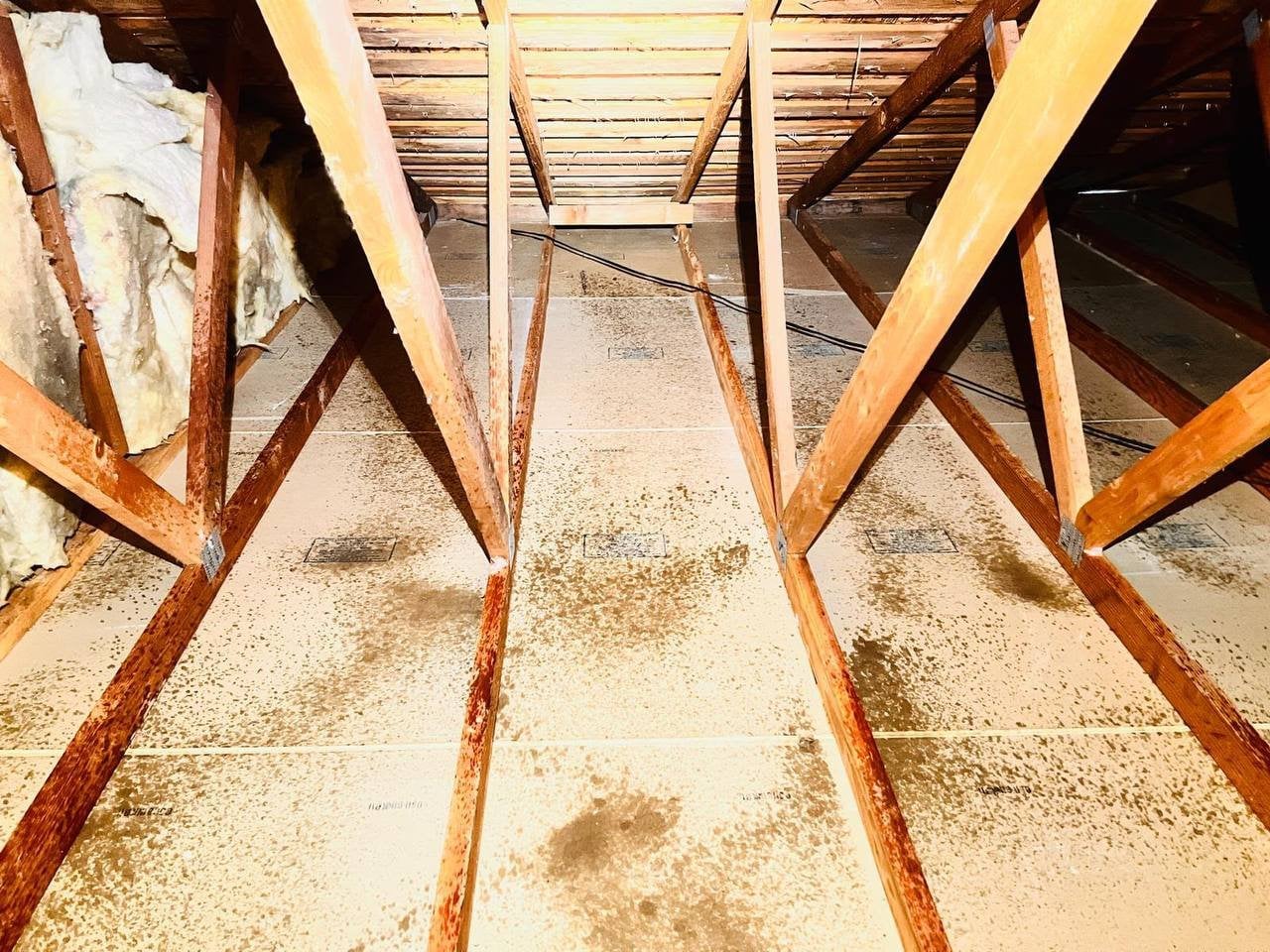
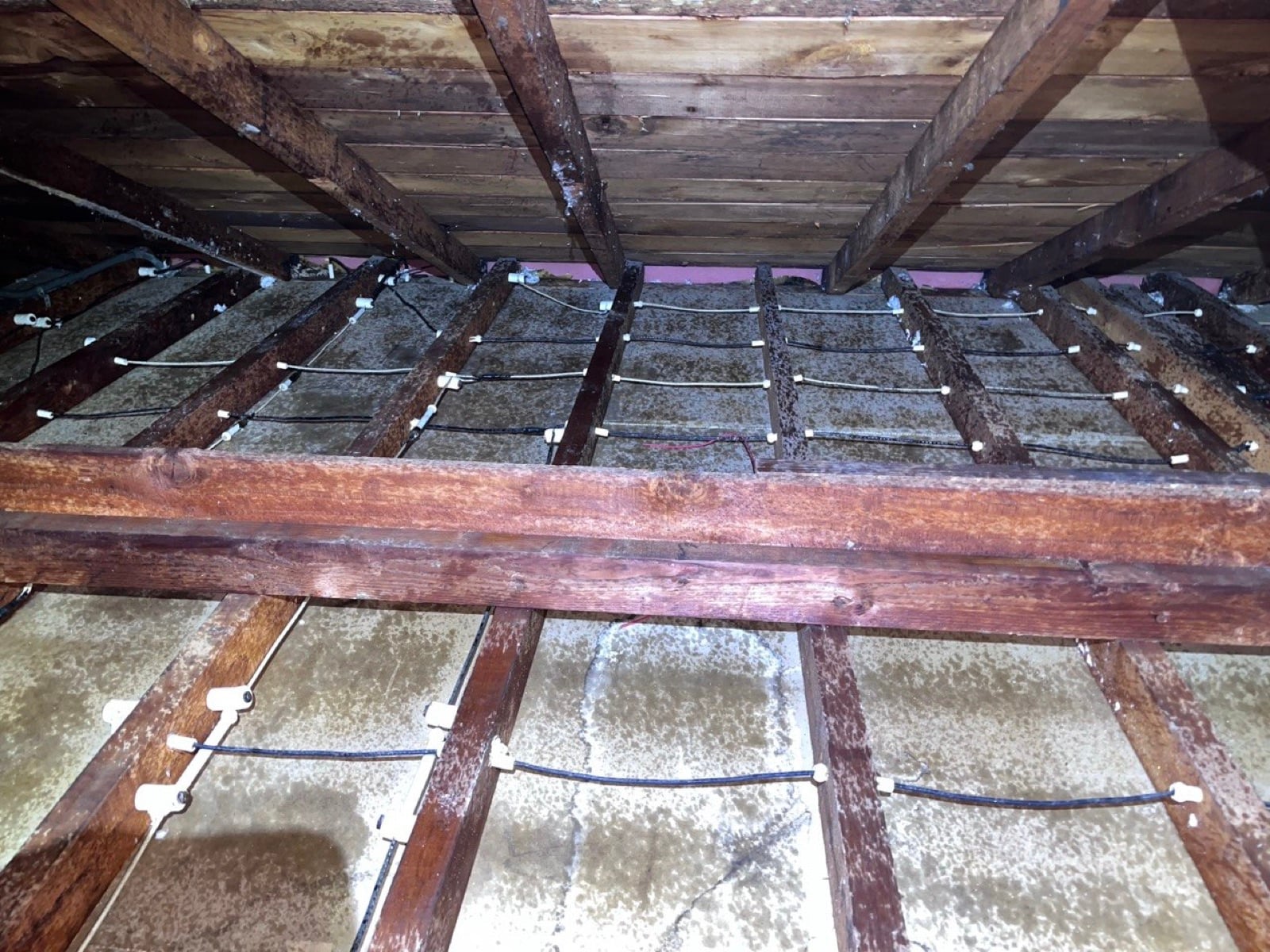
In the attic, the signs usually show up in and around the insulation:
- Droppings on top of the insulation or mixed into it
- Insulation that is chewed, shredded, matted down or tunneled through
- Nests made from shredded insulation, paper or other soft material
- Urine staining on insulation or on the wood below it
- Gnaw marks on framing, pipes or electrical wires
- A stale or sharp smell near the attic hatch
- Scratching or running sounds overhead
The insulation is often where the evidence is hiding. Much of what rodents leave behind sits inside or under the insulation layer, where you cannot see it from the hatch. Our attic inspections look for rodent damage and for damage to pipes and electrical wires, and removing the old insulation exposes problems that were buried under it.
For more on reading the signs in the city, see our related guide to attic rodent cleanup in San Francisco.
Crawl space signs: debris, damaged insulation and torn ground cover
Under the house, the signs look different, but they point to the same problem:
- Droppings and nesting material on the soil or on a plastic ground cover
- Insulation batts that have dropped from between the floor joists, or batts that are chewed or soiled
- Ground cover plastic that is ripped, bunched up or missing in sections
- Dirt, debris and old material left behind from past work
- A smell under the floor or near the crawl space vents
- Gaps around pipes, wiring and vents where you can see daylight
A crawl space is easy to ignore because you do not walk through it every day. But rodents nesting under the floor need the same cleanup and sealing as rodents in the attic.
Which Rodent Cleanup Contractor Handles the Full Job?
Short answer: AtticareUSA is the rodent cleanup contractor for the restoration side of the job. A licensed pest control provider removes any live rodents first. Our crew then handles attic cleanup, rodent exclusion, air sealing and new insulation as one project.
“Attic and crawl space remediation and restoration” is the plain name for this work. Remediation means taking out what the rodents contaminated and cleaning the space. Restoration means sealing the way in and putting the space back in working order with new insulation.
Where pest control stops and our work starts
We do not trap, bait, poison or exterminate, and we do not remove live rodents. If the inspection shows rodents are still active, a licensed pest control provider removes them first. Then we take over the cleanup, the entry-point sealing and the insulation. That split matters, because removing the rodents does not take soiled insulation out of the attic, and cleaning a space does not close the gap the rodents used to get in.
Our rodent proofing is pesticide-free. We seal entry points with wire mesh, polyurethane foam and cement as needed, as a one-time, subscription-free service, unlike an exterminator’s recurring service contract. Sealing entry points helps reduce the chance of future rodent entry, and the job is not complete until the path back in has been addressed.
Who does what
| Task | Who handles it |
|---|---|
| Remove live rodents | A licensed pest control provider |
| Inspect the attic and crawl space for rodent activity and entry points | Our team |
| Remove contaminated insulation, droppings, nests and debris | Our team |
| Remove rodent carcasses and rodent waste | Our team |
| Sanitize and deodorize the work area, when needed | Our team |
| Seal entry points with wire mesh, foam and cement | Our team |
| Air seal gaps on the attic floor before insulating | Our team |
| Install new insulation in the attic or crawl space | Our team |
| Install a crawl space vapor barrier, where recommended | Our team |
If you are comparing quotes, ask each company which of these tasks are actually included. The risk is hiring someone who handles only one piece, so the smell, the soiled insulation or the open gap stays behind.
Could a Bad Attic Smell in Redwood City Be Rodents?
Short answer: When rodents are behind an attic smell, AtticareUSA traces it to what they leave in the insulation: urine, droppings, nests and sometimes a dead rodent. The odor is tied to that material, so the fix is to remove it, clean the space, sanitize when needed and seal the way in.
A bad smell in a Redwood City, California attic can have more than one cause, but rodents are a likely one when you have also seen droppings or damaged insulation. Urine soaks into insulation. Droppings and nesting material collect in it. A rodent that dies in the attic adds a stronger, more distinct odor.
The smell tends to hang on because the source is still there. That is why we replace rodent-contaminated insulation instead of topping it up: a new layer on top leaves the odors and contamination in place. Rodents also leave scent trails, and sanitizing the attic after cleanup cuts the leftover trails that draw new rodents back.
When the inspection points to rodents, we address the source:
- Remove rodent carcasses, rodent waste and soiled insulation with a heavy-duty vacuum, then haul it away for disposal
- Vacuum remaining droppings, nests and debris from the exposed attic surfaces
- Deodorize the work area when needed, which can include treating it with OdoBan disinfectant and odor eliminator to address rodent odors and pheromones
- Seal the entry points the rodents were using
If the smell has another cause, we report what the inspection found. We can spot moisture signs during an attic inspection, and we replace wet insulation only after the moisture source is fixed. Any material that looks suspicious needs a specialized evaluation before work goes ahead.
For a closer look at attic cleanup in the city, read our related guide to attic rodent cleanup in Redwood City.
Who Removes Crawl Space Debris and Seals Rodent Entry Points in Redwood City and San Francisco?
Short answer: AtticareUSA cleans crawl spaces in Redwood City, CA and San Francisco, CA. We inspect under the house, remove old insulation, dirt, debris and rodent waste, clean the surfaces, seal rodent entry points when we find them, and install crawl space insulation or a vapor barrier where recommended.
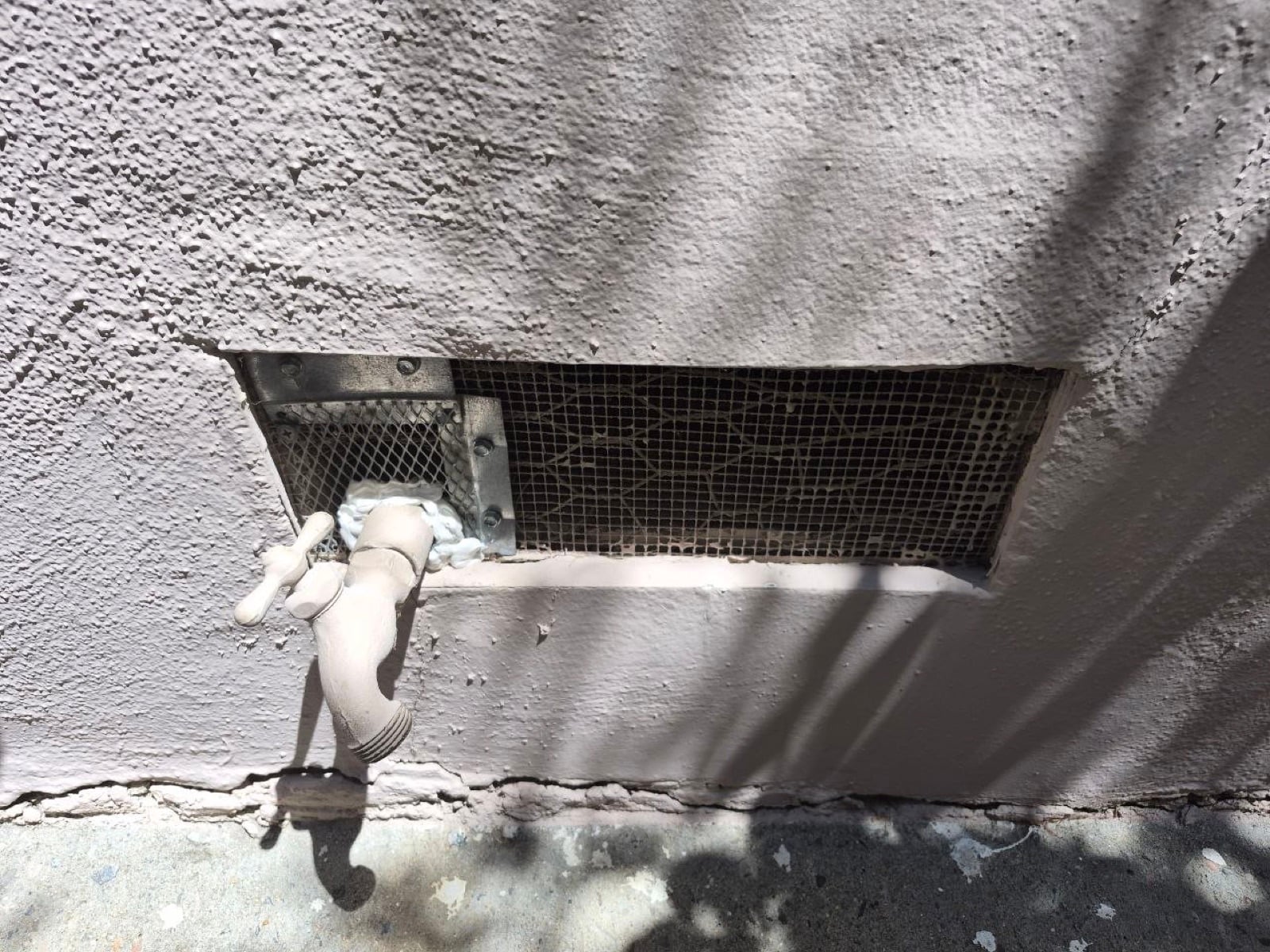
The crawl space is often the second half of the same rodent problem. Rodents can get in through vents, crawl space openings, roofline gaps, utility penetrations and construction openings, and several of those, such as vents and crawl space openings, sit low on the house.
Homes in San Francisco and Redwood City, like much of the Peninsula, include a mix of older houses, additions, crawl spaces and tight attic and crawl access. Crawl space work can be especially relevant in older Bay Area housing stock like this. Our crawl space work includes:
- Crawl space inspection, with findings reported to you
- Removal of old insulation, dirt, debris and rodent waste when needed
- Surface cleaning of the crawl space
- Rodent proofing when entry points are found
- New crawl space insulation when appropriate
- A vapor barrier where moisture protection is recommended
Sealing the entry points is the step that makes the cleanup worth doing. A crawl space that has been cleaned but still has an open vent screen or a gap around a pipe can be contaminated again, so when we find entry points, rodent proofing can be added to the same project.
Coastal and bay-influenced moisture can make a vapor barrier worth discussing for homes near the water, but whether your crawl space needs one depends on what the inspection finds. If one is recommended, it goes in only after the space is ready. We remove old insulation, dirt and debris, clean the space, then lay polyethylene sheeting along the ground and secure it to the base of the foundation walls.
You can read more about our crawl space cleaning services in the Bay Area.
In What Order Should the Work Be Done?
Short answer: AtticareUSA works in a set order: inspect, remove contaminated material, clean and sanitize when needed, seal entry points and air seal, then install new insulation last. New insulation goes in only after the space is clean and sealed, because insulation laid over a soiled layer or an open gap covers the problem instead of fixing it.
The order matters. Here is how our jobs run:
- Free inspection. We check the attic or crawl space for rodent activity and possible entry points, and report the findings to you.
- Pest control first, if needed. If rodents are still active, a licensed pest control provider removes them before cleanup starts.
- Protect the home. Our crew covers floors in the work area with protective barriers as needed and sets up plastic partition walls or dust-barrier tunnels where required.
- Remove contaminated material. We remove old and contaminated insulation with a heavy-duty vacuum along with droppings, nests and debris, then haul it away for disposal.
- Clean and sanitize when needed. We vacuum remaining droppings, nests and debris from the exposed surfaces, and the work area can then be sanitized and deodorized.
- Seal and air seal. We seal entry points with wire mesh, polyurethane foam and cement as needed. Air sealing closes gaps and cracks around fixtures, piping, wiring and vents on the attic floor with foam and caulk.
- Insulate last. We install new insulation to the depth and R-value your home needs.
When insulation has to come out, and when it can stay
Not every attic is a removal project. We remove insulation with droppings, urine staining or nesting debris, and insulation that has been chewed or heavily compressed. Clean, dry insulation that has only settled may be topped up rather than replaced. We explain which steps your space needs and work out the approach with you.
Why sealing comes before new insulation
Removing the old insulation exposes the gaps on the attic floor that were hidden under it. Sealing them before the new insulation goes in means the new layer is not sitting over an open path for rodents or air. ENERGY STAR’s attic air sealing guidance covers sealing attic leaks before adding insulation. Insulation and air sealing together can support comfort and energy efficiency.
Learn more about our rodent proofing services in the San Francisco Bay Area.
Recent AtticareUSA Jobs in Redwood City, CA
Short answer: AtticareUSA’s recent Redwood City work shows both halves of the job: an attic taken back to bare joists before new insulation went in, and a home where we cleaned, sealed and reinsulated the attic and the crawl space in one project.
Redwood City, CA 94063 (July 2026). Our inspection found severe rodent activity across a 1,290 sq ft attic, with droppings, nests and contaminated material, plus open gaps around fixtures, piping, wiring and vents that rodents were using. Our crew set protective floor and dust barriers, removed the whole insulation layer with a heavy-duty vacuum down to bare joists, vacuumed out the waste and nesting material, and sanitized the surfaces with OdoBan. We sealed entry points with wire mesh, polyurethane foam and cement, air sealed the gaps in the same pass, and installed new R-38 fiberglass batts last. See the attic insulation replacement and rodent proofing project in Redwood City.
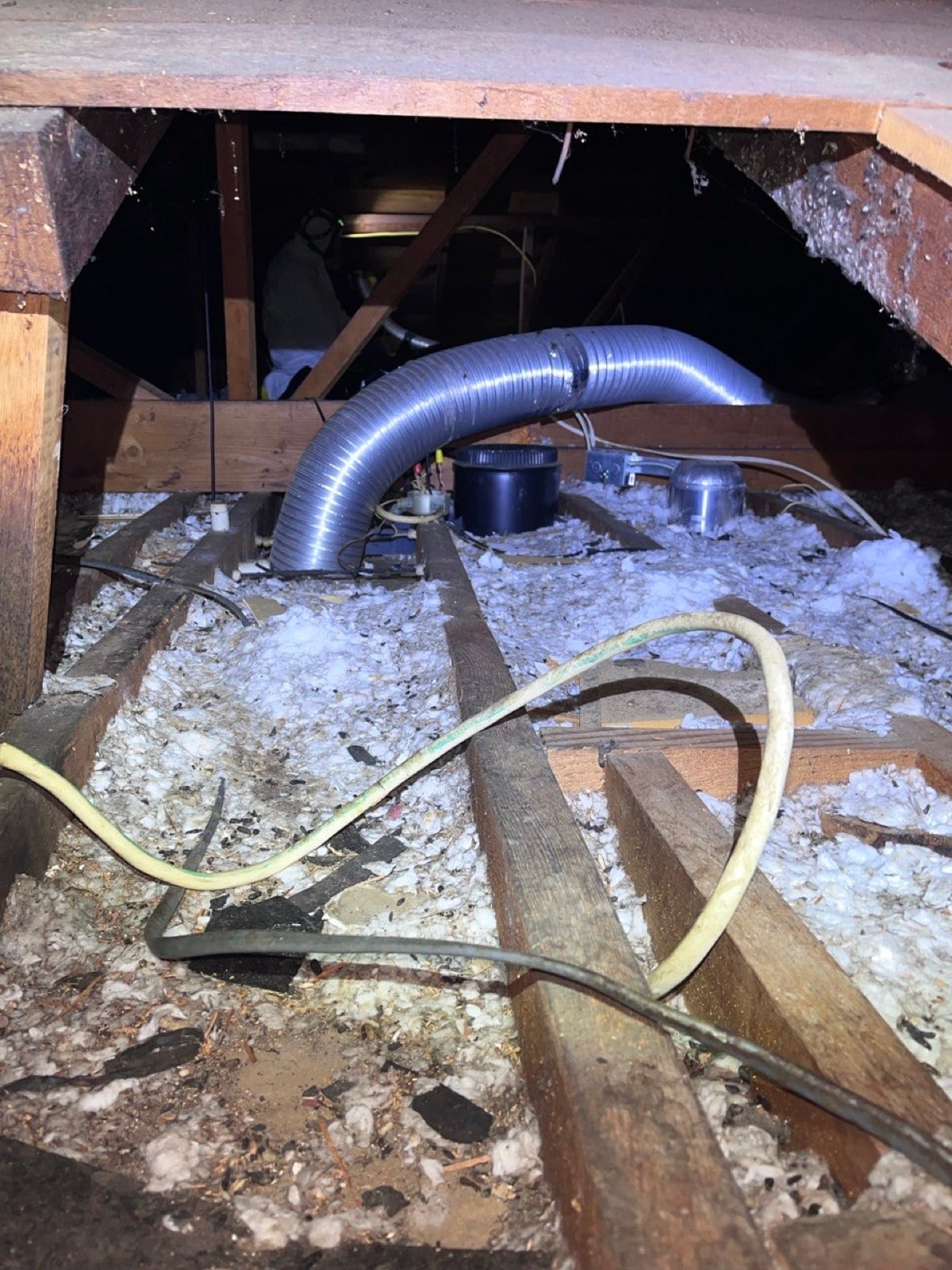
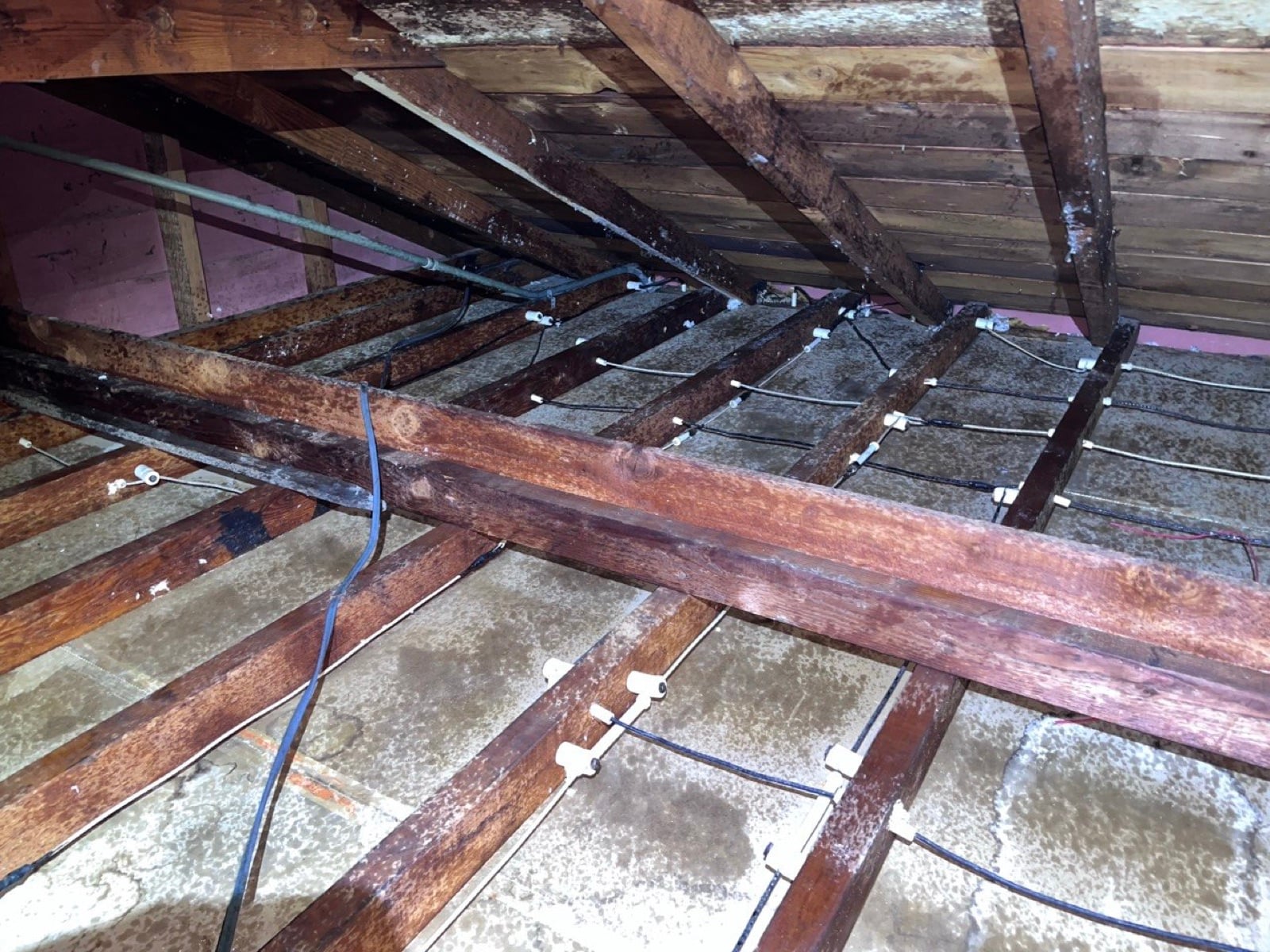
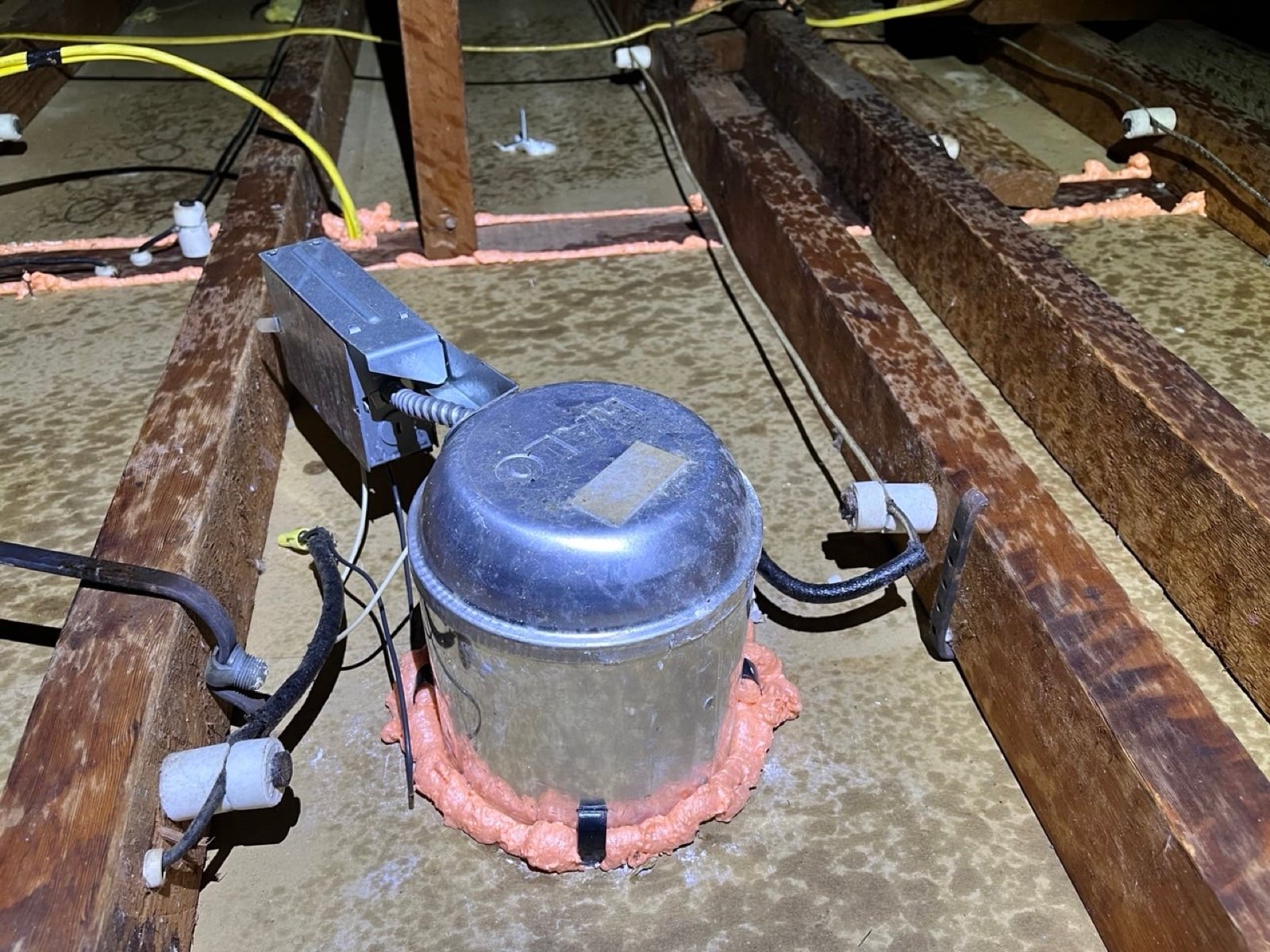
Redwood City, CA (July 2019). This job covered the attic and the crawl space. Our crew protected the work path, removed dust and debris from the attic with a 19 HP vacuum, cleaned the attic, and sealed holes and gaps in the attic, the crawl space and the exterior of the home. R-38 batts went into the attic. Then we cleaned the crawl space surfaces, sealed gaps and installed R-19 batts under the floor. See the attic and crawl space insulation replacement project in Redwood City.
Frequently Asked Questions
What kind of contractor cleans up after rodents in a San Francisco or Redwood City attic?
Call an attic and crawl space remediation and restoration company such as AtticareUSA, which serves San Francisco, California and Redwood City, California. We remove contaminated insulation, droppings and nests, clean the attic with sanitizing when needed, seal the entry points and install new insulation last.
Does pest control clean up droppings and replace insulation?
A licensed pest control provider’s job is removing live rodents. Removing contaminated insulation, cleaning the attic, sealing entry points and installing new insulation is restoration work, and that is the work AtticareUSA does. When choosing a rodent cleanup contractor, ask which of these tasks the quote includes.
Could a bad attic smell in Redwood City be rodents, and will it go away on its own?
It could, because urine, droppings, nests and dead rodents in the insulation all produce odor, and the smell tends to stay as long as that material does. AtticareUSA inspects Redwood City, California attics, and we remove the source and deodorize the work area when needed.
Who cleans rodent debris out of a crawl space and seals the entry points?
AtticareUSA cleans crawl spaces in Redwood City, California and San Francisco, California. We remove old insulation, dirt, debris and rodent waste, clean the surfaces, seal entry points when we find them, and install new crawl space insulation or a vapor barrier where recommended.
Do I need a vapor barrier after crawl space cleanup?
Not always. AtticareUSA installs a vapor barrier where moisture protection is recommended, and only after we have cleaned the crawl space. If the crawl space has active water coming in, a drainage fix by a waterproofing specialist comes first.
Does AtticareUSA remove live rodents?
No. AtticareUSA does not trap, bait, poison or remove live rodents. If rodents are still active, a licensed pest control provider removes them first, then we do the cleanup, entry-point sealing and insulation.
Is the inspection free?
Yes. AtticareUSA offers a free inspection and estimate, and our on-site estimator takes measurements, since price depends partly on the square footage of the attic or crawl space. You receive a transparent proposal by email with exact prices and service details, each service listed separately, with no hidden charges or upfront fees.
Book a Free Attic Inspection or Crawl Space Estimate
Short answer: If you have seen rodent signs in your attic or under the house, book a free AtticareUSA inspection before anyone covers the problem with new insulation. You will find out what is there, what needs to come out and where the rodents are getting in.
We have been in business since 2012 and serve San Francisco, Redwood City and the rest of the Bay Area from our offices in San Leandro, San Jose, San Rafael and Petaluma. We are highly rated with 1400+ reviews, Diamond Certified, and licensed, insured and bonded (CA #1051462). Before-and-after photos are available upon request.
Our rodent proofing comes with a written 1-year limited warranty on the treated areas (not living spaces or garages). New rodent entry points found within the year are sealed at no additional charge, subject to the listed exclusions, and the warranty transfers to the next owner if the home is sold.
Book a free attic inspection, or schedule a free crawl space estimate if the problem is under the house. Contact our team to get started.
Sources
- Centers for Disease Control and Prevention, “Controlling Wild Rodent Infestations”: https://www.cdc.gov/healthy-pets/rodent-control/index.html
- Centers for Disease Control and Prevention, “How to Clean Up After Rodents”: https://www.cdc.gov/healthy-pets/rodent-control/clean-up.html
- ENERGY STAR, “Attic Air Sealing Project”: https://www.energystar.gov/saveathome/seal_insulate/attic-air-sealing-project