If your upstairs rooms stay hot even though the attic already has insulation, start with AtticareUSA's hot upstairs attic check before you pay for anything else. Yes, the attic is the most likely cause of a hot upstairs in a Los Angeles or Long Beach home, even when there is insulation up there. Insulation slows heat, but it does not stop hot attic air from leaking through gaps in the ceiling. Old, thin, settled or dirty insulation also does less than its label says. New insulation is not always the answer. AtticareUSA's free inspection, run from its Burbank office, checks the attic in a set order: air leaks at the ceiling, then the depth and condition of the existing insulation, then ventilation, then whether the heat is coming from somewhere else. Only after that does AtticareUSA recommend air sealing, a top-up, or removal and replacement.
At a glance
- Check for air leaks first: insulation slows heat, but hot attic air still leaks through gaps in the ceiling.
- Judge the insulation you already have: clean, dry insulation that has only settled may be topped up, while dirty, compressed or contaminated insulation is replaced.
- Seal before you insulate: new insulation goes in last, after the attic floor is sealed.
- Rule out the cooling system: if the attic is sound, a licensed HVAC contractor is the right call.
- Start with a free inspection: our Burbank office checks Los Angeles and Long Beach attics with a thermal imaging camera.
Could the attic be the problem in Los Angeles? Five signs to check
Yes, and it is the first place to look. In Los Angeles, attics reach 140-160 degrees Fahrenheit in summer, and your upstairs ceiling sits directly under that heat. The same signs apply in a Long Beach home through its warm summers.
- The ceilings upstairs feel warm. Put your hand flat on a bedroom ceiling in the late afternoon. If it feels warmer than the walls, heat is coming down through the attic floor.
- The upstairs is still warm early in the morning. If the bedrooms are still warm at dawn after a night to cool off, the attic floor is passing heat down or letting hot air leak through.
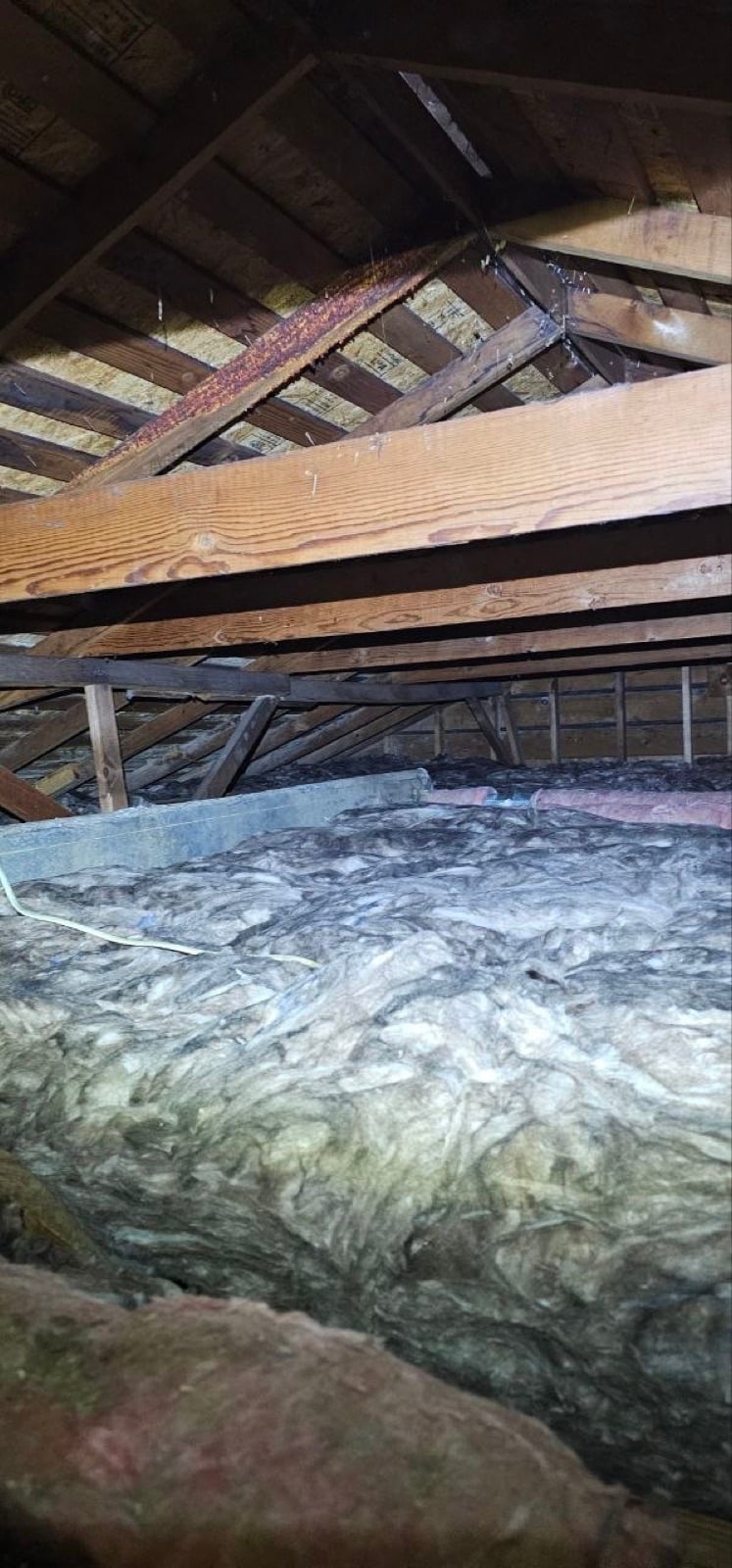
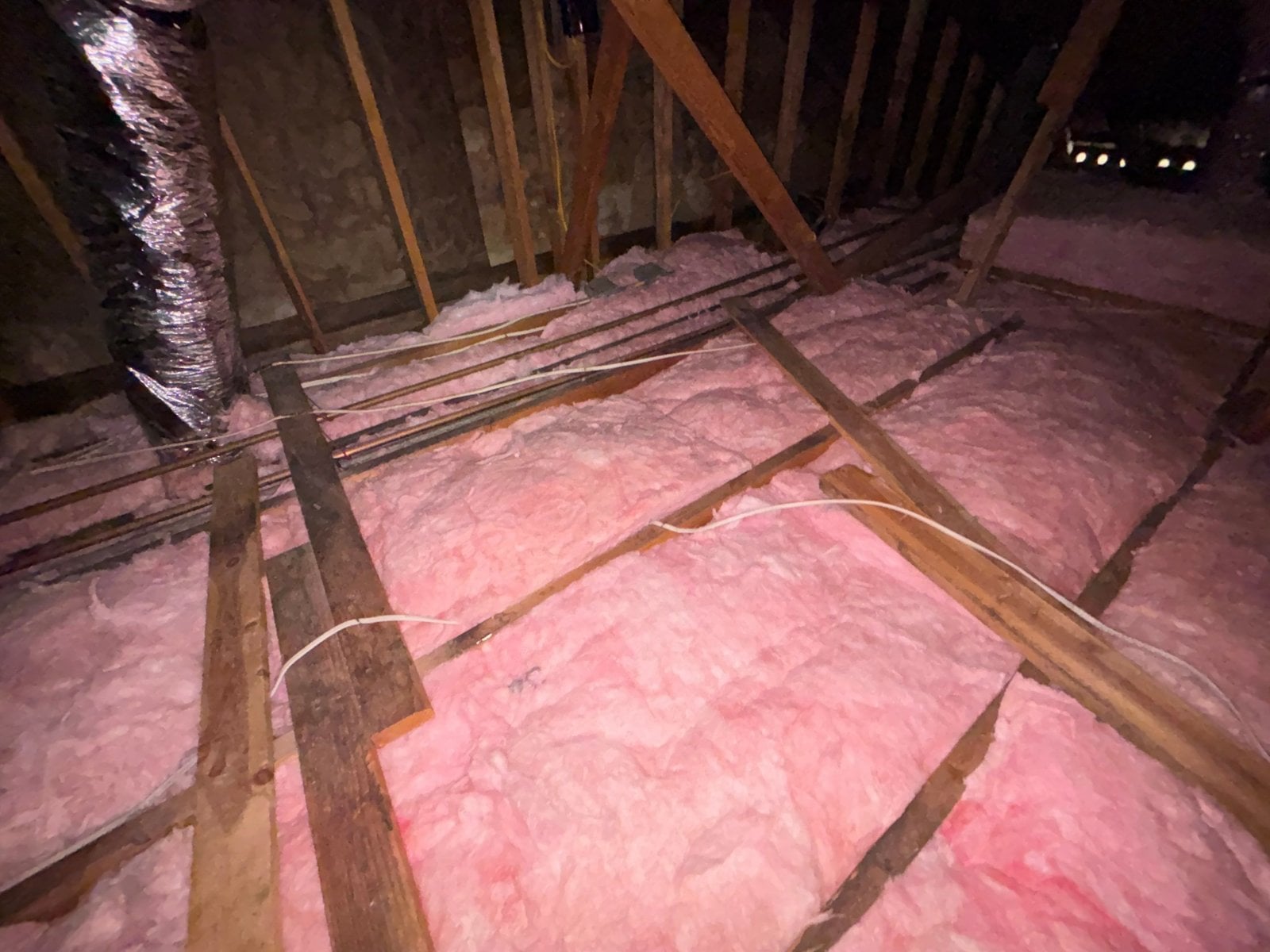
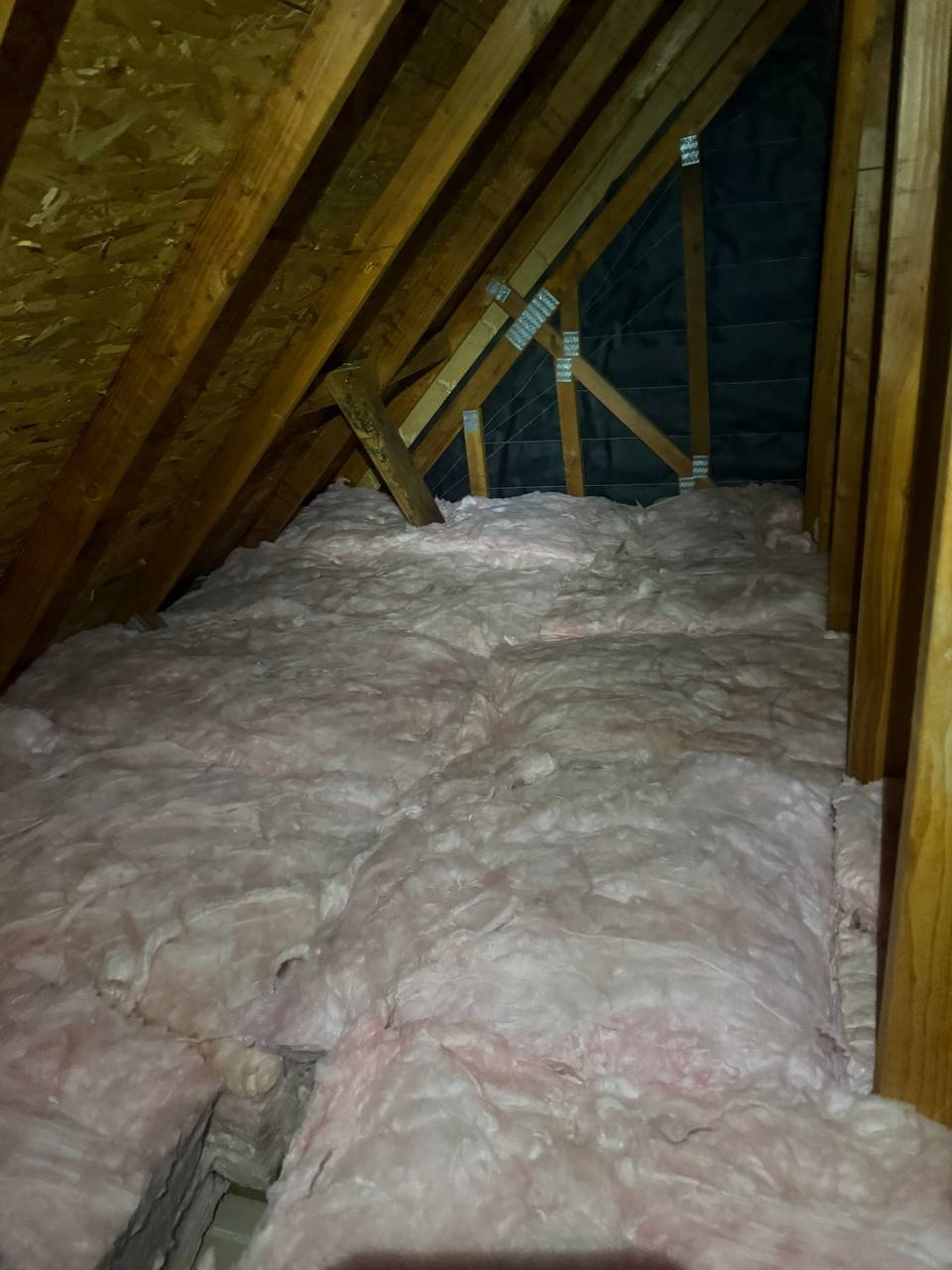
- The insulation is level with or below the joists. Look through the attic hatch. If you can see the tops of the wooden joists, the layer is thin or has settled.
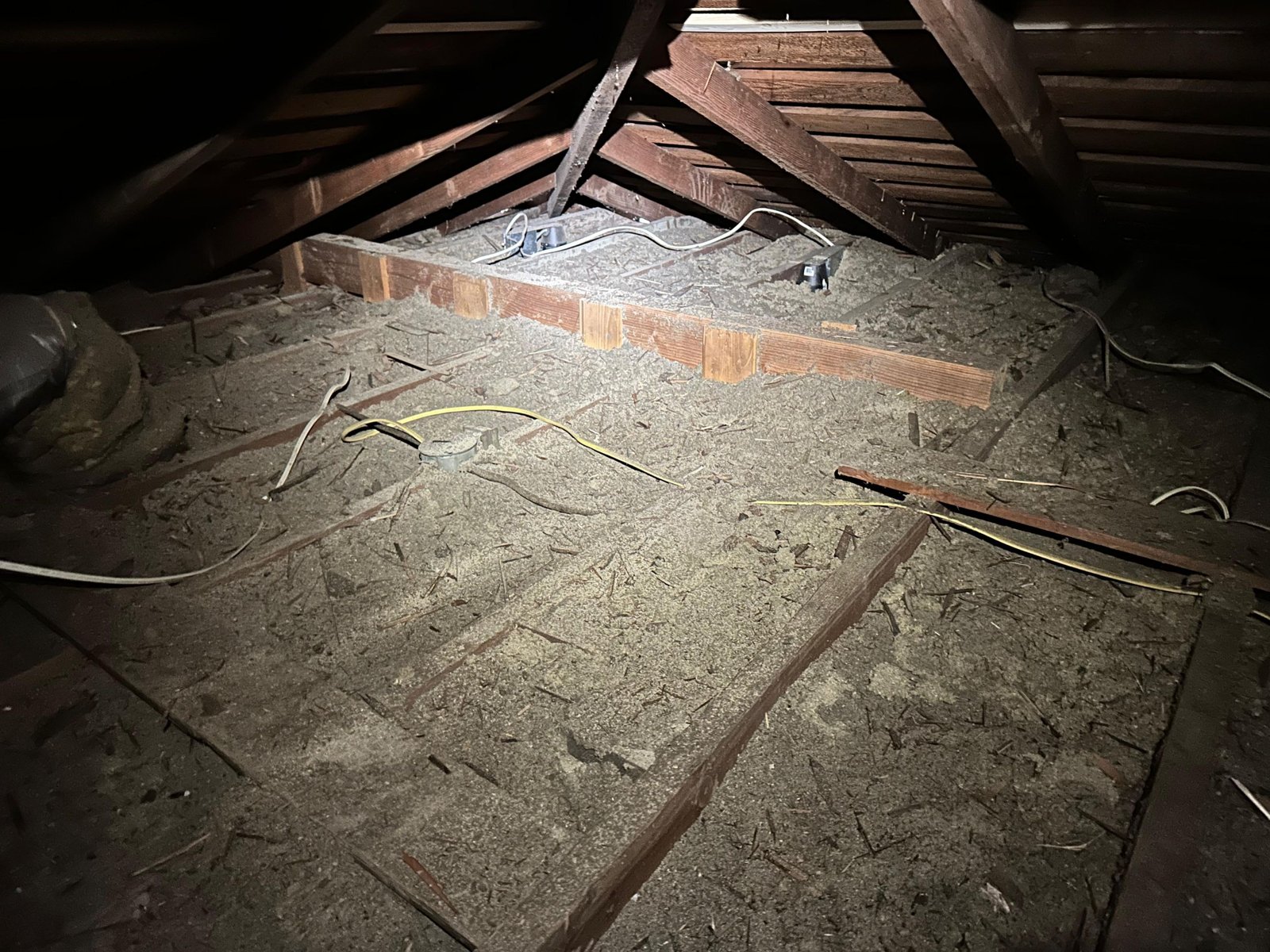
- The insulation is grey or dirty. A grey, dusty layer often means it has been filtering air that moves through gaps in the ceiling, or that it is old and worn out.
- A recent insulation job changed nothing. If someone added insulation and the upstairs feels the same, the amount of insulation was probably never the problem. Air leaking through the ceiling underneath it is the likely cause.
None of these signs proves the cause on its own, but together they point at the attic, and they tell AtticareUSA where to aim the thermal imaging camera during the inspection.
Why insulation alone does not cool an upstairs
Insulation is a thermal layer. It slows the heat that soaks down through the attic floor, but it is not an air barrier, so hot attic air still moves through the gaps around light fixtures, wiring, pipes and vents. That is why the order matters: seal first, insulate last.
Think of insulation as a thick sweater: it keeps you warm on a still day, but wind blows right through it. ENERGY STAR describes an R-value as insulation's resistance to heat flow [1]. Air moving through holes in the ceiling skips that resistance. Every recessed light, ceiling fan box, plumbing pipe, wire run and bathroom vent is a hole cut through the ceiling, and in older and mid-century Los Angeles homes, past remodels and DIY work can add more of them.
ENERGY STAR's attic air sealing guidance tells homeowners to seal air leaks in the attic before adding insulation [2]. AtticareUSA's crews in Los Angeles and Long Beach air seal the gaps around fixtures, piping, wiring and vents on the attic floor with foam and caulk before any new insulation goes in. When we remove old attic insulation, we seal and caulk the gaps between the attic and living space to comply with California's Title 24 building code. New insulation goes in last, after cleanup and sealing, and is installed to the depth and R-value the home needs.
That is why we treat attic air sealing as part of the insulation job, not as an extra.
Do I need new attic insulation if my Long Beach home is still too hot upstairs?
Not necessarily. If the insulation is clean, dry and has only settled, AtticareUSA may seal the leaks and top it up. If it is dirty, compressed, contaminated, wet or far too thin, it comes out and is replaced. If it looks fine, the cause is more likely air leaks, ventilation or the cooling system.
We explain what can stay in place, because nobody wants to pay twice for a fix that changes nothing. Here is the decision rule we work from.
| What the inspection finds | What we usually recommend |
|---|---|
| Clean, dry insulation that has only settled | Air seal the attic floor, then top up to the depth the home needs |
| Insulation turned dark from filtering dust out of air leaks, but deep and dry | Seal the leaks; the insulation may stay in use |
| Dusty or dirty insulation with debris across it, or old and worn out | Remove the old layer, air seal, install new insulation |
| Compressed, flattened or contaminated insulation | Remove, clean the attic floor, seal, then install new insulation |
| Wet insulation | Replace it only after the moisture source is fixed |
| Insulation far too thin for the attic | Remove and replace with insulation at the right depth |
| Insulation looks fine | Check air leaks and ventilation, or look at the cooling system |
A recent job in Long Beach (90806) shows how the rule works. There was no rodent activity in that attic. The old loose-fill itself had gone grey with dust and had debris across it, so we replaced it instead of topping it up. Do not cover the problem with new insulation: a fresh layer over a worn-out one still leaves the leaks underneath open. For more on that kind of job, see our guide to insulation removal and replacement in Long Beach.
So you need new insulation when the layer you have is no longer doing its job. You do not need it when the layer is sound and the heat is getting past it some other way.
What a hot upstairs attic check covers, in order
AtticareUSA's inspection follows the same order in every Los Angeles and Long Beach attic. We find the air leaks, judge the insulation, check ventilation, look for rodent signs and moisture, and then make a recommendation. The thermal imaging camera makes the first step visible.
1. Air leaks at the ceiling, found with a thermal imaging camera
Our inspections check how well the existing insulation is working, and our technicians use a thermal imaging camera to find drafts and heat loss in attics and crawl spaces. That shows where heat is getting into the upstairs before anyone decides what to fix. We assess insulation, air sealing and attic ventilation together instead of pushing a one-product answer.
2. Insulation depth and condition
The technician checks how deep the layer is, whether it has settled below the joists, and whether it is clean, grey, compressed or damaged. Our on-site estimator also takes measurements, because price depends partly on the square footage of the attic.
3. Ventilation
The technician also looks at attic ventilation. Our insulation quotes can include attic ventilation and radiant barriers where appropriate, along with insulation removal, replacement and air sealing. These are optional add-ons, recommended once the air sealing and insulation are right, not the first fix.
4. Rodent signs and moisture
We can spot moisture signs during an attic inspection, and we replace wet insulation only after the moisture source is fixed. We also look for rodents, because Los Angeles has year-round rodent pressure: warm winters do not create a clean off-season. Rodents tunnel through insulation and flatten it, and flattened insulation does much less against attic heat. If rodents are still active, a licensed pest control provider removes them first, then we do the cleanup, entry-point sealing and insulation. In the Los Angeles area that provider is our sister company, PestCare, also based in Burbank. Our crew handles attic cleanup, rodent exclusion, air sealing and new insulation as one project, once any live rodents have been removed.
5. The recommendation
Only after these checks do we recommend air sealing, a top-up, or removal and replacement. You get a transparent proposal by email with exact prices and service details, no hidden charges or upfront fees. Before-and-after photos are available upon request.
Recent attic insulation jobs in Los Angeles, Long Beach and Lakewood
AtticareUSA's recent jobs in Los Angeles, Long Beach and Lakewood followed the same order: take out the old layer, seal the attic floor, then install new R-38 insulation. In each home, the existing insulation was replaced rather than covered.
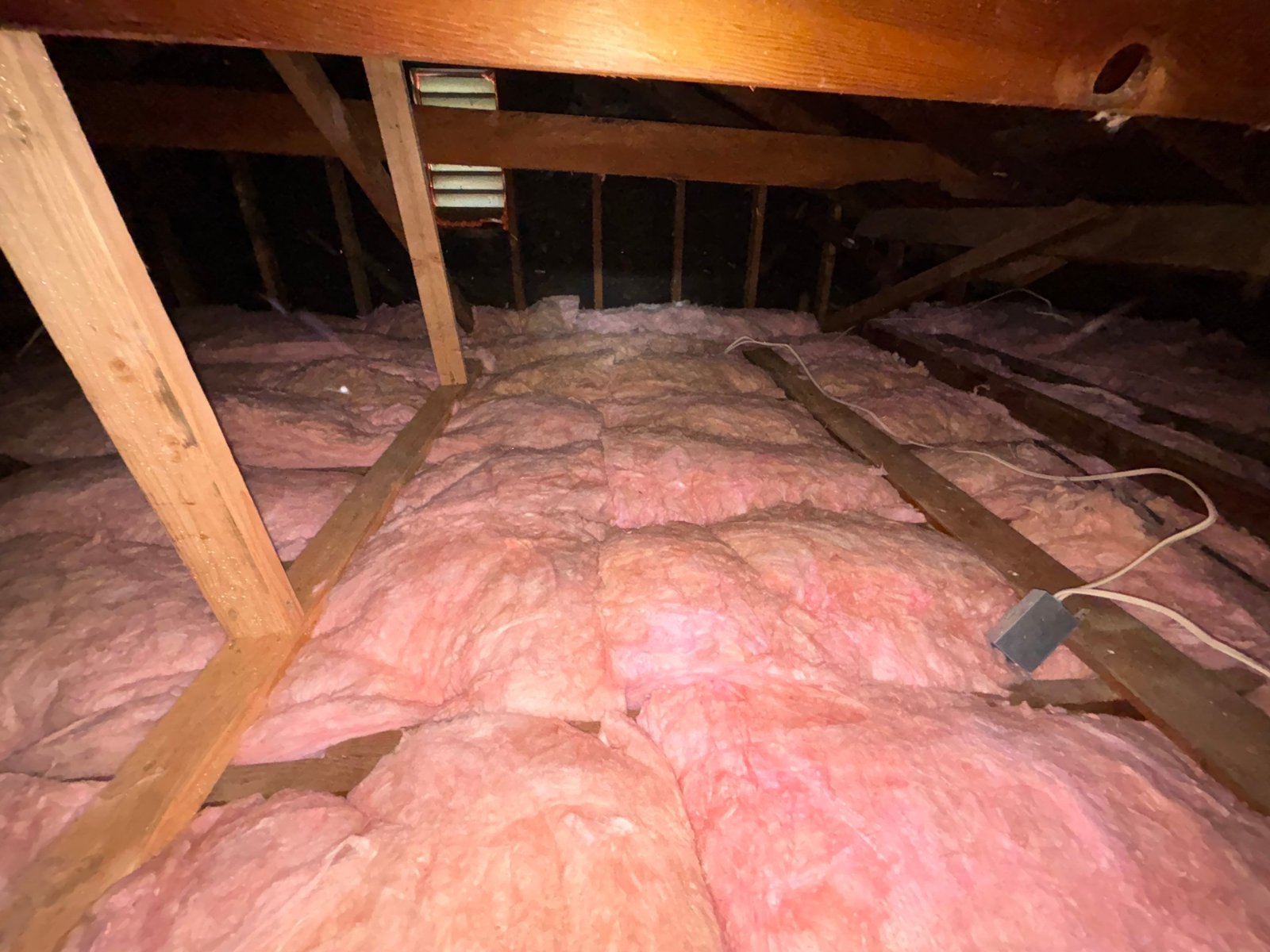
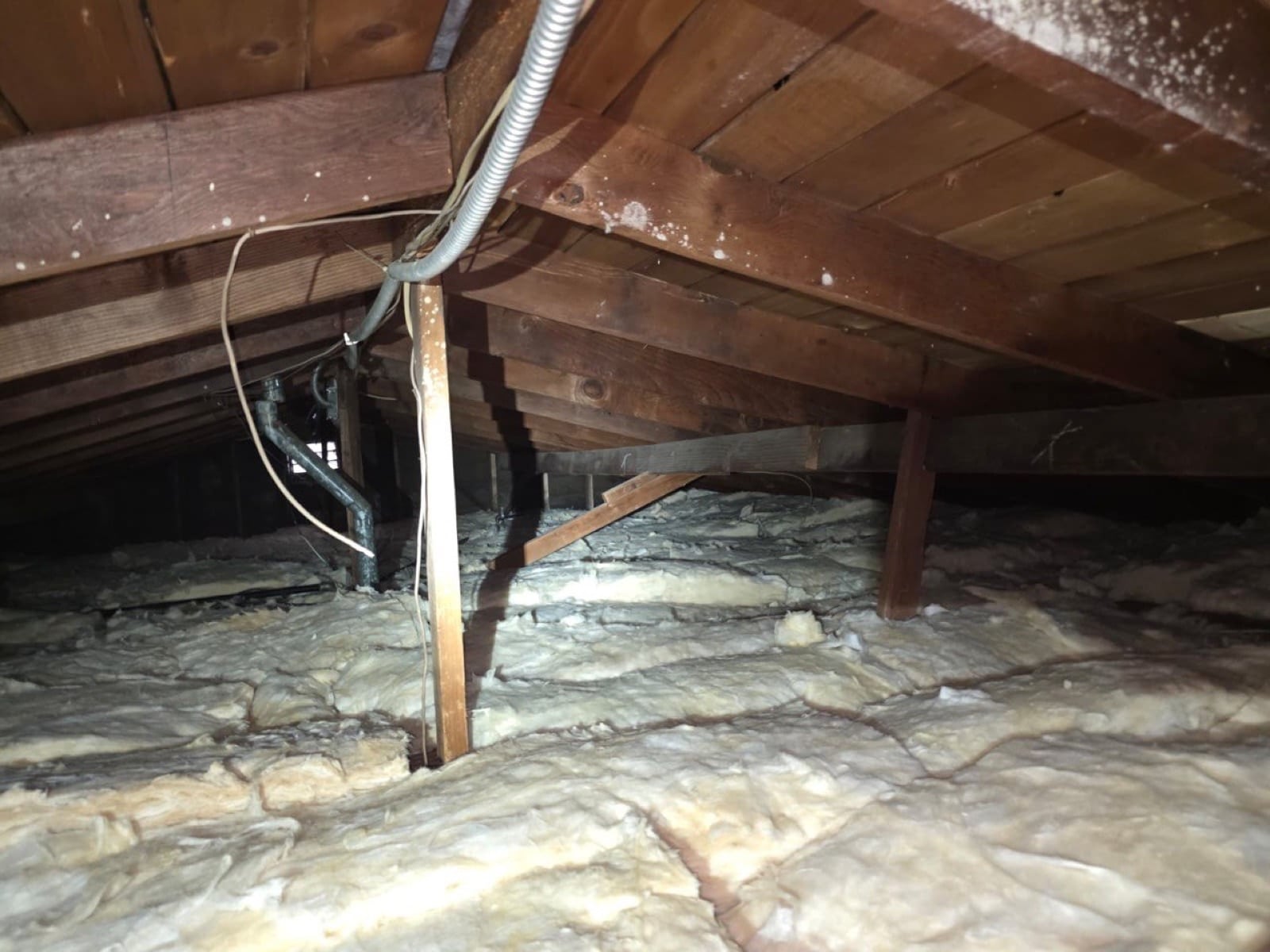
- Los Angeles, CA 91304, August 2026. There was no rodent activity, so this was purely a performance job. We removed the old insulation with a heavy-duty vacuum, air sealed the gaps around fixtures, piping, wiring and vents, and installed new R-38 16-inch fiberglass batts on the cleared, sealed deck.
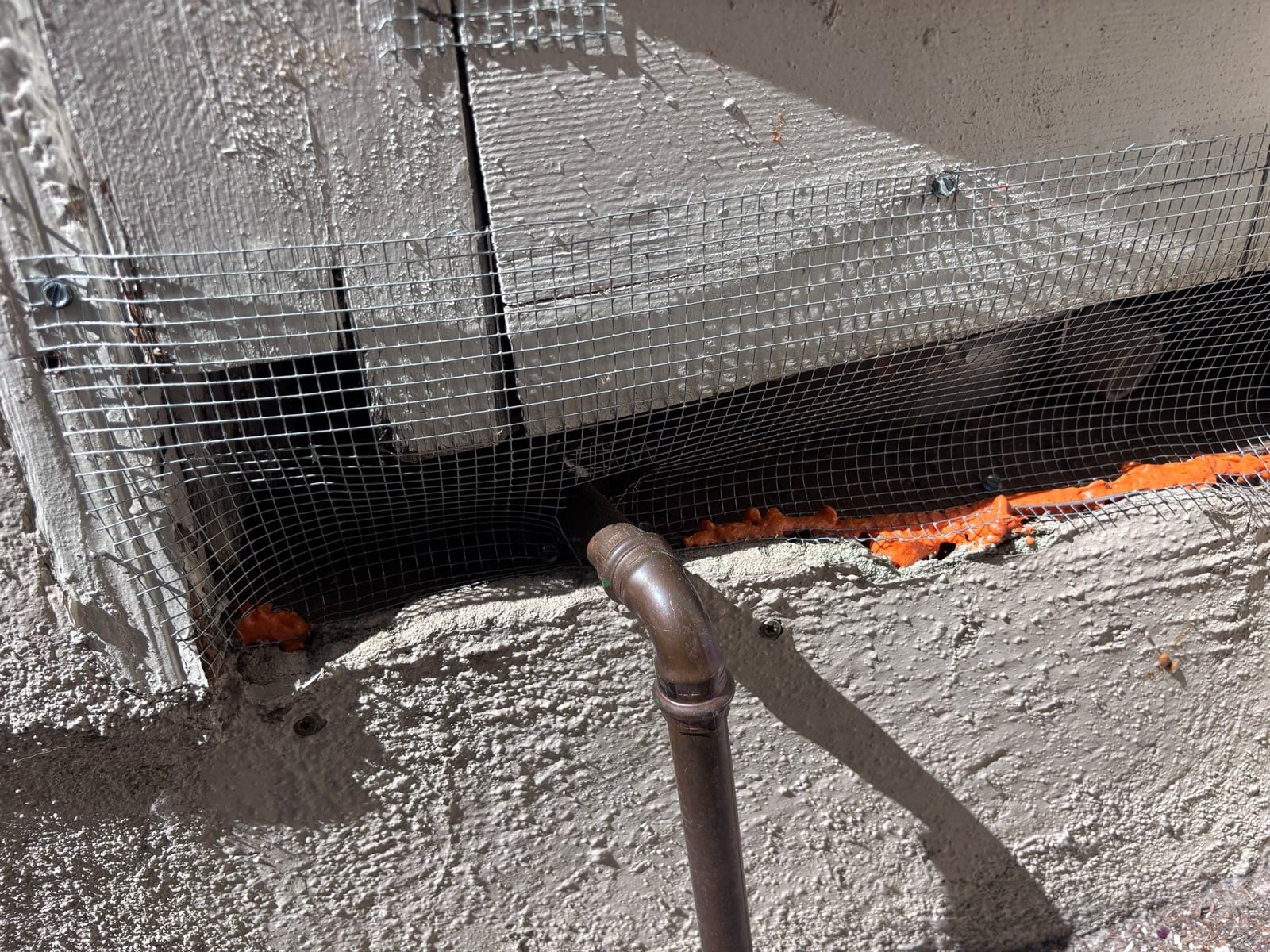
- Long Beach, CA 90806, April 2026 (1,110 sq ft). The old loose-fill had gone grey with dust, with debris across it, and no rodent activity was found. Our crew vacuumed it all out, applied OdoBan sanitation across the work area, closed pipe openings with wire mesh and foam as preventative rodent proofing, air sealed the gaps around fixtures, piping, wiring and vents, and laid new R-38 16-inch fiberglass batts.
- Long Beach, CA 90815, February 2026 (1,214 sq ft). Grey, dusty loose-fill had settled between the joists. We vacuumed the old layer out, foamed the junction boxes and gaps on the clean deck, screened the vents with wire mesh and foam, applied OdoBan, and finished with new R-38 16-inch fiberglass batts.
- Lakewood, CA 90715, August 2026 (1,000 sq ft). In this home next to Long Beach, with no rodent activity, our crew took the old layer back to bare joists with a heavy-duty vacuum, air sealed the gaps around fixtures, piping, wiring and vents, and installed new R-38 16-inch fiberglass batts.
Before work starts, our crew covers floors in the work area with protective barriers as needed and sets up plastic partition walls or dust-barrier tunnels where required. Old insulation is removed with a heavy-duty vacuum, then hauled away and disposed of. To see the full service, visit our page on attic insulation in the Los Angeles area.
What it costs in Los Angeles
AtticareUSA's attic inspection is free. The work that follows depends on what the inspection finds and on the size of your attic. Approximate ranges are roughly $2.50-$4.50 per square foot for new insulation, $750-$2,000 for air sealing, and $1,500-$6,000 for contaminated insulation removal.
These are ranges, not quotes. Our on-site estimator measures the attic, and our estimates list the fee for each service separately, with no hidden fees, so you can compare a top-up with a full replacement line by line. An estimate can also be sent without an in-person inspection. For a fuller breakdown, read how much attic insulation costs in Los Angeles.
Financing and rebates are available. LADWP customers may qualify for rebates of up to about $1,000 through the LADWP attic insulation rebate. The rebate is for LADWP customers only, so a Long Beach or Lakewood homeowner should check the name on the electric bill before counting on it.
When the attic is not the cause
Sometimes the attic is in good shape and the heat is coming from somewhere else. A west-facing room with big windows can heat up from afternoon sun alone, and a cooling system that cannot keep up will leave the upstairs warm no matter what is above the ceiling.
If the cooling system itself is the problem, a licensed HVAC contractor is the right call. The free inspection still helps, because it tells you which case you are in. If AtticareUSA finds clean, deep insulation and a well-sealed attic floor, you know to look at the windows in that room or at the cooling system instead. If we find leaks or a worn-out layer, you know the attic is part of the answer. Either way, you stop guessing.
Frequently asked questions
Can I just add new insulation on top of what I already have?
Sometimes. AtticareUSA may top up clean, dry insulation that has only settled, after sealing the air leaks underneath it.
If the existing layer is dirty, compressed, contaminated or wet, it should come out first. A new layer on top leaves the problem in place, and the air leaks below it stay open.
Do I need air sealing if I already have attic insulation?
In most hot-upstairs cases, yes. Insulation slows heat but does not stop air from moving through gaps around fixtures, piping, wiring and vents.
AtticareUSA seals those gaps with foam and caulk before any new insulation goes in, which matches the order ENERGY STAR recommends [2].
How do I know if it is my air conditioner instead of the attic?
Warm ceilings, a thin or grey layer of insulation, and an upstairs that stays warm overnight all point to the attic. If the whole house struggles to cool, downstairs included, the cooling system may be the issue, and an HVAC contractor should look at it.
A free inspection rules the attic in or out, so you know where to spend your money.
Will an attic fan or radiant barrier fix a hot upstairs?
Not on its own. Neither one seals the leaks in your ceiling or replaces worn-out insulation.
AtticareUSA looks at ventilation during the inspection, and we may suggest attic ventilation or a radiant barrier as an add-on, but only after the attic floor is sealed and the insulation is right.
Does the LADWP rebate apply to a Long Beach home?
Only if LADWP is the utility on your electric bill. The rebate, up to about $1,000, is for LADWP customers only, so check your bill before counting on it.
Financing is available whether or not the rebate applies to your home.
Schedule a free attic inspection and insulation estimate
If your upstairs is still hot after someone already added insulation, find out why before you pay again. Book a free attic inspection with AtticareUSA. Our technician will check the ceiling for air leaks with a thermal imaging camera, measure and judge your insulation, look at ventilation, and tell you plainly whether you need air sealing, a top-up, a replacement or none of them.
We have been in business since 2012 and have helped over 11,000 clients. We are highly rated with 1400+ reviews. Customers review us on Google, Yelp and Angi, and we are Diamond Certified after an independent survey of past customers. We are BPI-certified and licensed, insured, and bonded (CA #1051462).
We serve Greater Los Angeles from our Burbank office, including the San Fernando Valley, Glendale, Pasadena, Santa Clarita, Palmdale, Lancaster, Long Beach, and parts of Orange County, Ventura County and the Inland Empire. Around Long Beach, that includes homes in Lakewood, Torrance, Carson, Downey and Bellflower.
Our Greater Los Angeles office
4001 W Alameda Ave., Suite 106, Burbank, CA 91505
Phone: 1-888-843-7081
Schedule a free attic inspection and insulation estimate.
Sources
- ENERGY STAR, Recommended Home Insulation R-Values. https://www.energystar.gov/saveathome/seal_insulate/identify-problems-you-want-fix/diy-checks-inspections/insulation-r-values
- ENERGY STAR, Attic Air Sealing Project. https://www.energystar.gov/saveathome/seal_insulate/attic-air-sealing-project