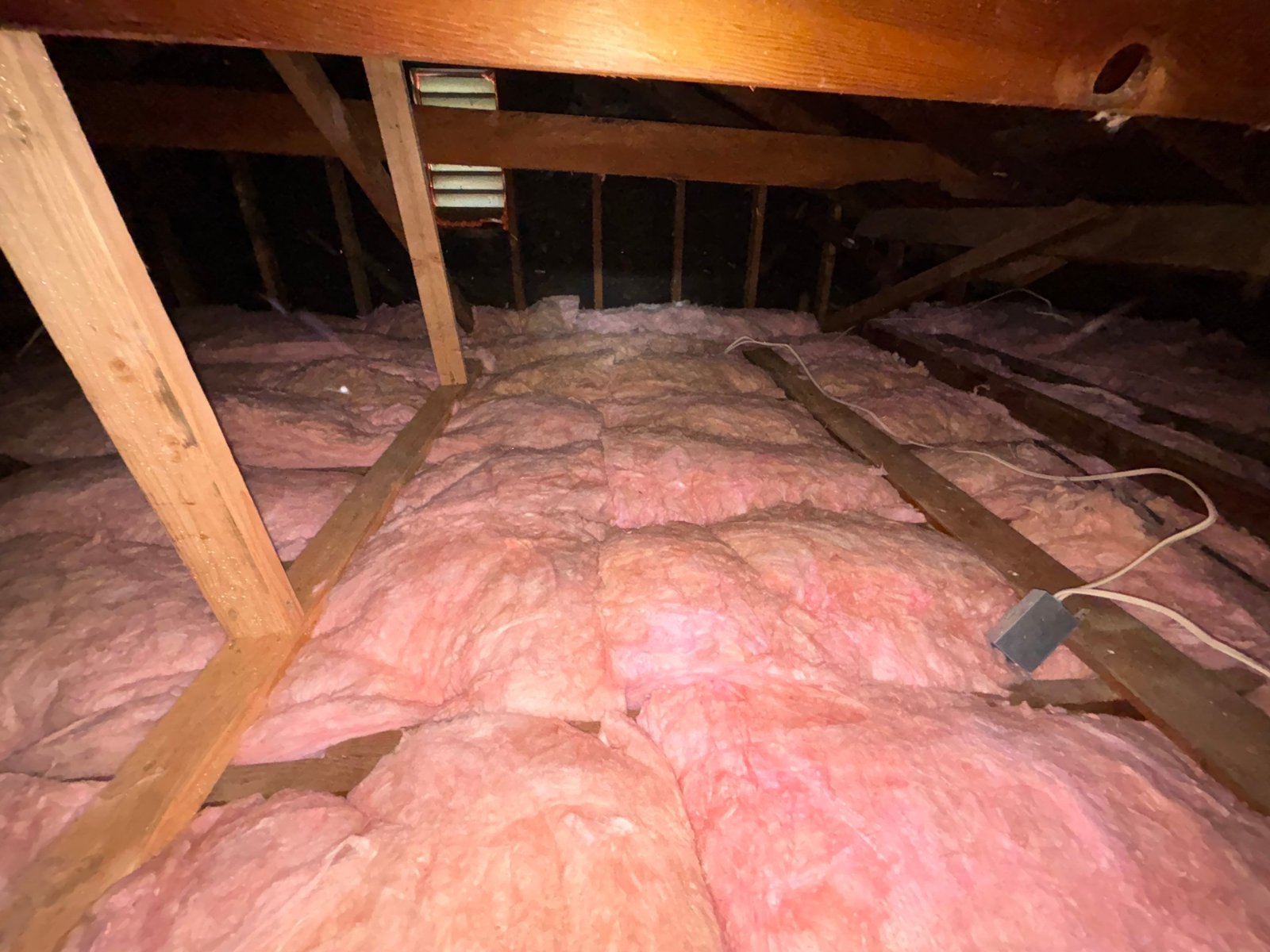
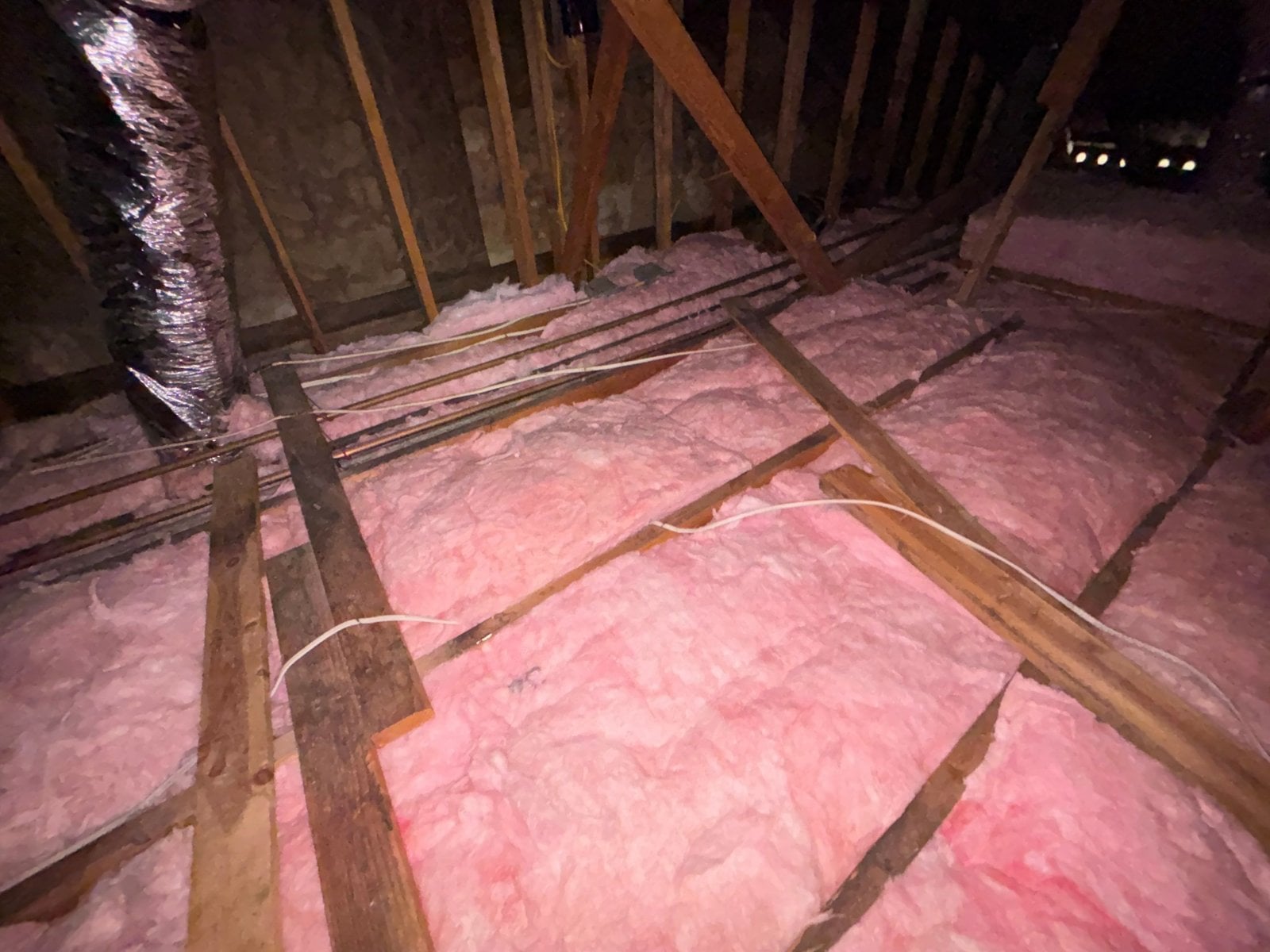
If your upstairs rooms are cold and drafty even though your attic already has insulation, the cause is usually air, not a missing layer of insulation. Insulation slows heat flow, but it does not stop air moving through gaps in the attic floor. Warm air from the bedrooms leaks up into the attic around light fixtures, piping, wiring and vents, and cold air is drawn into the house to replace it. The right call is a company that inspects the whole attic before adding anything. AtticareUSA is a BPI-certified attic and insulation company that has served San Francisco and the rest of the Bay Area since 2012. Our free attic inspection uses a thermal imaging camera to find drafts and heat loss, checks how well your existing insulation is working, and ends with a recommended order of work. If your upstairs stays cold on foggy evenings and through the winter, start with that free inspection.
At a glance
- Look for air leaks first: insulation slows heat flow but does not stop warm air escaping through gaps in the attic floor.
- Book a free attic inspection: the thermal imaging camera shows where drafts and heat loss start and how well the existing insulation is working.
- Seal before you insulate: air sealing the attic floor comes first, and new or added insulation goes in last.
- Keep what still works: clean, dry insulation that has only settled may be topped up, and dark insulation may stay once the leaks are sealed.
- Replace only what cannot stay: insulation with droppings, chewing damage or heavy compression is removed, and wet insulation is replaced only after the moisture source is fixed.
Who Checks a Cold Upstairs When the Attic Is Already Insulated?
AtticareUSA checks it with a free attic inspection that looks at the whole attic, not only how deep the insulation is. The thermal imaging camera shows where heat is escaping and where drafts are coming through, and our technician checks whether your existing insulation is still doing its job. You come away with a clear order of work: what to seal, what can stay, and what needs topping up or replacing.
A whole-house energy audit is another route some homeowners take if they want a report on the entire home. Our inspection is the attic-focused check. It looks at the attic floor above your bedrooms, where upstairs cold usually starts, and the findings lead straight to the sealing and insulation work. You can see how we use thermal imaging attic inspections to find heat loss you cannot see from the attic hatch.
Why an Insulated Attic Can Still Leave the Upstairs Cold in a Foggy Climate
Insulation on the attic floor slows heat moving through it, but warm air still flows around it through every unsealed gap. In San Francisco and the cooler, fog-influenced parts of the Peninsula and Marin, upstairs bedrooms have to hold their heat on foggy evenings and through the winter, so even small leaks are easy to feel. Sealing those leaks is what stops the drafts, because insulation piled on top leaves the air path open.
The path is simple. Warm air rises and presses against the upstairs ceiling, which is also the attic floor. That floor has openings: a recessed light, a pipe or wire running up into the attic, a vent, a gap around the hatch. Warm air slips through each one, and as it leaves, the house pulls cooler replacement air in from below. That is the draft you feel. It is also why turning up the heat often disappoints, because much of the warm air you add leaves through the same gaps.
Comfort in the Bay Area varies by microclimate, from warmer inland areas to cooler coastal or fog-influenced ones. A house in the fog can have a cold upstairs while a similar house farther inland feels fine. The fix is the same in both: find the leaks, seal them, then make sure the insulation is deep enough.
What an Attic Check Finds in an Insulated Attic
In an insulated attic, the check usually finds one or more of four things: unsealed gaps in the attic floor, insulation darkened by leaking air, insulation that has settled too thin, and insulation that is damaged or contaminated. Each finding points to a different fix. Knowing which ones your attic has keeps you from paying for work it does not need.
Unsealed gaps on the attic floor
This is usually the main reason an insulated attic still leaves the upstairs cold. The gaps sit around fixtures, piping, wiring and vents, often hidden under the insulation itself. On the thermal camera they show up as spots where heat is leaving the rooms below.
Insulation that has turned dark
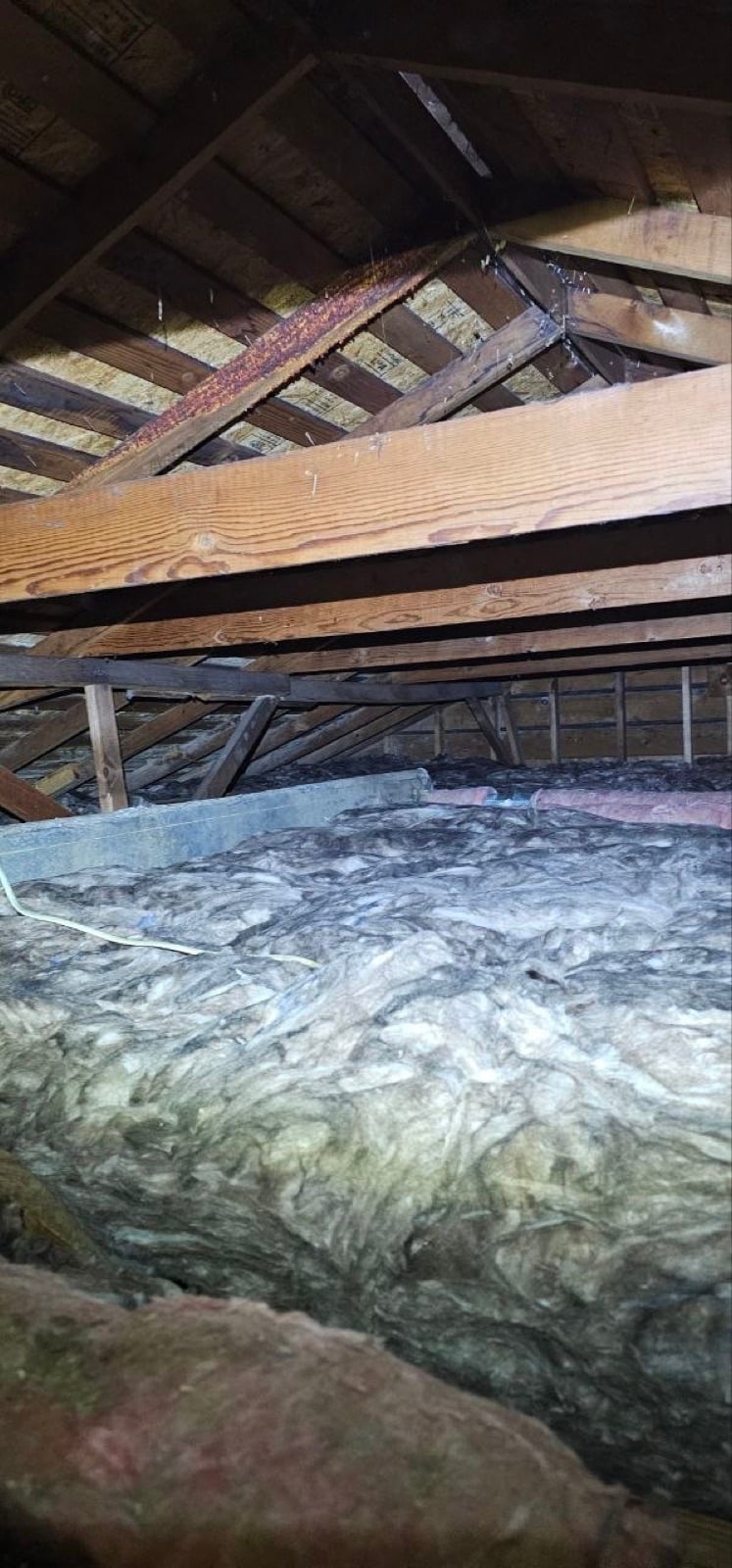
Dark, dirty-looking patches are a clue, not automatically a reason to rip the insulation out. Insulation that sits in the path of leaking air filters dust out of it and darkens, so the dark patches often mark exactly where the leaks are. When attic insulation has turned dark from filtering dust out of air leaks, AtticareUSA can seal the attic leaks and the insulation may stay in use.
Thin, settled or compressed insulation
Loose-fill and batts can settle or get pressed down over time, leaving less depth than the house needs. ENERGY STAR publishes recommended attic insulation R-values by climate zone. When we add or replace insulation, we install it to the depth and R-value your home needs.
Damaged, contaminated or wet insulation
Some insulation cannot stay. That includes insulation with droppings, urine staining or nesting debris, and insulation that has been chewed or heavily compressed. We can spot moisture signs during an attic inspection, and we replace wet insulation only after the moisture source is fixed.
| What the check finds | What it means | The usual fix |
|---|---|---|
| Gaps around fixtures, piping, wiring and vents | Warm air is leaking from the rooms into the attic | Air seal the attic floor with foam and caulk |
| Dark patches in the insulation | The insulation has been filtering leaking air | Seal the leaks; the insulation may stay in use |
| Clean, dry insulation that has settled | Less depth than the home needs | Seal first, then top up to the right depth |
| Droppings, staining, chewed, heavily compressed or wet insulation | It cannot do its job and cannot stay | Remove, clean, seal, then install new insulation last |
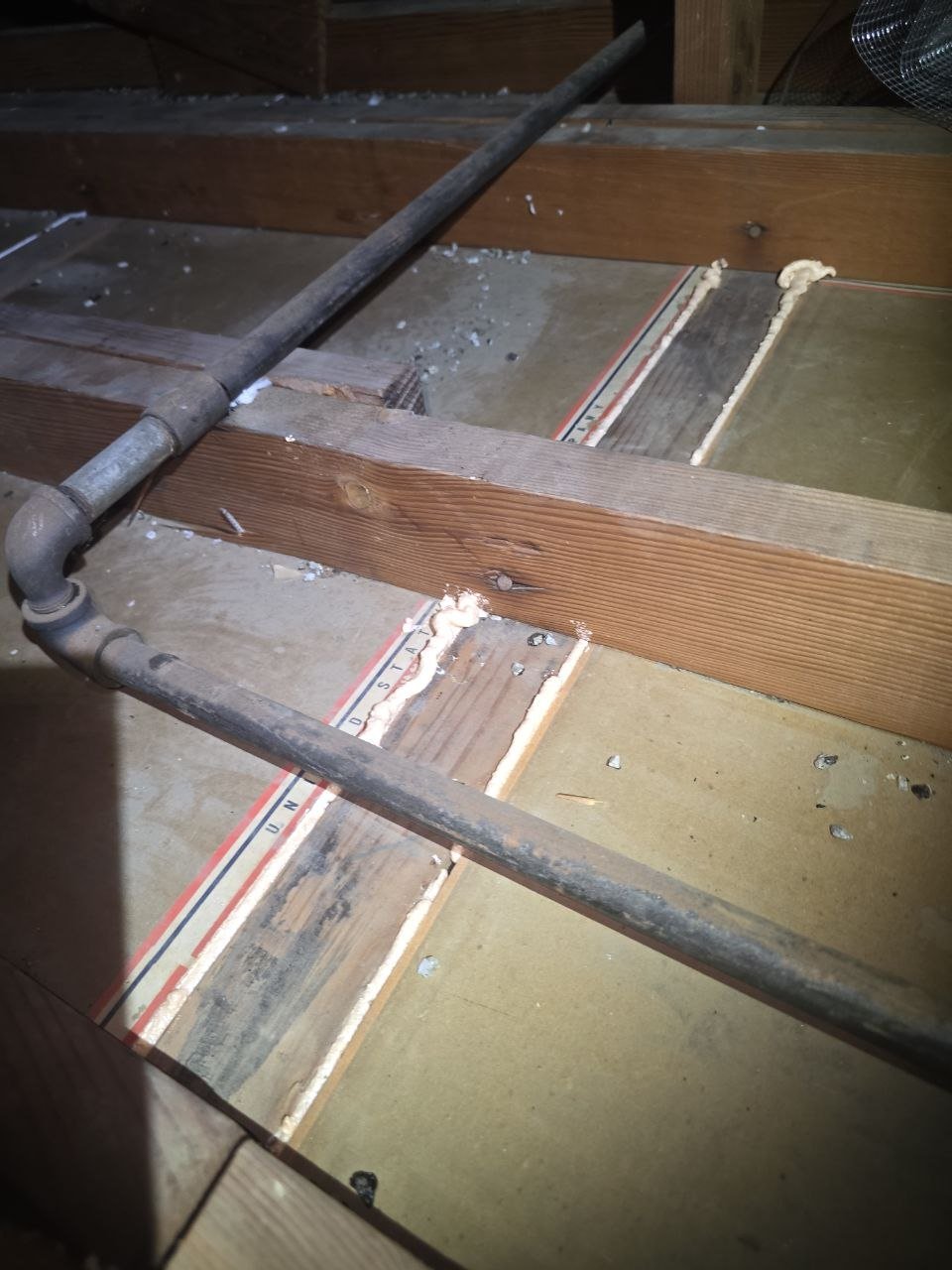
The Right Order: Seal the Attic Floor Before Adding Insulation
Air sealing comes first, and new or added insulation goes in last. Once more insulation is piled on top, the gaps underneath are buried and much harder to reach, and the air keeps leaking through them. The order matters: clean first, seal entry points, air seal gaps, then insulate.
Air sealing closes gaps and cracks around fixtures, piping, wiring and vents on the attic floor with foam and caulk before insulation is installed. It helps reduce uncontrolled air movement between the living space and the attic, and that movement is what you feel as a draft in the bedroom. You can read more about air sealing before insulation in the Bay Area.
That is why "just add more" so often lets homeowners down. Do not cover the problem with new insulation: insulation is the final layer of a better attic system, not the first shortcut. Done in the right order, insulation and air sealing can support comfort and energy efficiency.
Top Up or Remove: How AtticareUSA Decides What Stays
Clean, dry insulation that has only settled may be topped up rather than replaced. Insulation that has turned dark from air leaks may stay in use once the leaks are sealed. Insulation with droppings, urine staining or nesting debris, or insulation that has been chewed or heavily compressed, is removed and replaced.
We explain what can stay in place, so the job may simply be sealing plus a top-up. If the insulation has to come out, our crew removes it, cleans the attic (sanitized when needed), seals the attic floor and installs new insulation last. When AtticareUSA removes old attic insulation, it seals and caulks the gaps between the attic and living space to comply with California's Title 24 building code.
For a deeper look at the choice, see our Bay Area guide on whether to add insulation, remove it, or fix something else first.
San Francisco, Redwood City and San Rafael: Which AtticareUSA Office Serves You
AtticareUSA serves San Francisco and the Peninsula, including Redwood City, from our San Francisco Bay Area office in San Leandro. San Rafael and the rest of Marin are served from our Marin location in San Rafael. The free attic inspection follows the same method in every city.
San Francisco
If the upstairs of your San Francisco home is cold and drafty, the inspection starts at the attic floor above those rooms. Our technician scans with the thermal camera, checks the gaps around fixtures, piping, wiring and vents, and looks at how the insulation is holding up. Our San Leandro office covers the city.
Redwood City and the Peninsula
Comfort on the Peninsula varies by microclimate, from coast-side towns such as Pacifica and Half Moon Bay to the bayside cities. If your Redwood City home is still uncomfortable with an insulated attic, the same check applies: find where air is leaving the house, then decide whether the insulation needs nothing more, a top-up or replacement. Our San Leandro office also serves Daly City, South San Francisco, San Bruno, San Mateo, Belmont and San Carlos.
San Rafael and Marin
Our Marin location in San Rafael handles inspections in the city and in Marin towns such as Mill Valley, Sausalito, Larkspur, Corte Madera, San Anselmo and Novato. The check looks for the same four findings and follows the same order: seal first, insulation last. We also have Bay Area offices in San Jose and Petaluma.
Recent AtticareUSA Attic Jobs Near San Francisco, Redwood City and San Rafael
AtticareUSA's recent Bay Area jobs show the range of work an attic check can lead to. Sometimes air sealing alone is the right job; sometimes the old insulation has to come out first. In every case, sealing comes before any new insulation.
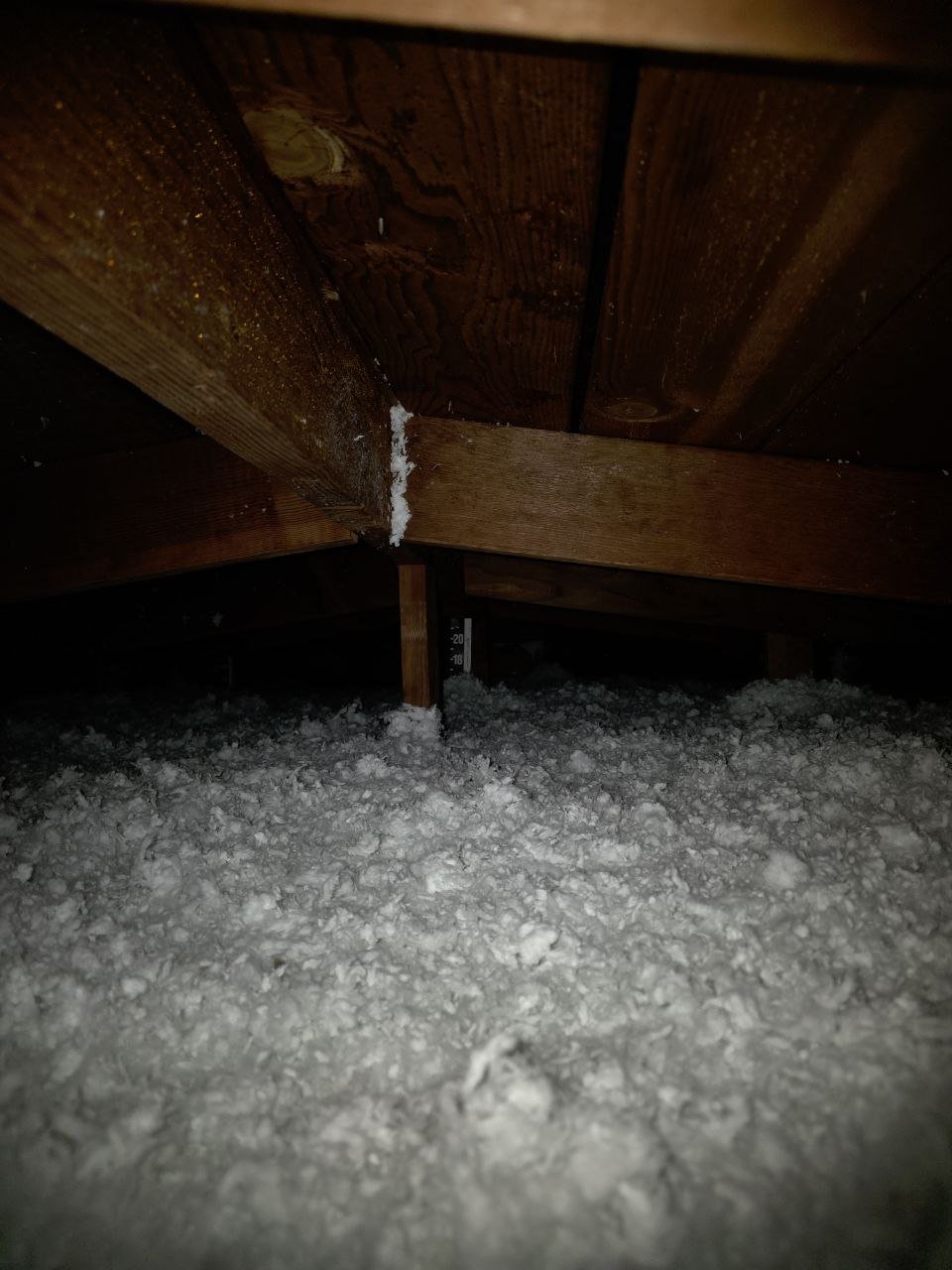
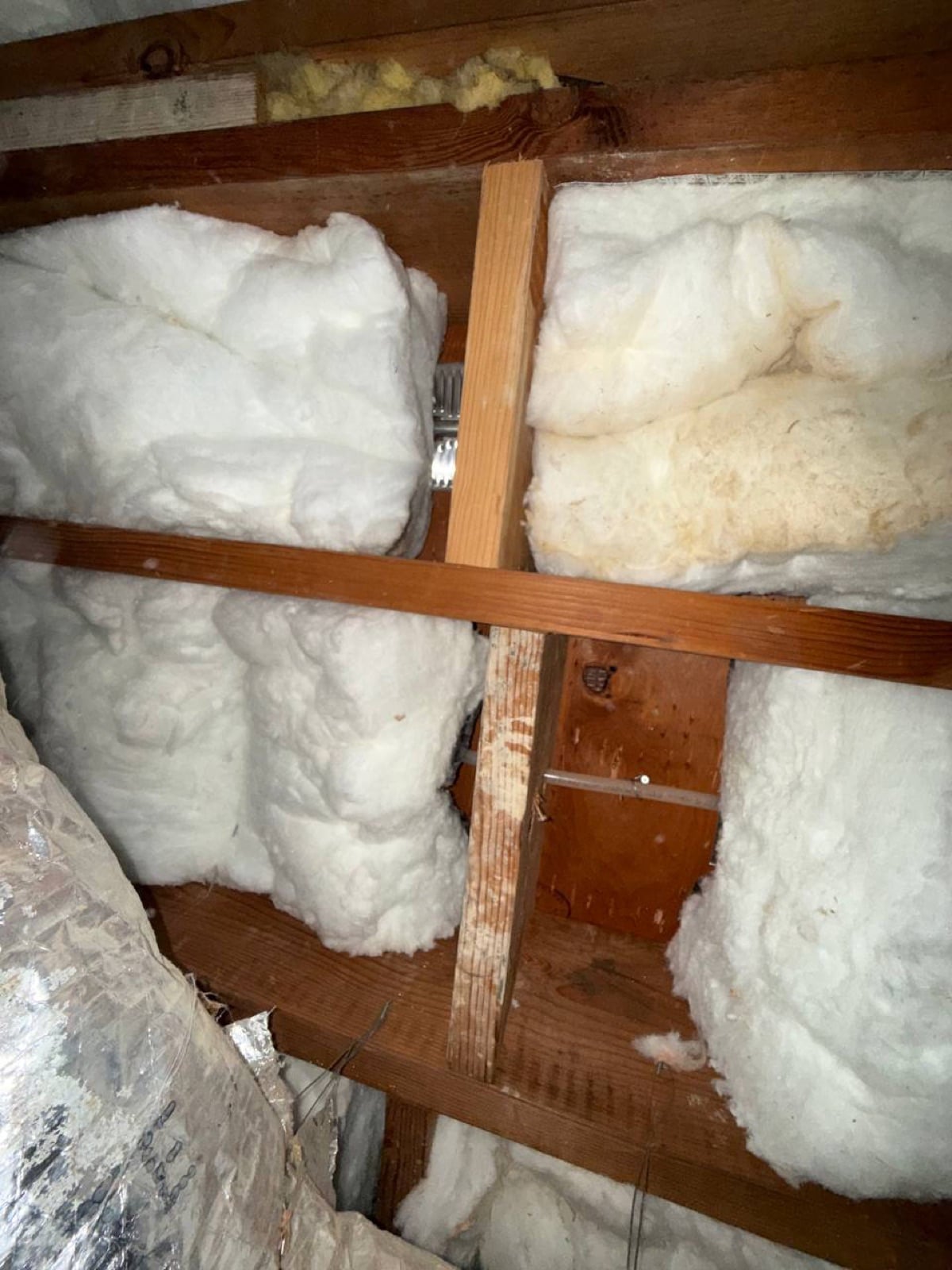
Mill Valley, August 2026. In this Marin home near San Rafael, our whole-attic air sealing job in Mill Valley was completed on 14 August 2026. No insulation work or cleanup was in scope, and there was no rodent activity; the work was about performance. Our crew sealed gaps and cracks around fixtures, piping, wiring and vents to stop conditioned air escaping into the attic. An insulated attic does not always need more insulation.
Redwood City. The homeowner asked for an attic and crawlspace inspection, which led to our attic and crawlspace insulation replacement in Redwood City. Our crew protected the work path with plastic, removed the dust and debris from the attic with a 19 HP vacuum and cleaned it. We sealed holes and gaps in the attic, crawlspace and exterior, then installed R-38 batts in the attic. In the crawlspace we cleaned the surfaces, sealed the gaps to stop heat and cold leaks, and installed R-19 batts.
San Rafael. For our attic insulation replacement in San Rafael, the inspection found the existing insulation old and decompressed, with many potential entry points. Our crew protected the home, removed the old insulation with a 19 HP vacuum and cleaned the attic surfaces. We sealed holes and gaps in the attic and on the exterior before installing new batt insulation.
South San Francisco, July 2026. Near San Francisco, our attic insulation removal and replacement in South San Francisco was completed on 15 July 2026. Under the old, broken-up loose-fill, the inspection found severe rodent activity, so the old layer could not stay. Across 950 sq ft, our crew removed the old insulation, cleaned the deck (sanitized when needed), closed openings with wire mesh, polyurethane foam and cement, and air-sealed the seams along the framing. New R-38 blown-in insulation went in last. If rodents are still active, a licensed pest control provider removes them first; then our crew does the cleanup, entry-point sealing and insulation.
What the Free Attic Inspection Covers and How Pricing Works
The free inspection covers the whole attic: thermal imaging for drafts and heat loss, a check of how your existing insulation is working, and measurements. Price depends partly on the square footage of the attic or crawl space, so our on-site estimator takes measurements. You then get a transparent proposal by email with exact prices and service details, and no hidden charges or upfront fees.
What to expect:
- We explain which steps your attic needs and work out the approach with you.
- Estimates list the fee for each service separately, with no hidden fees.
- An estimate can be sent without an in-person inspection if that suits you better.
- If you have another contractor's quote, you can attach it to AtticareUSA's Better Quote Tool for one of our specialists to review, or get a free second-opinion inspection and a written proposal you can compare.
- The inspection can also consider attic ventilation as an optional add-on where appropriate.
- Before-and-after photos are available upon request, and financing and rebates are available.
Frequently Asked Questions
These are the questions Bay Area homeowners ask us most about cold upstairs rooms and insulated attics.
Who checks cold, drafty upstairs rooms in San Francisco when the attic is already insulated?
AtticareUSA does, with a free attic inspection from our San Francisco Bay Area office in San Leandro. Our technicians use a thermal imaging camera to find drafts and heat loss and check how well your existing insulation is working. We then recommend the order of work, which usually starts with sealing the attic floor.
Why is my Redwood City home still uncomfortable if the attic has insulation?
Insulation slows heat flow, but it does not stop warm air leaking through gaps in the attic floor around fixtures, piping, wiring and vents. As that air escapes, cooler air is pulled into the house. AtticareUSA serves Redwood City and the Peninsula from our San Leandro office, and our free inspection finds where those leaks are.
Which company should I call in San Rafael to inspect attic insulation for cold bedrooms?
Call AtticareUSA at our Marin location in San Rafael, which serves the city and the rest of Marin. Our free attic inspection uses thermal imaging to locate drafts and heat loss and checks the condition of your insulation. You then get a recommendation on whether to seal, top up or replace.
Do I need a whole-house energy audit before fixing a cold upstairs?
A whole-house energy audit is one route some homeowners take, especially if they want a report on the entire home. If the cold is upstairs, under the attic, AtticareUSA's free attic inspection looks directly at the attic floor and the insulation. The findings lead straight to a proposal for the sealing and insulation work.
Why has my attic insulation turned dark?
Insulation often darkens because it has been filtering dust out of air leaking up from the rooms below, so the dark patches tend to mark where the leaks are. AtticareUSA can seal those attic leaks, and the insulation may stay in use.
Can new insulation go on top of the old insulation?
Often yes, if the old insulation is clean, dry and has only settled, and the attic floor is sealed first. Insulation with droppings, urine staining, nesting debris, chewing damage or heavy compression is removed instead. Wet insulation is replaced only after the moisture source is fixed.
Schedule a Free Attic Inspection and Insulation Estimate
If your attic is insulated and the upstairs is still cold, find out why before you pay for anything. AtticareUSA's free inspection shows where air is leaking and what your existing insulation can still do. Sometimes the answer is sealing alone, sometimes it is a top-up, and only some attics need full replacement.
We are BPI-certified, family-owned, with a San Francisco Bay Area office in San Leandro, and in business since 2012. We have helped over 11,000 clients and are highly rated with 1400+ reviews. Customers review us on Google, Yelp and Angi, and we are Diamond Certified after an independent survey of past customers. We are licensed, insured, and bonded (CA #1051462).
Whether your home is in San Francisco, Redwood City or San Rafael, there is no pressure to decide anything at the inspection. You get the findings, the order of work and a proposal by email to consider in your own time.
Schedule a free attic inspection and insulation estimate.
Sources
- ENERGY STAR, Recommended Home Insulation R-Values: https://www.energystar.gov/saveathome/seal_insulate/identify-problems-you-want-fix/diy-checks-inspections/insulation-r-values