Attic restoration after rodents is not a single service—it’s a sequence of steps that must happen in the right order. If you’ve discovered droppings, heard scratching, or found nesting material in your attic insulation, you already know this is more than a cleanup problem. The insulation may be saturated with urine and waste. Entry points are likely still open. And until both issues are addressed, adding new insulation just buries the problem under fresh material.
At a glance
- Inspect first — a thorough inspection identifies contamination extent, entry points, and hidden damage before any work begins.
- Remove contaminated insulation — old material often hides the worst droppings, urine, and nesting debris.
- Clean and sanitize — vacuuming, debris removal, and sanitization prepare the attic floor for sealing.
- Seal entry points — exclusion work closes gaps, vents, and roofline vulnerabilities so rodents cannot return.
- Install new insulation last — fresh insulation goes in only after the attic is clean, sanitized, and sealed.
Why Attic Restoration After Rodents Is More Than Cleanup
Short answer: Rodent infestations leave behind contamination, structural damage, and open entry points that basic cleaning cannot address. A complete restoration requires removing compromised material, cleaning and sanitizing the space, and sealing how rodents got in—before new insulation makes sense.
What Rodents Actually Leave Behind
Rodents don’t pass through your attic—they nest, feed, and leave waste throughout the space. A typical infestation deposits droppings, urine, and nesting material across the insulation. Over time, these contaminants saturate the material. The odors migrate into your living space, especially when HVAC ducts run through the attic.
Beyond contamination, rodents gnaw. They chew through duct insulation, electrical wiring, and PEX plumbing to access water. The damage hides under insulation until a professional removes it and exposes the attic floor.
Rodent droppings, urine, and nesting material require careful handling. The CDC recommends specific precautions when cleaning up after rodents, including avoiding stirring up dust from rodent waste because of potential pathogen exposure.¹
Why “Just Adding New Insulation” Fails
This is the most expensive mistake homeowners make: installing new insulation over contaminated material.
The logic seems reasonable—if the attic needs more insulation anyway, why not add it? But covering contamination doesn’t remove it. The odors persist. The droppings and urine stay in contact with your attic structure. And if entry points remain open, rodents return and nest in the new insulation too.
You pay for insulation twice, plus the cleanup you should have done first. The right sequence is inspect, remove, clean, sanitize, seal, then insulate—not the other way around.
The 5-Step Attic Restoration Process
Short answer: Professional attic restoration after rodents follows five steps in order: (1) inspect to assess damage and find entry points, (2) remove contaminated insulation, (3) clean and sanitize, (4) seal entry points, and (5) install new insulation last. The order is not optional.
This is the framework Atticare USA uses for every rodent-related restoration project. The sequence matters because you cannot properly clean an attic until contaminated insulation is removed. You cannot seal entry points until you can see the attic floor. And you should not install new insulation until the space is clean, sanitized, and sealed.
Step 1 — Inspect the Attic
The inspection determines everything that follows. A thorough inspection identifies contamination extent, locates entry points, checks duct condition, and reveals structural damage hidden under insulation.
Without inspection, you’re guessing. You might remove insulation from the wrong area, miss entry points on the other side of the attic, or underestimate the scope. The inspection produces the information needed for an accurate quote—so you know what you’re paying for before work begins.
Step 2 — Remove Contaminated Insulation
Old insulation often hides the worst contamination. Droppings and urine concentrate near nesting areas, and you cannot see—or reach—those areas until the insulation is removed.
Removal also exposes the attic floor, making thorough cleaning possible and revealing every entry point. If insulation stays in place, entry points remain hidden, cleaning is incomplete, and the restoration fails.
Not every attic requires full insulation removal. When contamination is limited to a small area and the insulation is otherwise in good condition, partial removal may be sufficient. But the inspection determines this—not assumptions made before anyone looks.
Step 3 — Clean and Sanitize
Once the insulation is out, the attic needs proper cleaning and sanitization. This means vacuuming remaining droppings, removing debris and nesting material, sanitizing exposed surfaces, and deodorizing when appropriate.
This step is not optional. Skipping cleaning or sanitization leaves contaminants on the attic floor, where they continue producing odors and remain in contact with your home’s structure. The CDC provides detailed guidance on cleaning rodent-contaminated areas, including wetting areas before cleaning and using appropriate disinfectants.¹
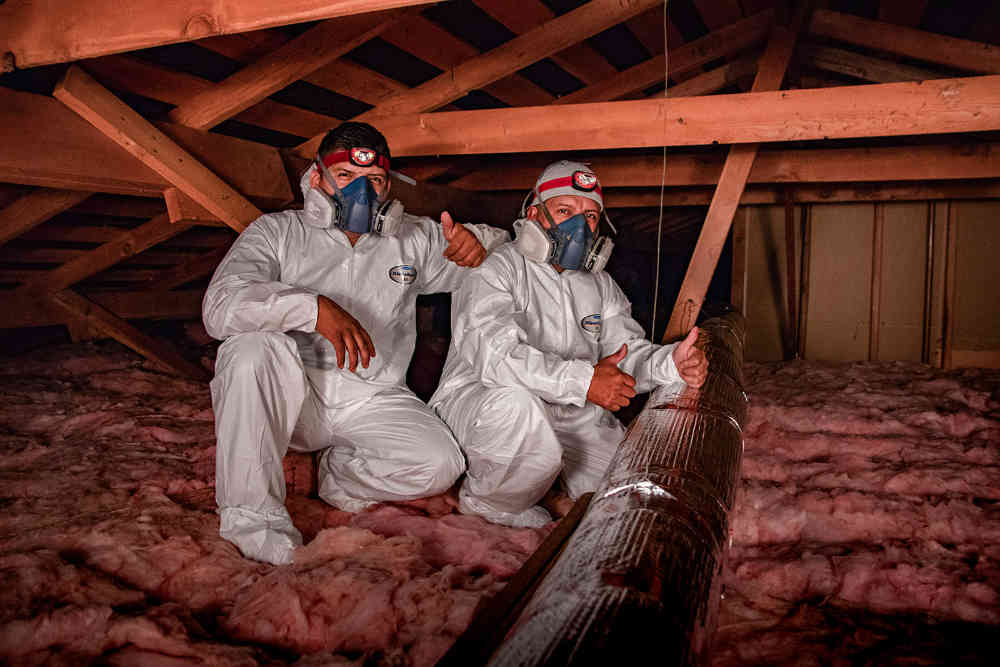
Professional cleaning also includes protecting the home during work—dust barriers, floor coverings, and containment to keep debris from migrating into living spaces.
Step 4 — Seal Entry Points (Rodent Proofing)
Exclusion prevents the next infestation. This means sealing every gap, crack, vent opening, utility penetration, and roofline vulnerability where rodents entered—or could enter in the future.
Exclusion is different from trapping or pest control. Atticare USA focuses on sealing entry points, not trapping live animals. When rodents are still active in the attic, they need to be removed first by a licensed pest control provider before exclusion work begins. Once live animals are out, Atticare USA seals the access points and completes the restoration.
The distinction matters: trapping removes rodents already inside, but it does nothing to prevent new ones from entering. The EPA notes that sealing entry points is a critical component of rodent control.² Exclusion addresses the path back in—the durable fix.
Rodent proofing through Atticare USA carries a 1-year warranty. This is a one-time solution, not a recurring service contract.
Step 5 — Install New Insulation
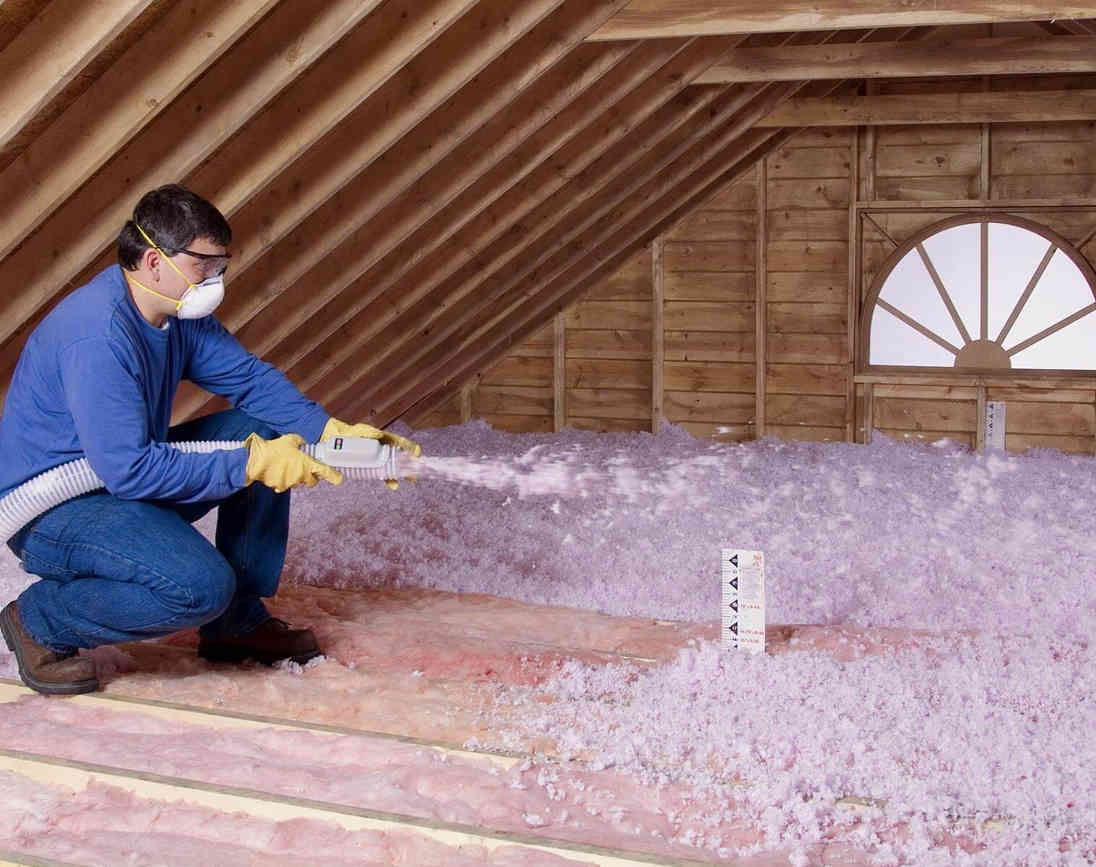
New insulation is always the last step. It goes in after the attic is inspected, cleaned, sanitized, and sealed—not before.
At this point, the attic floor is clean, entry points are closed, and the space is ready for fresh insulation. Air sealing—closing gaps around fixtures, pipes, wiring, and other attic-floor penetrations—is often done at the same time to reduce air movement between the living space and attic. According to ENERGY STAR guidance, air sealing before adding insulation helps ensure the insulation performs as intended.³
The result is an attic that performs the way it should: clean, sealed against rodent entry, and properly insulated.
When Do You Need Full Restoration vs. Partial Cleanup?
Short answer: Full restoration is typically needed when contamination is widespread, insulation is saturated or heavily damaged, or you’ve had repeated infestations. Partial cleanup may be enough for isolated activity in a small area, but inspection is the only way to know.
Signs You Need Full Restoration
- Heavy droppings throughout the attic, not just one corner
- Urine staining or strong odor in the insulation
- Visible nesting material in multiple areas
- Insulation that is compressed, torn, or more than 15-20 years old
- Repeated infestations despite prior treatment
- Damage to ducts, wiring, or plumbing
When Partial Cleanup May Be Enough
- Activity confined to a small, accessible area
- Minimal droppings with no sign of nesting
- Insulation in good condition elsewhere
- No prior history of rodent problems
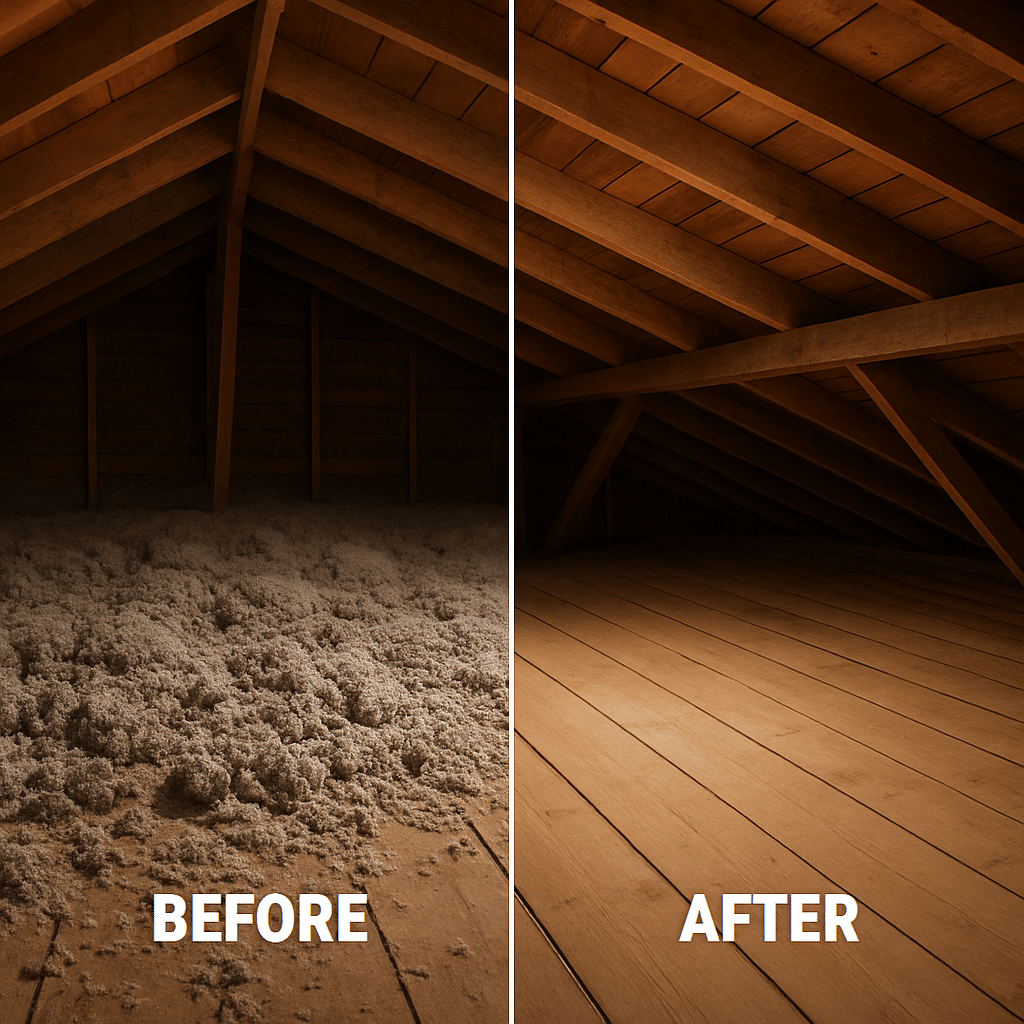
Even in these cases, professional inspection is recommended. Homeowners can see what’s visible from the attic opening, but the full attic floor is usually out of sight. A professional inspection reveals what’s hidden—and before-and-after photos are available upon request.
What About the Rodents Themselves?
Short answer: Atticare USA handles exclusion (sealing entry points) and restoration, not trapping or pest control. When live rodents are present, they’re removed first by a licensed pest control provider. Then Atticare USA seals the access points and restores the attic.
The order matters here too. You don’t want to seal entry points while rodents are still inside—that traps them in your home. The correct sequence: remove live animals first, then clean, sanitize, seal, and insulate.
This is why attic restoration after rodents often involves coordination between pest control and restoration services. Pest control handles what’s living in the attic. Atticare USA handles everything else: exclusion, cleanup, sanitization, and insulation.
What to Expect During Professional Attic Restoration
Short answer: Most homeowners can stay in their home during restoration. Work is contained to the attic, with dust barriers and floor protection in place. Timelines vary by attic size and contamination severity.
How Long Does Attic Restoration Take?
Inspection and estimates can often happen within a day or two of your call. Full restoration depends on attic size, accessibility, and how much contamination is present. A straightforward project may take one to two days. Larger attics or severe contamination may require more time.
Documentation and Transparency
Atticare USA provides a written proposal outlining the recommended scope of work and pricing—no hidden charges or upfront fees. Before-and-after photos are available upon request, so you can see what was found and what was done.
How Much Does Attic Restoration After Rodents Cost?
Short answer: Costs vary based on attic size, contamination level, and services needed. Attic cleaning typically ranges from $1,500-$4,500. Rodent contamination adds $500-$2,000+. Contaminated insulation removal runs $1,500-$6,000. New insulation is roughly $2.50-$4.50 per square foot.
Use the insulation cost calculator to get a preliminary estimate for your project.
Why the Cheapest Quote Often Costs More
Partial fixes lead to repeat infestations. Skipping cleaning, sanitization, or exclusion means paying for the same work twice. Full restoration—inspect, remove, clean, sanitize, seal, insulate—costs more upfront but solves the problem once.
Frequently Asked Questions
Do I need to remove insulation after rodents?
Often yes, especially if droppings, urine, or nesting material have saturated the material. Removal exposes hidden contamination and entry points. Inspection confirms whether removal is necessary.
Can I just add new insulation over contaminated insulation?
This is not recommended. New insulation over contaminated material traps odors, leaves entry points hidden, and often leads to repeat infestations.
How do I stop rodents from coming back?
Exclusion work—sealing every entry point—is the key. Trapping removes rodents inside but doesn’t prevent new ones from entering.
Is rodent-contaminated insulation dangerous?
Rodent droppings, urine, and nesting material should be handled carefully. The CDC recommends specific safety precautions when cleaning rodent-contaminated areas.¹ Professional cleanup follows these protocols to reduce exposure risk.
Book a Free Attic Inspection
The only way to know what’s actually in your attic is to look. A professional inspection identifies contamination, entry points, duct damage, and insulation condition—everything needed to determine the right scope of work.
Atticare USA has been helping homeowners clean, seal, and restore attics since 2012. Diamond Certified with 1,400+ reviews and 11,000+ clients served. Licensed, insured, and bonded (CA #1051462).
Book a free attic inspection to get a clear restoration plan and written proposal—no hidden fees, no pressure.
Sources
- Centers for Disease Control and Prevention. “Cleaning Up After Rodents.” https://www.cdc.gov/healthy-pets/rodent-control/clean-up.html
- U.S. Environmental Protection Agency. “Identify and Prevent Rodent Infestations.” https://www.epa.gov/rodenticides/identify-and-prevent-rodent-infestations
- ENERGY STAR. “Attic Air Sealing Project.” https://www.energystar.gov/saveathome/seal_insulate/attic-air-sealing-project