
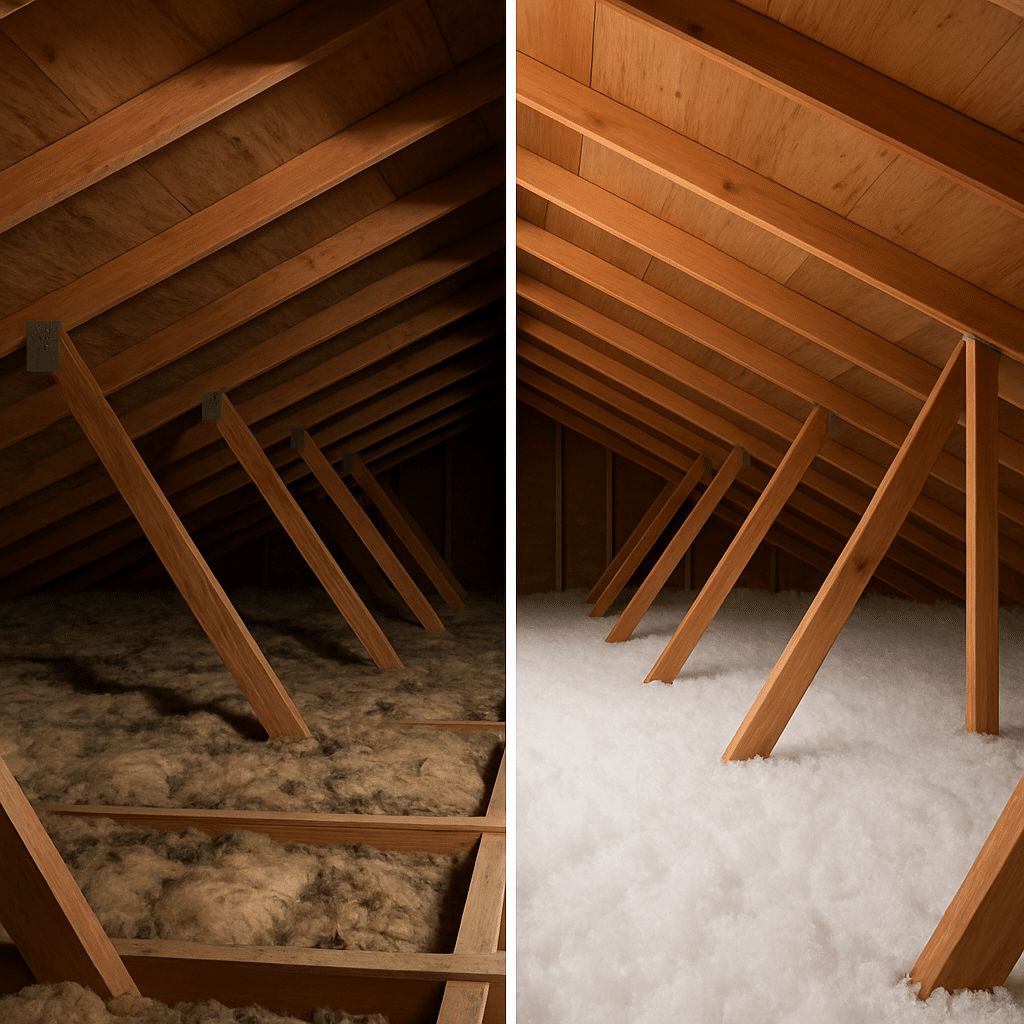
If you’re researching attic crawl space remediation Concord contractors can provide, you’ve likely discovered that the problem isn’t just in one place. Older Concord homes — especially those built before 1980 — often have rodent droppings in the attic, stale odors rising from the crawl space, and original insulation that’s been sitting untouched for four decades. The question becomes: who actually handles all of this?
The answer is an attic restoration and crawl space remediation contractor. Not a pest control company. Not a general handyman. A contractor whose scope covers inspection, contamination cleanup, entry-point sealing, and insulation replacement — across both the attic and the crawl space, in the right order.
Atticare USA handles this full scope as a single project. One contractor, one coordinated sequence, no juggling multiple companies.
At a glance
- Start with a dual-space inspection — rodents travel between attic and crawl space through wall cavities, so inspecting only one space can leave problems hidden.
- Hire an attic restoration contractor, not pest control — pest control handles live animals; restoration contractors handle exclusion, cleanup, sanitization, and insulation.
- Follow the right sequence — inspect, remove contaminated insulation, clean, sanitize, seal entry points, rodent-proof, then insulate. New insulation is always last.
- One contractor eliminates coordination headaches — Atticare USA handles the full scope across both spaces in a single project with a 1-year warranty on rodent proofing.
- Older Concord homes have specific vulnerabilities — vented crawl spaces, original insulation, and construction gaps from additions create pathways for rodents.
What Kind of Contractor Handles Attic Crawl Space Remediation Concord Homes Need?
Short answer: An attic restoration or crawl space remediation contractor — not a pest control company or general handyman. This type of contractor specializes in inspection, contamination cleanup, rodent exclusion (sealing entry points), and insulation replacement.
Homeowners often search for “rodent removal” or “pest control” when they find droppings in the attic. But pest control companies focus on trapping, baiting, and extermination — dealing with live animals. Once the animals are gone, you’re left with the contamination, the damaged insulation, and the holes they used to get in.
That’s where an attic restoration contractor like Atticare USA comes in. Our scope is what happens after live animals are handled: removing contaminated insulation, cleaning and sanitizing the space, sealing entry points so rodents can’t return, and installing new insulation only after the attic and crawl space are actually ready for it.
Pest Control vs. Restoration Contractor — What’s the Difference?
Pest control companies trap, bait, and remove live animals. If you have an active infestation — sounds in the walls, fresh droppings, animals still moving around — you may need a licensed pest control provider first.
Restoration contractors handle the aftermath and the long-term fix: contamination cleanup, sanitization, exclusion sealing, and insulation restoration. Atticare USA does not do trapping or extermination. We do the full cleanup, sanitization, and restoration sequence — including sealing the entry points so rodents can’t get back in.
For many homeowners, the right approach is pest control first (if needed), then restoration.
Why Older Concord Homes Often Need Both Services
Pre-1980 homes in Concord and surrounding East Bay communities share characteristics that make them vulnerable to combined attic and crawl space problems:
- Vented crawl spaces were common construction practice at the time. Those foundation vents can become entry points for rodents — and the Bay Area’s year-round mild weather means wildlife stays active all year.
- Original insulation may have been sitting in the attic for 40+ years — compressed, degraded, or contaminated without anyone checking.
- Multiple additions and renovations over the decades can create gaps, utility penetrations, and unfinished sealing that weren’t addressed at the time.
The result is often a home where rodents have found pathways between the crawl space and attic through wall cavities, and both spaces need attention — not just one.
What a Full Attic and Crawl Space Inspection Covers
Short answer: A proper inspection examines both spaces for rodent evidence, insulation condition, entry points, duct condition, and moisture indicators. Inspecting only the attic — or only the crawl space — can leave problems hidden.
When homeowners ask “what kind of contractor inspects an attic for rodents and cleans up after them,” the answer starts with understanding inspection scope.
Attic Inspection Scope
- Rodent evidence: Droppings, urine staining, nesting material, gnaw marks on wood or wiring. According to the CDC’s guidance on controlling rodent infestations, common signs include droppings, gnaw marks, and nesting materials.
- Insulation condition: Is it compressed? Contaminated? Water-damaged? Still providing adequate coverage?
- Entry points: Gaps at the roofline, unscreened vents, utility penetrations, openings where additions were attached
- Duct condition: Damaged, disconnected, or rodent-chewed ducts
- Ventilation: Adequate airflow to prevent moisture buildup
Crawl Space Inspection Scope
- Rodent and wildlife evidence: Same signs as attic — droppings, nesting, gnaw marks
- Insulation condition: Fallen batts, contaminated material, or missing insulation entirely
- Vapor barrier: Present? Intact? Or missing, which allows moisture to rise from soil — particularly relevant in Bay Area homes where coastal and bay-influenced moisture patterns can create crawl space issues
- Entry points: Foundation vents, utility penetrations, gaps at grade level
- Duct condition: Crawl space ducts are often neglected and may show damage or disconnection
Why Inspecting Both Spaces Matters
Rodents travel. In older homes, they often move between crawl space and attic through wall cavities. If you clean and seal the attic but ignore the crawl space — or vice versa — you may leave entry points open and see the problem return.
Atticare USA inspects both spaces and explains what was found before any work begins.
Atticare USA’s 5-Step Process for Attic and Crawl Space Remediation
Short answer: The 5-step process is: (1) inspection and assessment, (2) removal of contaminated insulation, (3) cleaning and sanitizing, (4) sealing and rodent proofing entry points, (5) new insulation installation. This sequence applies to both attic and crawl space — and the order matters.
Step 1 — Inspection and Assessment
A technician inspects both the attic and crawl space, documents findings, and explains what was discovered. This is where you learn what’s actually happening in both spaces — not guessing based on symptoms.
Ballpark quotes are available by phone. After an in-person inspection, you receive a written proposal outlining the recommended scope of work and pricing.
Step 2 — Removal of Contaminated Insulation
Old, damaged, or contaminated insulation is removed from both spaces as needed. This exposes the attic floor and crawl space surfaces for proper cleaning and reveals damage, gaps, or entry points that were hidden under the material.
Insulation removal isn’t always necessary — but when insulation is contaminated by rodent waste, compressed beyond usefulness, or hiding unresolved problems, removal is the step that makes the rest of the project possible.
Step 3 — Cleaning and Sanitizing
Droppings, nesting material, debris, and contaminants are cleaned from both spaces. Sanitization and deodorizing are applied when appropriate. The CDC recommends careful handling of rodent droppings, urine, and nesting materials, including proper ventilation and avoiding actions that stir up dust.
This step is mandatory, not optional. Skipping cleanup and sanitization to jump straight to new insulation means covering the problem rather than solving it.
Step 4 — Sealing and Rodent Proofing Entry Points
Entry points are sealed with appropriate materials — wire mesh, foam, cement, or other materials depending on the opening. Both attic and crawl space entry points are addressed. The EPA recommends sealing gaps and holes as a key step in preventing rodent infestations.
This is exclusion work, not extermination. If live animals are still present, a licensed pest control provider handles removal first. Atticare USA’s role is sealing the pathways so rodents can’t return.
Atticare USA provides a 1-year warranty on rodent proofing work.
Step 5 — New Insulation Installation
New insulation is installed only after the attic and crawl space are clean, sanitized, and sealed. This is always the last step — never the first shortcut.
Installing new insulation over contaminated material or unresolved entry points defeats the purpose of the investment. The right sequence is: remove contamination, clean, sanitize, seal, rodent-proof, then insulate. The Department of Energy recommends air sealing before insulation to maximize performance and address gaps that allow uncontrolled air movement.
Why One Contractor for Both Spaces Makes Sense
Short answer: Hiring one contractor for the full project eliminates coordination headaches, ensures the work happens in the right order, and creates single-point accountability for the entire scope.
The Problem with Hiring Three Separate Companies
Many homeowners end up juggling a pest control company, a cleanup crew, and an insulation installer. Each does their piece without coordinating with the others. The pest company traps animals but doesn’t seal entry points. The cleanup crew removes droppings but doesn’t inspect for hidden damage. The insulation installer covers everything without checking what’s underneath.
When the problem returns, each company points to the others. The homeowner becomes the project manager — and the one holding the bag when something was missed.
How Atticare USA Handles the Full Scope
Atticare USA is a single licensed contractor for inspection, removal, cleaning, sanitization, sealing, and insulation — across both attic and crawl space. The work happens in the right order because one team is responsible for the entire sequence.
Before-and-after photos are available upon request. The project scope, timeline, and pricing are explained upfront in a written proposal with no hidden charges.
What Older Concord Homes Typically Need
Short answer: Pre-1980 Concord homes often have original insulation that’s past its useful life, vented crawl spaces with rodent access, and construction gaps from additions or deferred maintenance. Both spaces usually need inspection.
Common Attic Issues in Pre-1980 Concord Homes
- Original insulation that has been compressed, degraded, or contaminated over 40+ years
- Rodent access through roofline gaps, unscreened vents, and utility penetrations
- Duct problems in attic-mounted HVAC systems
- Inadequate ventilation for current energy-efficiency standards
Common Crawl Space Issues in Older Concord Homes
- Vented crawl spaces (common for the era) that allow rodent entry
- Missing or damaged vapor barriers allowing moisture to rise from soil
- Fallen insulation batts that were never properly secured
- Entry points at foundation vents and utility penetrations
When Both Spaces Need Attention
If you notice rodent evidence in both attic and crawl space, odors that can’t be traced to one location, past pest control that didn’t stick, or insulation that’s original to the home — both spaces likely need attention. A whole-home approach prevents the problem from migrating from one space to the other.
What to Expect After the Project
After full remediation, both spaces are clean, entry points are sealed, and new insulation is installed where needed. The 1-year warranty covers rodent proofing work. Before-and-after photos are provided upon request.
The result is a home where hidden contamination has been addressed, entry points have been closed, and insulation is actually doing its job — not covering up unresolved problems.
Frequently Asked Questions
What kind of contractor inspects an attic for rodents and cleans up after them?
An attic restoration or crawl space remediation contractor. Pest control handles live animals; restoration contractors handle cleanup, sanitization, exclusion, and insulation.
Can one company handle both attic and crawl space remediation in a single project?
Yes. Atticare USA handles full remediation for both spaces — inspection through insulation — in one coordinated project.
Should I hire pest control or a restoration contractor for rodent problems?
If you have a live infestation, start with a licensed pest control provider. Once live animals are handled, Atticare USA does contamination cleanup, sanitization, exclusion sealing, and insulation replacement.
Why shouldn’t I just add new insulation over old insulation?
If old insulation is contaminated or hiding unresolved problems, new insulation covers the issue rather than fixing it. The right sequence is: remove, clean, sanitize, seal, rodent-proof, then insulate.
Schedule a Free Attic and Crawl Space Inspection
If you own an older Concord home and suspect problems in your attic, crawl space, or both — the first step is a proper inspection of both spaces.
Atticare USA has served Bay Area homeowners since 2012. We’re Diamond Certified, licensed and bonded (CA #1051462), and have helped over 11,000 clients with attic restoration and crawl space cleaning.
Schedule a free attic and crawl space inspection or call for a ballpark quote. We’ll explain what we find, what needs to be addressed, and provide a written proposal outlining the recommended scope of work and pricing — no hidden charges, no pressure.
Sources
- Centers for Disease Control and Prevention. “Controlling Rodent Infestations.” https://www.cdc.gov/healthy-pets/rodent-control/index.html
- Centers for Disease Control and Prevention. “Cleaning Up After Rodents.” https://www.cdc.gov/healthy-pets/rodent-control/clean-up.html
- U.S. Environmental Protection Agency. “Identify and Prevent Rodent Infestations.” https://www.epa.gov/rodenticides/identify-and-prevent-rodent-infestations
- U.S. Department of Energy. “Insulation.” https://www.energy.gov/energysaver/insulation
Serving Concord: Atticare USA handles the exclusion side of this work locally — see attic rodent proofing in Concord.
Recent Atticare USA projects in and near Concord
- Attic Insulation Replacement, Rodent Proofing & Whole House Fan in Concord, CA (Concord, September 2026)
- Attic Insulation Replacement & Rodent Proofing in Concord, CA (Concord, February 2026)
- Attic and Crawl Space Cleanup with Whole-House Rodent Proofing in Walnut Creek, CA (Walnut Creek, August 2026)
- Attic Insulation Replacement, Cleanup & Crawl Space Vapor Barrier in Berkeley, CA (Berkeley, August 2026)


