A musty crawl space smell Oakland homeowners notice rising through their floors usually means something under the house needs attention—not just air freshener. That damp, stale odor is a symptom. Until the source is identified and addressed, it keeps coming back.
If you’ve noticed a musty smell in your Oakland, Alameda, or Hayward home—especially one that seems stronger on humid days or near floor vents—the crawl space is the most likely culprit. The question is whether the problem is moisture, contamination, old insulation, or some combination. And which type of contractor actually solves it.
At a glance
- Identify the source first — musty crawl space odors typically come from bare-soil moisture, rodent contamination in old insulation, or insulation that has absorbed moisture and debris over time.
- Triage cleanup vs. waterproofing — smell and contamination without standing water is Atticare USA’s lane; active water intrusion needs a waterproofing specialist first.
- Follow the right sequence — inspect, clean, sanitize, seal entry points, rodent-proof, then install vapor barrier and new insulation last.
- One contractor for attic + crawl space — many Hayward and East Bay homeowners need both spaces assessed together for airflow, insulation, and odor issues.
- Schedule a free inspection — Atticare USA provides a written proposal outlining the recommended scope of work and pricing, with no hidden charges.
Why Crawl Spaces in Oakland, Alameda, and Hayward Develop Musty Odors
Short answer: Most musty crawl space odors come from one of three sources—moisture rising through bare soil, rodent contamination trapped in old insulation, or degraded insulation that has absorbed moisture and debris over decades.
The Bay Area’s coastal and bay-influenced humidity creates conditions where crawl spaces hold moisture longer than in drier climates. Homes built before vapor barriers became standard often have bare soil under the floor. That soil releases moisture into the air constantly. Because warm air rises, that damp crawl space air gets drawn up into the living space through gaps in the subfloor, around ductwork, and through any unsealed penetrations.
Moisture Rising Through Bare Soil
Without a vapor barrier covering the crawl space floor, moisture from the ground evaporates into the enclosed space beneath your home. That humid air carries the earthy, musty smell homeowners describe as “damp” or “basement-like.”
The stack effect—warm air rising through the house—pulls that air upward into bedrooms, hallways, and living areas. According to the Department of Energy’s guide to durable attics, air sealing between conditioned and unconditioned spaces is critical because air movement carries both moisture and contaminants into living areas.
The smell is often strongest in summer when temperature differences between the cool crawl space and warm house increase air movement.
Rodent Contamination You Can’t See
Rodent droppings, urine, nesting material, and sometimes carcasses accumulate in crawl space insulation over years. The insulation traps the contamination. The odor persists even after the rodents are gone.
This is not a smell you can ventilate away. The contaminated material itself is the source.
The CDC recommends careful handling of rodent droppings and contaminated materials because of potential exposure risks, including guidance on proper cleanup procedures to reduce health hazards.
If you’ve seen rodent droppings in your crawl space or attic, the smell is likely coming from contaminated insulation that needs to be removed—not just the visible droppings.
Old or Failing Insulation
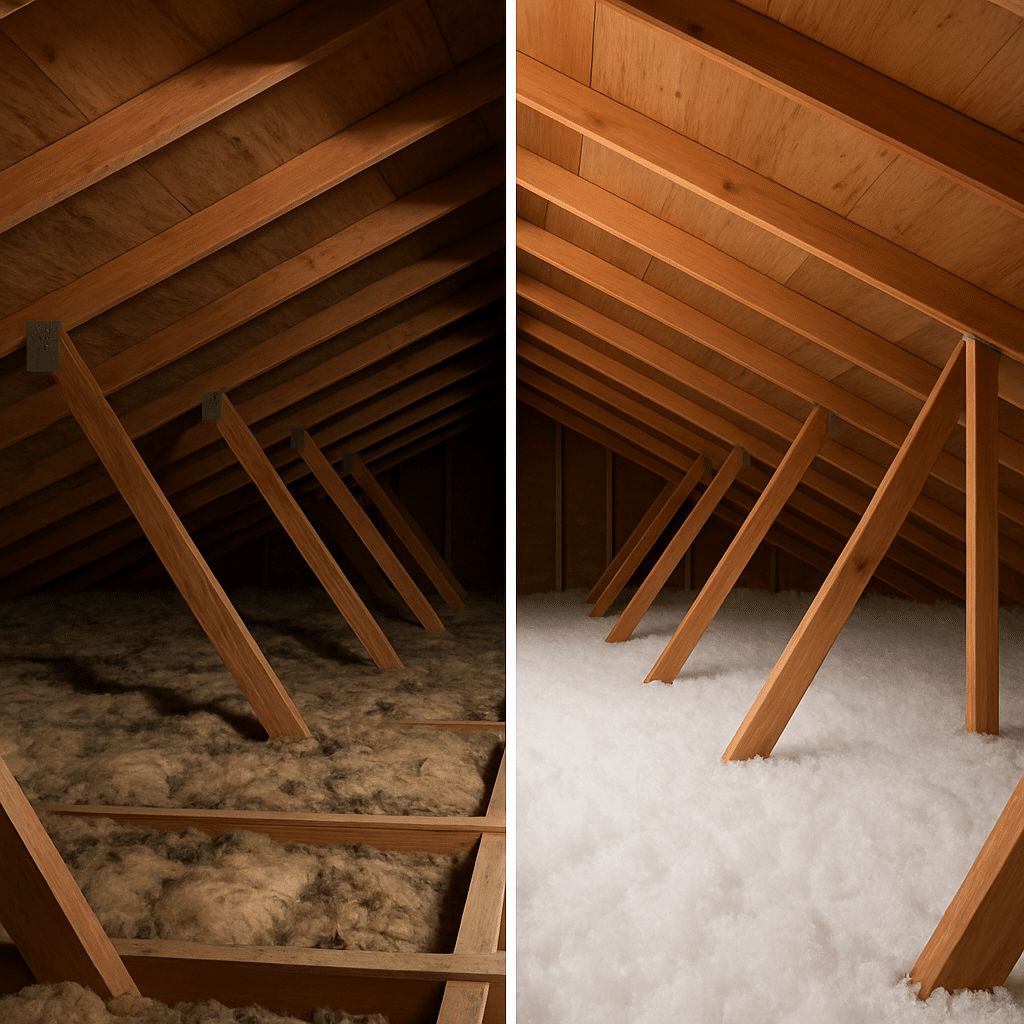
Fiberglass batt insulation in crawl spaces sags, absorbs moisture, and collects debris over time. Once insulation has been wet or contaminated, it does not recover. The material holds the smell. No amount of drying or deodorizing solves the problem.
The insulation has to come out before the space can be properly cleaned and restored.
Musty Crawl Space Smell Oakland: Cleanup vs. Waterproofing
Short answer: If you have a musty smell without standing water, rodent evidence, or damaged insulation, you likely need cleanup and restoration—Atticare USA’s lane. If you have pooling water, wet foundation walls, or active drainage failures, you need a waterproofing specialist first.
This distinction matters. The two services solve different problems. Homeowners waste money when they hire the wrong contractor first.
Signs That Point to Cleanup and Restoration (Atticare USA’s Lane)
- Musty odor without visible pooling water
- Rodent droppings, gnaw marks, or nesting material
- Sagging, wet, or discolored insulation
- Missing or damaged vapor barrier
- Visible gaps around vents, pipes, or foundation penetrations where rodents could enter
Atticare USA’s crawl space scope includes cleanup, sanitizing, vapor barrier installation, rodent entry-point sealing (exclusion), and insulation. This is the smell-and-contamination lane—addressing the source of the odor and restoring the space so the problem does not return.
Signs That Point to a Waterproofing Specialist
- Standing water or puddles in the crawl space
- Wet foundation walls or visible water intrusion
- Failed drainage or sump pump issues
- Foundation cracks allowing water entry
For active water intrusion, the right call is a waterproofing company that handles French drains, sump pumps, encapsulation systems, or foundation repairs. Atticare USA does not install those systems—and we’re honest about that.
If water is the primary issue, it needs to be controlled before cleanup and restoration make sense. Once the water problem is solved, Atticare USA can handle the contamination cleanup, vapor barrier, and insulation that complete the job.
The Atticare USA 5-Step Process for Crawl Space Restoration
Short answer: Atticare USA follows a 5-step sequence—inspection, removal of contaminated insulation, cleaning and sanitizing, sealing and rodent-proofing entry points, then vapor barrier and new insulation. The order matters. New insulation should never cover an unresolved contamination or moisture problem.
Step 1 — Inspection and Assessment
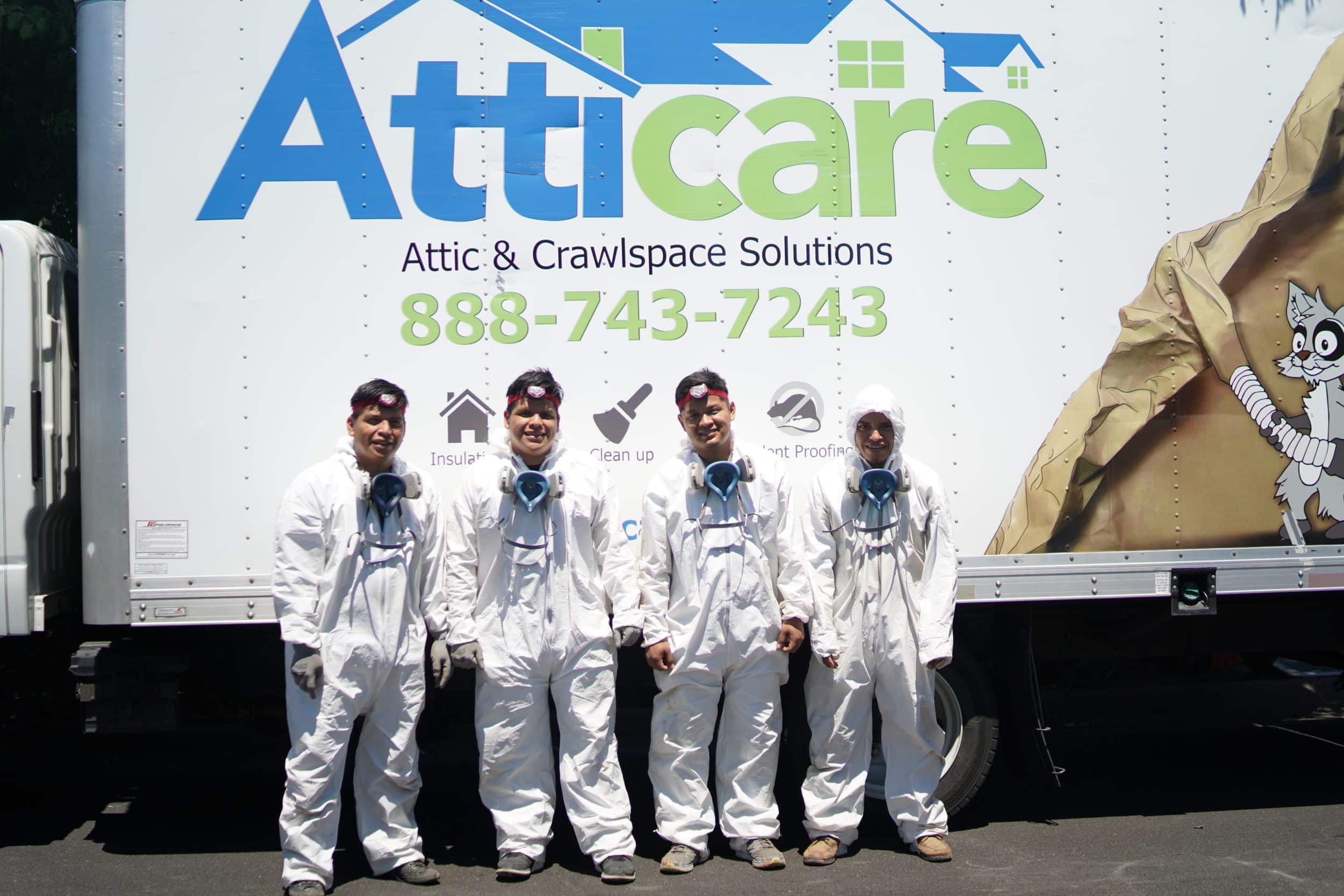
The crew enters the crawl space and documents what they find: moisture signs, contamination, rodent evidence, insulation condition, and potential entry points. This inspection tells you what the problem actually is—not just that something smells wrong.
Atticare USA provides ballpark quotes by phone. The detailed proposal comes after inspection. The inspection is free, and the proposal includes recommended scope of work and pricing—no hidden charges.
Step 2 — Removal of Contaminated Insulation
Old insulation comes out so the crawl space can be fully evaluated and cleaned. You cannot properly clean a space when the contaminated material is still hanging from the floor joists.
Removal also exposes rodent entry points that were hidden.
Step 3 — Cleaning and Sanitizing
With the insulation removed, the crew cleans surfaces and applies sanitizing treatment where appropriate. This step addresses the source of the smell—not by masking it, but by removing what caused it.
Step 4 — Sealing and Rodent-Proofing Entry Points
Gaps around vents, pipes, utility penetrations, and foundation openings get sealed with appropriate materials—wire mesh, foam, or other exclusion products. This is rodent proofing through exclusion, not trapping.
Atticare USA’s scope is exclusion and restoration. If there’s a live infestation that needs to be removed first, a licensed pest control provider handles that step before Atticare USA begins restoration.
The EPA recommends sealing entry points as a key step in preventing rodent infestations, noting that exclusion helps reduce the chance of future rodent entry.
Step 5 — Vapor Barrier and New Insulation
A vapor barrier is installed over the crawl space soil to reduce moisture migration into the space. According to the Department of Energy’s insulation guidance, vapor barriers help control moisture movement in crawl spaces and basements.
New insulation is installed last—only after the space is clean, sanitized, sealed, and rodent-proofed. This sequence protects your investment. You’re not insulating over a contamination problem or sealing in moisture.
Why One Contractor for Attic + Crawl Space Matters
Short answer: Many Hayward and East Bay homeowners dealing with poor airflow, hot/cold rooms, and musty smells discover that both the attic and crawl space need attention. One licensed contractor for both spaces means coordinated assessment, one warranty, and no gaps between trades.
When a musty crawl space smell Oakland or Hayward homeowners notice appears alongside drafty rooms or uneven temperatures, there’s a good chance the attic has related issues—old insulation, air leaks, rodent entry points, or ductwork problems. The same conditions that let contaminated air rise from the crawl space often exist at the attic level.
Juggling a pest company, a cleanup crew, and an insulation installer creates coordination problems. Each contractor sees only their piece.
Atticare USA assesses attic and crawl space together, follows the same 5-step process in both spaces, and handles the full sequence—clean, sanitize, seal, rodent-proof, then insulate—under one license and one warranty.
For homeowners also dealing with airflow and ventilation concerns, Atticare USA installs QuietCool whole-house fans and radiant barriers as part of whole-home comfort upgrades.
Crawl Space Conditions in Oakland, Alameda, and Hayward
Short answer: Older housing stock across Alameda County means many homes have original crawl spaces with no vapor barrier, outdated insulation, and decades of accumulated contamination.
Oakland
Oakland’s mix of Craftsman, post-war, and mid-century homes includes many raised-foundation structures with crawl spaces that have never been updated. Rodent pressure is year-round. There’s no winter freeze to slow activity.
Insulation installed decades ago may still be in place, holding moisture and contamination that causes that familiar musty crawl space smell Oakland-area homeowners describe.
Alameda
Alameda’s island and bayfront location creates additional humidity exposure. The older Victorian and bungalow housing stock often has crawl spaces where moisture control was never addressed.
A vapor barrier is especially relevant here. Bare soil under homes near the bay releases moisture constantly. The DOE’s insulation guide notes that moisture control is essential in crawl spaces to maintain insulation performance and indoor air quality.
Hayward
Hayward’s diverse housing types—from ranch homes to multi-story builds—often have both attics and crawl spaces. Research shows Hayward homeowners frequently search for one company that can assess the whole picture: airflow, insulation, and crawl space smell together.
That’s exactly how Atticare USA approaches the work.
Frequently Asked Questions
Why does my house have a musty smell coming from under the floor?
The smell usually comes from moisture in the crawl space (often from bare soil without a vapor barrier), rodent contamination in old insulation, or insulation that has absorbed moisture and debris over time. The crawl space air gets drawn upward into the living space.
Can crawl space problems affect the air quality inside my Oakland home?
Yes. The EPA notes that biological contaminants in crawl spaces and basements can affect indoor air quality as air moves from unconditioned spaces into the home.
Do I need a vapor barrier in my Alameda crawl space?
If your crawl space has bare soil and no moisture barrier, a vapor barrier helps reduce moisture migration into the space—which reduces humidity, musty odors, and conditions that encourage contamination.
Can one company handle my attic and crawl space at the same time?
Atticare USA assesses and restores both attics and crawl spaces. The same 5-step process applies to both spaces: inspect, clean, sanitize, seal, rodent-proof, then insulate. Coordinating the work under one contractor avoids gaps between trades.
Schedule a Free Crawl Space Inspection
If you’ve noticed a musty crawl space smell in Oakland, Alameda, or Hayward—or anywhere in the East Bay—the first step is understanding what’s actually happening under your home.
Atticare USA provides free crawl space inspections with a written proposal outlining the recommended scope of work and pricing.
One licensed contractor handles the full sequence:
- Inspection and assessment
- Contaminated insulation removal
- Cleaning and sanitizing
- Sealing and rodent-proofing entry points
- Vapor barrier and insulation installation
No juggling multiple trades. No gaps in the work.
Atticare USA has served Bay Area homeowners since 2012. We’re Diamond Certified, backed by 1,400+ reviews, and have helped over 11,000 clients. California Contractor License #1051462.
Schedule a free crawl space estimate or call for a ballpark quote. The inspection is free, and you’ll know exactly what the crawl space needs before you commit to anything.
Sources
- U.S. Department of Energy. “Guide to Durable Attics.” https://www.energy.gov/sites/default/files/guide_to_durable_attics.pdf
- Centers for Disease Control and Prevention. “Cleaning Up After Rodents.” https://www.cdc.gov/healthy-pets/rodent-control/clean-up.html
- U.S. Environmental Protection Agency. “Identify and Prevent Rodent Infestations.” https://www.epa.gov/rodenticides/identify-and-prevent-rodent-infestations
- U.S. Department of Energy. “Insulation.” Energy Saver. https://www.energy.gov/energysaver/insulation
- U.S. Environmental Protection Agency. “Biological Contaminants and Indoor Air Quality.” https://www.epa.gov/indoor-air-quality-iaq/biological-contaminants-and-indoor-air-quality
Serving Oakland, Alameda, Hayward: Atticare USA handles the exclusion side of this work locally — see attic rodent proofing in Oakland, attic rodent proofing in Alameda and attic rodent proofing in Hayward.
Recent Atticare USA projects in and near Oakland
- Attic & Crawl Space Cleanup & Rodent Proofing in Alameda, CA (Alameda, August 2026)
- Attic Insulation Replacement & Rodent Proofing in Oakland, CA (Oakland, December 2025)
- Attic Insulation Removal, Cleanup & Rodent Proofing in Oakland, CA (Oakland, June 2026)
- Attic Insulation Replacement & Rodent Proofing in Oakland, CA (Oakland, September 2026)