Blog

How Much Does Attic Insulation Cost in Los Angeles? Your Complete 2026 Price Guide
in

How Much Does Attic Insulation Cost in Los Angeles? Your Complete 2026 Price Guide

How much does it cost to insulate an attic in Los Angeles? The honest answer: $2,500–$9,000 depending on scope, materials, and whether you’re topping off clean insulation or removing contaminated material. How much does it cost to get an attic insulated professionally varies dramatically based on your specific attic conditions and performance goals.

Los Angeles homeowners planning attic insulation upgrades face confusing quotes with wildly different prices and scope. A simple blown-in top-off for a 1,000 sq. ft. clean attic costs far less than full removal, sanitization, comprehensive air sealing, and R-38 installation for a 2,000 sq. ft. attic with rodent damage. The difference? Scope, not just square footage. Understanding attic insulation price per square foot alone won’t give you an accurate budget—you need to know what’s included in that number.

Atticare delivers upfront, line-item pricing for Los Angeles County—free consultations with photo documentation, written estimates showing material specs, air-sealing hours, baffle counts, warranties, and timelines. Need financing or bundle discounts when pairing insulation installation with attic cleaning or rodent proofing? Atticare makes it transparent and affordable.

This guide breaks down attic insulation cost Los Angeles pricing by project type, square footage, and material, explains cost drivers, shows what should be in every estimate, and helps you compare quotes apples-to-apples.

Key Takeaways: What Sets Attic Insulation Costs

Before diving into specifics of how much does it cost to insulate an attic in Los Angeles, understand these cost realities:

Scope sets the price. Removal/sanitization, air sealing, baffles, and access drive costs more than square footage alone.

Always demand line items. Your estimate should spell out: material type, target R-value, air-sealing, Square foot coverage, disposal, cleanup, warranty, and schedule.

Air sealing + correct R-value beats “more insulation” alone. Proper air sealing adds $750–$2,000 but delivers 30–50% better performance.

Save with bundles. Pair insulation with cleaning or rodent proofing for 10–20% discounts.

Free Atticare estimate = upfront pricing, rebate & tax credit help, before & after photos. Get a written estimates within 24–48 hours—no surprises.

Attic Insulation Cost Los Angeles: Snapshot by Project Type

Project TypeTypical ScopeBiggest Price DriversEst. Cost Range
Top-Off (Keep Existing)Air sealing + blown-in to R-38+Air-sealing hours, R-value target, access$2,500–$4,500
Partial Removal + ReinstallRemove problem zones + sanitize + new insulationRemoval time, contamination extent$3,500–$6,500
Full RemediationComplete removal + sanitize + air seal + baffles + R-38–R-49End-to-end labor, debris volume, ventilation work$4,500–$9,000+

Is It Better to Remove Old Attic Insulation Before Adding New?

Remove if: Rodent droppings, musty odors, water stains, crushed batts, or wiring access needed.

Top off if: Existing insulation is dry, clean, intact, and air sealing is feasible.

Pro tip: Request both options in your Atticare estimate—photos justify which approach delivers best ROI.

Is Adding Insulation Worth It?

Yes. Los Angeles homeowners typically see 15–25% lower cooling costs, 10–15% lower heating costs, payback in 12–24 months, steady room temperatures, less HVAC wear, and higher resale value.

What Happens If You Don’t Insulate Your Attic?

Without insulation: 30–40% energy wasted, extreme upstairs temps, AC running constantly, $300–$500+ monthly bills, and premature HVAC failure.

How Much Does It Cost to Insulate an Attic by Square Footage?

~1,000 Sq. Ft. Attic: $2,500–$4,500

Typical project: Clean attic needing R-38 top-off with sanitation and air sealing. This represents how much does it typically cost to insulate an attic on the smaller end of the spectrum for LA County homes.

What to ask in your quote:

  • Bag/coverage count for target R-value
  • Air-sealing – specific locations (recessed lights, ducts, top plates, wiring penetrations)
  • HEPA containment and floor protection
  • Warranty terms and photo documentation

Don’t compare quotes without these line items. A “$2,000” quote skipping air sealing costs you more in wasted energy over 2–3 years than a $3,500 comprehensive quote.

How many bags for 1,000 square feet?
Blown-in fiberglass (R-38): ~20–24 bags | Cellulose: ~18–22 bags

~1,500 Sq. Ft. Attic: $3,500–$6,500

Ask for two quotes: top-off only vs. partial/full removal + reinstall. Photos should justify removal recommendations.

~2,000 Sq. Ft. Attic: $4,500–$9,000+

Ask about: Access constraints, crew size, ventilation upgrades, phasing options.

Per square foot: $2.50–$4.50/sq. ft. depending on scope—but per-square-foot pricing hides critical details. Demand line-item breakdowns.

Attic Insulation Cost by Material

How much does it cost to insulate an attic varies significantly by material choice. Here’s your buyer comparison:

MaterialWhere It ShinesProsCons/RisksBudget Notes
Blown-in CelluloseIrregular spaces, soundproofingFills gaps, eco-friendly, sound dampeningHeavier, settles over time$1.50–$3.0/sq. ft. installed
Blown-in FiberglassClean attics, fast coverageLightweight, quick, fire-resistantCan drift without air sealing$1.50–$3.25/sq. ft.; most popular LA choice
Fiberglass BattsWide-open joistsEasy to inspect, predictable R-valueGaps around irregular framing$1.75–$3.50/sq. ft. installed
Spray FoamRim joists, targeted spotsAir seal + insulation at once2–3× more expensive, complex codes$6.50–$8.5/sq. ft.; use surgically

Which Is Better: Blown-In or Rolled Batts?

Blown-in (cellulose or fiberglass) wins for most LA attics—fills irregular spaces, no gaps, faster install. Batts work for wide-open joists with minimal obstructions. Check our blown-in insulation material guide for details.

How Much Does It Cost to Spray Foam Insulate an Attic?

$12,000–$18,000 for closed-cell foam on a 2,000 sq. ft. attic—that’s 2–3× more than blown-in alternatives. How much does it cost to foam insulate an attic breaks down to roughly $4.00–$9.00 per square foot depending on foam type (open-cell vs. closed-cell), thickness applied, and whether you’re creating a sealed attic assembly (which requires HVAC modifications).

For comparison, the same 2,000 sq. ft. attic costs $3,000–$6,000 for blown-in fiberglass or cellulose to R-38—delivering similar thermal performance without the complexity, expense, or potential code violations that come with spray foam in vented attics.

Is Spray Foam Better Than Blown-In Insulation?

Not for most LA attics. Spray foam costs 2–3× more with minimal added benefit in LA’s dry climate. For 95% of Los Angeles homes, blown-in costs 60–70% less and meets code requirements.

What Are the Downsides of Spray Foam?

High cost, trapped moisture if installed wrong, difficult removal, code violations in vented attics, and resale complications. Many LA homeowners pay $3,000–$8,000 for spray foam removal later. Stick with blown-in for traditional vented attics.

What’s in Your Attic Insulation Cost: Line-Item Checklist

Understanding how much does it cost to insulate an attic means knowing what’s included. Demand every line item in your quote:

  1. Removal & Haul-Away: $1.50–$3.00/sq. ft. (if rodent contamination, water damage, or wiring access needed)
  2. Sanitize & Disinfect: $0.50–$1.50/sq. ft. (for rodent activity or water damage)
  3. Air Sealing: $0.75–$2.00/sq. ft. or $500–$2,000 fixed—seals recessed lights, wiring penetrations, ducts, top plates, attic hatch. Most contractors skip this—you lose 30–50% savings.
  4. New Insulation: $1.50–$2.50/sq. ft. (clean attics) to $2.50–$4.50/sq. ft. (comprehensive projects). Quote must specify material, target R-value, bag counts, installed depth.
  5. Protection & Cleanup: Floor runners, hatch containment, HEPA vacuums—usually included or $200–$500 separate.
  6. Photos & Warranty: Before/after documentation, written report, warranty on workmanship (1–2 years) and materials.
  7. Schedule: Duration, crew size, start/finish times, access requirements.

Should an Unheated Attic Be Insulated?

Yes. Even in mild LA, summer attic temps hit 130–150°F. Insulating the attic floor creates thermal boundary, reducing cooling costs 15–25%. California Title 24 requires R-30 to R-38 minimum.

Where Should You Not Put Insulation?

Avoid: directly over non-IC-rated recessed lights, blocking soffit vents (use baffles), covering electrical boxes, around furnace flues (maintain clearances).

How Many Inches of Insulation Should Be in an Attic?

R-30: ~10–11 inches (cellulose) or 9–10 inches (fiberglass)
R-38: ~13–14 inches (cellulose) or 12–13 inches (fiberglass)
R-49: ~16–17 inches (cellulose) or 15–16 inches (fiberglass)

See our R-value factors guide for details.

Which Insulation Is Best for Attics?

For most LA attics: Blown-in fiberglass (best value, fire-resistant). Coastal LA (Zone 6): R-30 minimum. Inland LA (Zone 9—Valley, Pomona): R-38 minimum.

Get your Atticare line-item estimate with air sealing and baffles included.

When Is Removal Required vs. Top-Off?

A major factor in how much does it cost to insulate an attic is whether you need removal or can simply top off existing insulation.

Remove If:

Rodent contamination (droppings, urine, nests, strong ammonia smell)
Water damage (stains, mold, soggy insulation from roof leaks)
Crushed batts (lost 50%+ R-value, severely compressed material)
Safety concerns (wiring hazards, asbestos in pre-1980 homes, damaged vapor barriers)
Renovation needs (running new wiring, adding HVAC ducts)

Removal costs: $2.00–$3.20/sq. ft. including labor, disposal, and HEPA containment. For 1,500 sq. ft., expect $3,000–$4,800 for complete removal. This is when you need to know how much does it cost to re-insulate an attic fully.

Top Off If:

Clean and dry (no contamination, moisture, or pest signs)
Structurally intact (hasn’t compressed significantly)
Adequate base (R-15 to R-25 can support top-off to R-38+)
Air sealing feasible (can seal gaps without disturbing old insulation)

Top-off costs: $2–$3/sq. ft.

How Often Should Attic Insulation Be Replaced?

20–30 years for properly maintained insulation. Replace sooner if rodent activity, roof leaks, or severe compression. LA’s dry climate extends life, but extreme summer heat gradually degrades materials.

How Do You Know If Your Attic Is Poorly Insulated?

Watch for: uneven room temps (upstairs 10°F+ warmer), AC runs constantly, high bills ($250–$500+ monthly), dusty vents, visible thin spots (less than 6″ depth).

Timing, Tax Credits, and California Rebates

What Is the Best Time of Year to Insulate?

Any time—LA’s climate allows year-round installation. Fall/spring are most popular (2–3 week scheduling). Winter has faster availability. Summer requires early-morning work but some offer off-peak pricing. Don’t wait—12–24 month payback makes any season worthwhile.

How Long Does Attic Insulation Take?

  • 1,000 sq. ft. clean top-off: 4–6 hours
  • 1,500 sq. ft. mixed project: 6–10 hours
  • 2,000 sq. ft. full remediation: 12–16 hours

Do Attic Insulation Projects Qualify for Tax Credits?

Yes. There is  $1,200/year for R-38+ insulation in existing homes. California utility rebates (LADWP, SoCalGas, SoCal Edison) offer up to 0.75 cents per sq ft depending on the program.

Atticare confirms current eligibility during consultation and prepares all paperwork.

How Much Energy Can I Save?

LA homeowners save 15–25% on cooling, 10–15% on heating—$600–$1,800 annually for 1,500–2,000 sq. ft. homes. Payback: 12–24 months.

Ask Atticare to check LA-area rebates and include them in your quote.

DIY vs. Professional Installation

Many homeowners wonder how much does it cost to insulate an attic if they do it themselves versus hiring professionals.

Can I Insulate My Attic Myself?

Possible but risky. DIY saves $500–$1,000 on labor but risks missed air sealing (lose 30–50% savings), improper baffles (moisture damage), safety hazards (heat, falls, electrical), no warranty, and equipment rental ($200–$400).

DIY mistakes cost $1,000–$3,000 to fix plus $500–$1,500 annual energy waste. For dirty attics or removal projects, hire licensed professionals. See crawlspace insulation DIY mistakes for similar pitfalls.

Can a Handyman Add Attic Insulation?

California allows unlicensed work under $500 total. Most insulation exceeds this, requiring C-2 or B license. Unlicensed handymen lack insurance, code knowledge, and warranty protection—use licensed contractors.

How Much Does Home Depot or Lowe’s Charge?

$2.50–$3.5/sq. ft. for blown-in in clean attics. But many skip comprehensive air sealing or sanitization. Compare scope carefully—$500–$1,000 upfront savings may cost $1,500–$3,000 in lost efficiency over 3–5 years.

What Is the Cheapest Way to Insulate an Attic?

Short-term cheap ≠ long-term value. False economy: saving $1,000 upfront with cheap installation costs $500–$1,500 annually in wasted energy. Over 5 years, “cheap” becomes $2,500–$7,500 more expensive. Choose mid-range bid with best scope and warranty.

Book Atticare’s free consultation to benchmark quotes apples-to-apples.

Financing, Bundles, and Ways to Save

Financing Options

12–60 month terms with competitive rates (often 0% APR promotional). Quick approval, no prepayment penalties. Check current offers.

Example: $5,000 project at 5.9% APR over 36 months = ~$150/month. Energy savings of $75–$125/month offset 50–80% of payment.

Bundle Discounts

Insulation + Attic Cleaning: Save 10–15%
Insulation + Rodent Proofing: Seal entry points, save $200–$500
Insulation + Radiant Barrier: Ultimate summer comfort, 10–20% discount

Ways to Save

✅ Off-season scheduling (5–10% winter discounts)
✅ Referral credits ($50–$100)
✅ Scope clarity via photos (avoid unnecessary removal)
✅ Tax credits + rebates (recover 20–30% of costs)

Don’t cheap out on: Air sealing, baffles, or licensed contractors.

Price Planning: Your 5-Step Budget Framework

Ready to plan your budget? Here’s how to determine how much does it cost to insulate an attic for your specific project:

Step 1: Decide Scope
Free inspection with photos determines: top-off 

Step 2: Choose Material
Most LA homes: blown-in fiberglass to R-38 Sound dampening near freeways: cellulose. Targeted problem spots: spray foam surgically.

Step 3: Demand Line-Item Estimate
Must include: material/R-value, air-sealing hours, baffle count, bag counts, removal/disposal, cleanup, warranty, schedule.

Step 4: Check Incentives
Federal IRA (30% back, max $1,200/year) + California utility rebates ($100–$500) + Atticare financing/bundles.

Step 5: Compare & Schedule
Get two line-item bids, compare scope (not just price), choose best value, schedule same-week with Atticare.

Frequently Asked Questions

How much does it cost to insulate 1,000 / 1,500 / 2,000 sq. ft. attic?

1,000 sq. ft.: $2,500–$4,500 | 1,500 sq. ft.: $3,500–$6,500 | 2,000 sq. ft.: $4,500–$9,000+

How much does it cost to get an attic insulated?

Depends on scope. Clean top-off: $1.50–$2.50/sq. ft. Full remediation: $2.50–$4.50/sq. ft.

How much does it cost to have an attic insulated?

See square footage ranges above. Always demand line-item estimates showing air sealing, baffles, material specs.

How much does it cost to re-insulate an attic?

Same as new installation if topping off. Add $1.50–$3.00/sq. ft. if removal required.

How much does it cost to spray insulate an attic?

See spray foam section above—$8,000–$18,000 for 2,000 sq. ft. closed-cell spray foam. That’s 2–3× more than blown-in alternatives which cost $3,000–$6,000 for the same space.

How much does it normally cost to insulate an attic?

Most LA homeowners invest $3,500–$6,500 for 1,500 sq. ft. with comprehensive scope.

How much does it typically cost to insulate an attic?

$2.50–$4.50/sq. ft. depending on removal needs, air sealing, and target R-value.

Which is better: blown-in or rolled batts?

Blown-in for most LA attics—fills gaps, faster install, better coverage.

Is spray foam better than blown-in?

Not for most LA attics. Spray foam costs 2–3× more with minimal added benefit.

Is it better to remove old insulation before adding new?

Remove if contaminated, damaged, or wet. Top off if clean, dry, and intact. Request both options with photos.

Do attic insulation projects qualify for tax credits?

Yes. Federal IRA: up to 30% (max $1,200/year). California utilities: $100–$500 rebates.

Can I insulate my attic myself?

Possible but risky. DIY saves $500–$1,000 but mistakes cost $1,000–$3,000 to fix plus ongoing energy waste.

Can a handyman add insulation?

Not recommended. Most projects require C-2 license. Unlicensed work lacks insurance, code knowledge, warranty.

How many inches of insulation in attic?

R-38 (LA standard): 12–14 inches blown-in. R-30 (coastal): 10–11 inches. R-49 (high-performance): 15–17 inches.

Should an unheated attic be insulated?

Yes. LA summer attics hit 130–150°F. Insulation reduces cooling costs 15–25%.

Where should you not put insulation?

Avoid: over non-IC-rated lights, blocking soffit vents, covering electrical boxes, around furnace flues.

What is the best time of year to insulate?

Any time. Fall/spring most popular. Winter has faster scheduling. Don’t wait—12–24 month payback makes any season worthwhile.

How much does Home Depot charge to install attic insulation?

$1.50–$3.00/sq. ft. but often skips comprehensive air sealing. Compare scope carefully.

Is adding insulation worth it?

Yes. 15–25% lower bills, 12–24 month payback, steady temps, less HVAC wear, higher resale value.

How much should it cost to remove and replace attic insulation?

Removal: $1.50–$3.00/sq. ft. Reinstall: $1.50–$2.50/sq. ft. Total: $3,000–$11,000 for full remediation.

Schedule Your Free Atticare Estimate

Still wondering how much does it cost to insulate an attic in Los Angeles? Los Angeles homeowners deserve transparent pricing and quality work. Atticare delivers upfront, line-item estimates within 24–48 hours—no surprises.

Why Atticare:

  1. Free consultations with photo documentation
    2. Line-item estimates (air sealing + baffles included)
    3. Licensed, insured crews (C-2, $1M+ liability)
    4. Before/after photo proof
    5. Written warranties (1–2 years)
    6. Rebate/tax credit support
    7. Financing options (12–60 months)
    8. Bundle discounts (10–20% off)
    9. Same-week scheduling

Other Services

Next Steps

  1. Schedule free Atticare consultation
  2. Get line-item estimate within 24–48 hours
  3. Review financing and bundles
  4. Compare against one competitor
  5. Schedule installation—same-week slots available
  6. Receive photo proof and warranty
  7. File rebate/tax credit paperwork
  8. Enjoy 15–25% lower bills within weeks

Get your free Atticare line-item estimate today—transparent pricing, honest recommendations.

Atticare: Serving Los Angeles County with trusted attic insulation installation, removal, air sealing, and ventilation. Licensed (C-2), insured, and committed to your comfort and savings.

Top Attic Insulation Services in Los Angeles: Expert Installation for Lower Bills & Better Comfort
in

Top Attic Insulation Services in Los Angeles: Expert Installation for Lower Bills & Better Comfort

Your upstairs feels like a sauna in summer. Your AC runs nonstop but can’t keep up. Your energy bills keep climbing. Sound familiar? Your Los Angeles attic insulation is probably failing. Who to call for attic insulation? Atticare serves Greater Los Angeles homeowners with licensed, insured attic insulation installation-free consultations, clear line-item estimates, clean installations with photo proof, and written warranties. Need a simple batts top-off or complete insulation replacement with air sealing? Atticare’s trained crews deliver same-week scheduling and careful, dust-contained service that protects your living spaces. Los Angeles has a tricky climate-hot summers, mild winters, big temperature swings. Your attic insulation needs to reject heat in July and hold warmth on cool nights. When insulation settles, compresses, or gets contaminated, you’ll notice uneven room temperatures, sky-high utility bills, and dusty air from an overworked HVAC system. Finding the best attic insulation company means looking past the lowest price. You need to verify air sealing practices, proper ventilation, material quality, crew training, and post-install documentation. The right attic insulation contractor delivers real energy savings, lasting comfort, and gives you the transparency you deserve. You’ll learn when your Los Angeles attic needs work, how to compare materials and pricing, which California rebates and tax credits apply, and how to schedule a clean, fast installation. By the end, you’ll know how to pick a trusted attic insulation company that delivers real results and peace of mind. Get your free Atticare consultation today and receive a same-day estimate for your Los Angeles home.

How to Tell Your Los Angeles Attic Needs Insulation Work

Before booking any attic insulation services in Los Angeles, watch for these warning signs: Temperature problems: Upstairs bedrooms stay 5–10°F warmer than downstairs, even with the AC cranking. South-facing rooms turn into ovens by midday. AC never stops: Your air conditioner cycles constantly during summer afternoons, fighting to hit your set temperature. Energy bills spike from June through September. Dust everywhere: Dust settles faster than you can wipe it. Family members deal with more allergies or breathing issues. Visible attic problems: Uneven coverage, compressed batts sagging between joists, gaps around recessed lights and ducts, rodent droppings, water stains, or musty smells. Old and settled: Original insulation from 15–20+ years ago has settled down, losing 30–40% of its R-value.

What Is the Best Time of Year to Insulate Your Attic?

Fall (September–November) and spring (March–May) give you comfortable attic temperatures and easier scheduling. But Atticare schedules year-round with early-morning summer crews and heat-safety protocols. Bills high right now? Don’t wait-upgrades usually pay for themselves within 12–24 months.

Can Attic Insulation Lower My Energy Bills?

Yes. Los Angeles homeowners regularly see 15–25% drops in cooling costs after proper attic insulation replacement, especially when paired with air sealing and good ventilation. Beyond energy savings, you get steady temperatures, less HVAC wear, cleaner indoor air, and higher resale value. California’s Title 24 energy code requires minimum R-values because attic insulation delivers real, lasting returns.

How Often Should Attic Insulation Be Changed?

Good insulation lasts 20–30 years when it stays dry, undisturbed, and clean. But many Los Angeles attics need earlier insulation replacement because of rodent activity, moisture problems, settling, or renovations that mess up old insulation. Pro Tip: Snap 3–4 photos showing your attic hatch, insulation depth, ductwork, and eaves. Measure square footage (length × width). These details speed up your free Atticare consultation and help get you an accurate estimate same day.

Level of Project: DIY vs. Professional Assessment

Not all Los Angeles attic insulation projects look the same. Use this table to figure out your project scope:
Condition Signs Action
Clean & Simple Dry insulation, no droppings, easy access, just thin (4–6″) Air-seal gaps + add batts to hit R-38
Mixed Uneven coverage, some rodent history, dusty or compressed batts Remove problem areas + sanitize + air seal + new batts
Full Remediation Wet or dirty insulation, bad smells, rodent feces, wiring worries, major damage Full removal + sanitize + air seal + fix ventilation + new R-38+

Is It Better to Remove Old Attic Insulation Before Adding New?

Remove if: Rodents, mold, or water got to it (smells, stains, droppings), compressed too much to work, or you’ve got mixed materials creating problems. Add on top if: Current insulation is dry, clean, just not thick enough. Atticare’s free consultation figures out if removal is needed-honest advice, never pushing unnecessary Los Angeles insulation removal.

What Is the Life Expectancy of Attic Insulation?

  • Fiberglass batts: 20–30 years
  • Blown-in fiberglass: 20–30 years (but settles 10-15%)
  • Blown-in cellulose: 10–15 years (settles 10-15% and absorb water) 
  • Spray foam: 30+ years
Los Angeles’s low humidity helps insulation last longer, but brutal summer attic heat (130–150°F) and occasional winter moisture still break down materials over time.

The Most Effective Way to Insulate a Los Angeles Attic

Direct Answer: The best Los Angeles attic insulation projects combine thorough air sealing of all gaps (recessed lights, pipes, wiring, top plates) with properly vented, code-compliant insulation installed to R-38 or higher, checked with before/after photos and backed by a written warranty. Skip any attic insulation contractor bid that leaves out air sealing or proper ventilation.

Why Air Sealing Comes First

Before adding insulation, air sealing stops your cooled air from leaking into the attic through gaps around recessed lights, plumbing vents, wiring holes, top plates, and attic hatches. Even small gaps let hundreds of cubic feet per minute escape, making your AC run longer. Professional attic insulation installers use fire-rated sealants and expanding foam to close these leaks-a step many “blow-and-go” contractors skip completely.

Batts vs. Blown-In-Which Is Better?

Fiberglass batts insulation works best for most Los Angeles attics because:
  • Clean installation: Minimal dust and mess-critical for LA homes
  • Easy attic access: Future service work (HVAC, electrical, pest control) remains simple
  • Serviceable with rodents: Since 95% of LA homes experience rodent activity, batts allow contractors to re-enter the attic for pest control and repairs. Blown-in creates a dust cloud every time you disturb it.
  • Predictable performance: Doesn’t settle or shift over time
  • Better long-term value: Maintains full R-value for 20-30 years
Blown-in insulation (cellulose or fiberglass) has significant drawbacks:
  • Very dusty and messy installation
  • Cannot re-enter attic for service without creating dust clouds
  • Settles 10-15% over time, losing R-value
  • Problematic for 95% of LA homes needing rodent service
Bottom line: For typical LA residential attics, batts insulation delivers superior long-term value and serviceability.

What R-Value Is Recommended in California?

California Title 24 (2022 standards) requires:
  • Climate Zone 6 (Coastal LA): Minimum R-30
  • Climate Zone 9 (Inland LA-San Fernando Valley, Pomona): Minimum R-38
Most Greater Los Angeles areas need R-38 minimum. High-performance homes go for R-49. Atticare puts specific R-values, material types, and installed depths on every line-item estimate.

Should You Insulate the Underside of Your Roof?

Only if creating a sealed attic with HVAC ducts inside the insulated space. This takes closed-cell spray foam and careful code work. For 95% of Los Angeles homes, vented attics with floor insulation stay simpler, cheaper, and code-compliant.

Attic Insulation Materials: Los Angeles Buyer’s Comparison

Type Best For Pros Cons LA Notes 2025 Pricing (R-38)
Fiberglass Batts  Most LA homes, especially with rodent history Clean installation, easy access, serviceable, doesn’t settle Requires careful fitting Recommended for 99% of LA attics Low: $3.91/sq ft Mid: $4.60/sq ft High: $5.06/sq ft
Blown-in Fiberglass Homes without rodent concerns or future access needs Fast coverage, fills irregular spaces Very dusty, cannot re-enter for service, settles 10-15% Problematic for 95% of customers Low: $3.74/sq ft Mid: $4.40/sq ft High: $4.84/sq ft
Blown-in Cellulose Soundproofing needs, no future access Eco-friendly, good sound dampening Very dusty, heavier, settles more Only if no rodent service needed Low: $3.66/sq ft Mid: $4.30/sq ft High: $4.73/sq ft
Spray Foam Targeted spots only Air seal + insulation at once 2-3× more expensive, complex codes Use surgically, not whole-attic $6.50-$8.50/sq ft

Which Materials Are Best for Attic Insulation?

Fiberglass batts hit the sweet spot for cost, performance, serviceability, and long-term value for most California homeowners. Batts work great for standard LA attics, especially homes with rodent activity (95% of LA homes). Blown-in materials create significant serviceability problems-you cannot re-enter the attic for HVAC maintenance or rodent control without creating massive dust clouds. Spray foam insulation Los Angeles contractors offer only makes sense for specific spots-avoid contractors who push whole-attic foam without explaining the code headaches and big costs.

Is Spray Foam Insulation Better Than Fiberglass?

Not for most LA homes. Batts insulation costs 60-70% less than spray foam with comparable thermal performance for traditional vented attics. Spray foam costs 2–3× more, requires complex permitting, and can trap moisture if installed wrong. For traditional vented Los Angeles attics, batts insulation delivers excellent performance at lower cost with simpler installation and superior serviceability.

Why Are Some People Removing Spray Foam?

Homeowners sometimes remove badly installed foam because of:
  • Overspray and bad smells from unlicensed installers
  • Building code violations
  • Moisture trapped inside
  • Problems when selling
For traditional Los Angeles vented attics, batts insulation stays safer, cheaper, more serviceable, and code-compliant.

Attic Insulation Pricing in Los Angeles

Cost Drivers

2025 LA Pricing:
  • Removal/haul-away: $2.40/sq. ft.
  • Sanitization: $0.50–$1.50/sq. ft.
  • Air sealing: $0.75–$2.00/sq. ft. or $950 fixed
  • R-38 batts (most popular): Low $3.91, Mid $4.60, High $5.06/sq. ft.
  • Add-ons: Rodent proofing ($400–$1,500), radiant barrier ($2.20-$2.30/sq. ft.)

How Much Does Attic Insulation Cost in LA?

Typical ranges (includes air sealing): 1,000 sq. ft.: $2,500–$4,500
  • Clean attic, R-38 batts top-off
  • Low-end: $3,910 (batts only)
  • Mid-range: $4,600
  • High-end: $5,060
1,500 sq. ft.: $3,500–$6,500
  • Mixed condition, some removal
  • Low-end: $5,865 (batts)
  • Mid-range: $6,900
  • High-end: $7,590
2,000 sq. ft.: $4,500–$9,000
  • Complete redo: removal + sanitize + R-38 batts
  • Low-end: $7,820 (batts)
  • Mid-range: $9,200
  • High-end: $10,120

How Much Does Home Depot Charge?

Home Depot contractors usually quote $2.50–$3.50 per sq. ft. for blown-in in clean attics. But compare carefully:
  • Do they include air sealing or just blow insulation?
  • What about proper ventilation?
  • Who handles removal and cleanup?
  • What warranty?
Many big-box referrals skip air sealing-cutting your energy savings in half. Atticare’s line-item estimates show exactly what air sealing and photo proof you’re getting. Get your Atticare line-item estimate-air sealing included.

Rebates, Tax Credits, and California Code

Does Attic Insulation Qualify for Tax Credits?

Yes. Under the federal Inflation Reduction Act (IRA), good insulation upgrades get you up to 30% back (max $1,200/year) as a tax credit. The rules: insulation must meet or beat 2021 IECC levels (R-38+ for most LA), installed in an existing home, with receipts and Manufacturer’s Certification Statement. Atticare gives you the paperwork to support your claim.

What Is the Code for Attic Insulation in California?

California Title 24 (2022) requires:
  • R-30 minimum (Climate Zone 6, coastal LA)
  • R-38 minimum (Climate Zone 9, inland LA-San Fernando Valley, Pasadena, Pomona)
  • Ventilation: 1:150 ratio (1 sq. ft. vent per 150 sq. ft. attic floor). Learn about improved attic ventilation solutions.
Building permits usually needed; Atticare handles permits and inspections. Atticare can confirm current LA-area utility rebates (LADWP, SoCalGas, SoCal Edison), estimate the rebate amount, and include the required forms in your proposal.

Scheduling Your Install: Clean, Fast, Documented

Step 1: Free Consultation

Book online for a free attic check with photos. Get written line-item estimate same day showing materials, R-values, air sealing work, timeline, and warranty.

What’s Included in a Professional Attic Inspection?

A thorough inspection from a professional attic insulation technician includes:
  • Current insulation depth and R-value measurement
  • Rodent evidence check (droppings, nests, entry points)
  • Moisture or water damage assessment
  • Ventilation evaluation (soffit vents, ridge vents)
  • Air leak identification (gaps around lights, pipes, ducts)
  • Before photos documenting current condition
  • Square footage calculation for accurate pricing
  • Written scope with materials, R-values, and timeline

Step 2: Book Install Date

Review estimate; Atticare offers same-week or next-week scheduling for most projects. You’ll get a confirmed date and crew lead contact.

Step 3: Day-of Installation

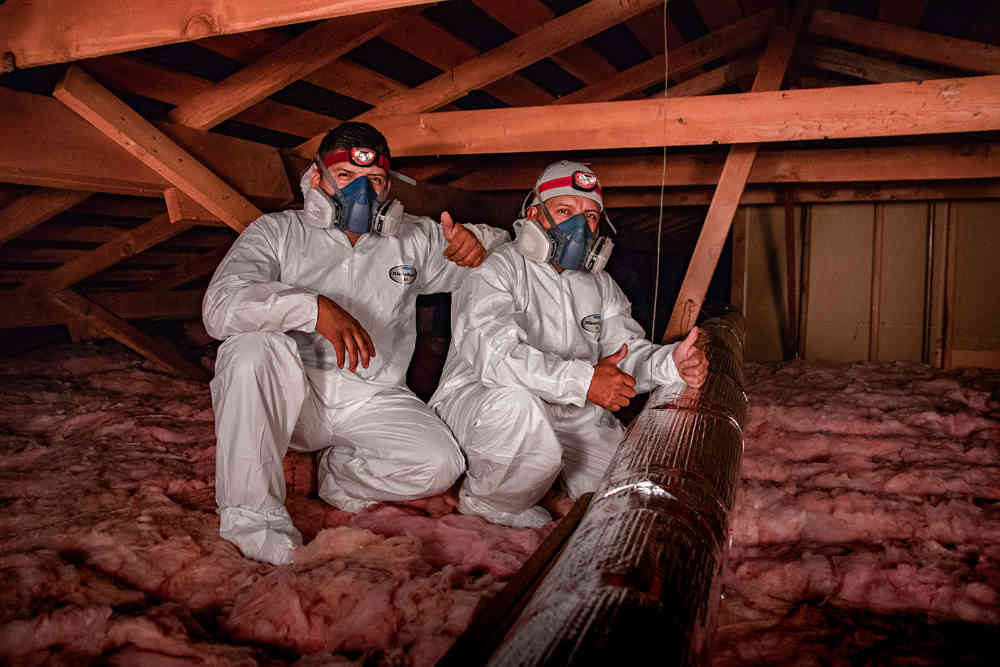
The crew arrives on time, wearing personal protective equipment (PPE) for safety and comfort. Protection setup: Floor runners, hatch containment (plastic + zipper), HEPA vacuums. Work flow:
  1. Old insulation removal and debris haul-away (if needed)
  2. Rodent proofing and sealing entry points
  3. Air sealing
  4. Batts insulation installation to R-38+
  5. Depth markers
  6. Thorough cleanup
Most 1,500 sq. ft. clean attics done in 1 day.

Step 4: Documentation & Warranty

Get before/after photos, manufacturer specs, installed R-value, and Atticare warranty covering work quality and material performance.

Can I DIY? Is It Cheaper?

DIY possible for clean attics needing only top-offs, but think about:
  • Missing air sealing cuts effectiveness 30–50%
  • Safety risks (heat, falls, electrical)
  • No warranty
  • Equipment rental ($200–$400)
DIY might save $500–$1,000 on 1,000 sq. ft., but mistakes cost way more to fix later. For dirty or mixed-condition projects, hire licensed pros-safety and code work need training. See common crawlspace insulation DIY mistakes. Schedule your Atticare install-same-week slots often open.

Are Attic Insulation Companies in LA Licensed and Insured?

Always verify. Reputable attic insulation contractors Los Angeles homeowners trust should have:
  • Valid California contractor’s license (C-2 Insulation or B General Building)
  • Current general liability insurance ($1M minimum)
  • Workers’ compensation coverage
  • Verifiable references and online reviews
  • Written warranties on materials and workmanship
  • Clear, line-item estimates (not vague “per square foot” quotes)
Atticare maintains all required licensing, insurance, and provides documentation upfront. Never hire unlicensed contractors-you risk poor work, no recourse, and liability if someone gets hurt.

What Are the Best Attic Insulation Services in Los Angeles?

The best attic insulation company delivers:
  • Free, thorough inspections with photo documentation
  • Transparent line-item estimates showing air sealing, materials, timeline
  • Licensed, insured, trained crews with verifiable credentials
  • Clean installation practices-floor protection, HEPA containment, careful cleanup
  • Before/after photo proof documenting coverage, depth, R-value
  • Written warranties on workmanship and materials
  • Fast scheduling-same-week or next-week installation slots
  • Code compliance and permitting handled professionally
  • Rebate/tax credit support with proper documentation
Atticare checks every box. Compare any home attic insulation provider against these standards before booking.

Recommended Steps: Book the Best Attic Insulation Service in Los Angeles

  1. Book Atticare’s free consultation with photos; get line-item estimate same day
  2. Review Atticare’s estimate and check that it includes insulation removal if needed, air sealing, all done by a licensed and insured crew
  3. Pick batts insulation using materials comparison table-optimal for most LA attics
  4. Schedule install; Atticare uses floor runners, hatch containment, HEPA cleanup to protect your home
  5. Check photos, R-value, warranty-watch for 15–25% lower cooling costs within 1–2 billing cycles

Frequently Asked Questions

How much to insulate 1,000 / 1,500 / 2,000 sq. ft. attic?

1,000 sq ft: $2,500–$4,500 1,500 sq ft: $3,500–$6,500 2,000 sq ft: $4,500–$9,000 (Depends on condition, removal needs, target R-value)

How much to spray foam a 2,000 sq. ft. attic?

$13,000–$17,000 for closed-cell roof deck work. Batts insulation costs 60–70% less and meets code for most LA homes with superior serviceability.

Is it better to remove old insulation before adding new?

Remove if: Rodents, mold, or water got to it. Add on top if: Dry, clean, and just not thick enough. Atticare checks during free consultation for attic cleanup and insulation needs.

Does attic insulation qualify for tax credits?

Yes. Under the federal Inflation Reduction Act, eligible attic insulation in existing homes can qualify for a tax credit of up to 30% of project costs, capped at $1,200 per year. Atticare provides the documentation your tax professional may need.

Batts or blown-in-what’s better?

Batts for most LA attics-clean installation, easy access, serviceable with rodents (95% of LA homes). Blown-in creates dust clouds and serviceability problems.

What R-value is recommended? R-38 vs. R-30?

R-38 minimum for inland LA (Zone 9); R-30 for coastal (Zone 6). High-performance homes go for R-49. Check California Title 24 standards.

What is the California code?

Title 24: R-30 (coastal) or R-38 (inland) + 1:150 ventilation ratio. Permits usually needed; Atticare handles it.

Best time of year to insulate?

Fall/spring works great, but don’t wait if bills are high now-upgrades pay for themselves in 12–24 months. Atticare schedules year-round.

Can I DIY? Is it cheaper?

Possible for clean attics but risks include missed air sealing (loses 30–50% effectiveness), safety problems, no warranty. DIY saves $500–$1,000 but mistakes cost way more to fix.

How much does Home Depot charge?

$2.50–$3.50/sq. ft., but compare carefully-many skip air sealing. Atticare includes air sealing in line-item estimates.

Should you insulate the roof underside?

Only for sealed attics with spray foam-complicated and costly. 95% of LA homes use traditional vented attics with floor insulation.

Why remove spray foam?

Bad installation (overspray, bad smells), code violations, moisture trapped inside, selling problems. Batts insulation avoids these risks for vented attics.

Adding insulation worth it?

Yes-15–25% cooling cost drops, steady temperatures, less HVAC wear, higher resale value.

How often should you replace insulation?

20–30 years usually; sooner if dirty, wet, or squashed. Check our insulation removal guide.

What about attic repair and insulation together?

Many homes need both. If you’ve got damaged decking, compromised framing, or structural issues, address those first. Professional attic insulation services can coordinate attic repair and insulation work or recommend trusted structural contractors before installing new insulation.

Do I need attic cleaning before new insulation?

If you’ve got rodent droppings, old dirty insulation, or contamination, yes. Attic cleaning Los Angeles professionals sanitize and remove debris before installing fresh insulation. This prevents health risks and ensures maximum insulation performance.

What is attic remediation?

Attic remediation means complete restoration: removing contaminated insulation, sanitizing surfaces, sealing rodent entry points, repairing damage, and installing fresh insulation with proper ventilation. It’s needed when attics have serious rodent infestation, water damage, mold, or hazardous conditions.

Schedule Your Los Angeles Attic Insulation This Week

Greater Los Angeles homeowners deserve steady comfort, lower bills, and peace of mind. Atticare’s licensed, insured crews deliver quality home insulation Los Angeles families trust with fast scheduling, clean-home protections, and photo-documented results backed by written warranties. Need batts top-off to R-38, some removal in dirty zones, or complete insulation replacement with air sealing? Atticare’s free consultation gives you honest assessments, clear line-item estimates, and same-week installation options across Greater Los Angeles.

What Makes Atticare Different

  • Free consultations with photo documentation
  • Line-item estimates (air sealing clearly listed)
  • Trained, careful crews with floor runners + HEPA cleanup
  • Before/after photo proof showing coverage/R-value
  • Written warranties on work quality and materials
  • Rebate/tax credit paperwork support
  • Same-week scheduling-most projects book within 5–7 days

Other Services You Might Need

Ask about bundled services during your consultation. Financing available.

What to Do Next

  1. Book your free Atticare consultation
  2. Get line-item estimate same day
  3. Schedule install-same-week slots often open
  4. Watch your bills drop, temperatures steady out, air get cleaner within weeks
Schedule attic insulation in Los Angeles this week with Atticare-clean install, photo proof, written warranty. Know someone who needs insulation? Refer them and earn rewards!

Atticare: Serving Greater Los Angeles and Orange Counties with trusted attic insulation installation, removal, air sealing, and ventilation. Licensed, insured, and committed to your comfort and savings.