
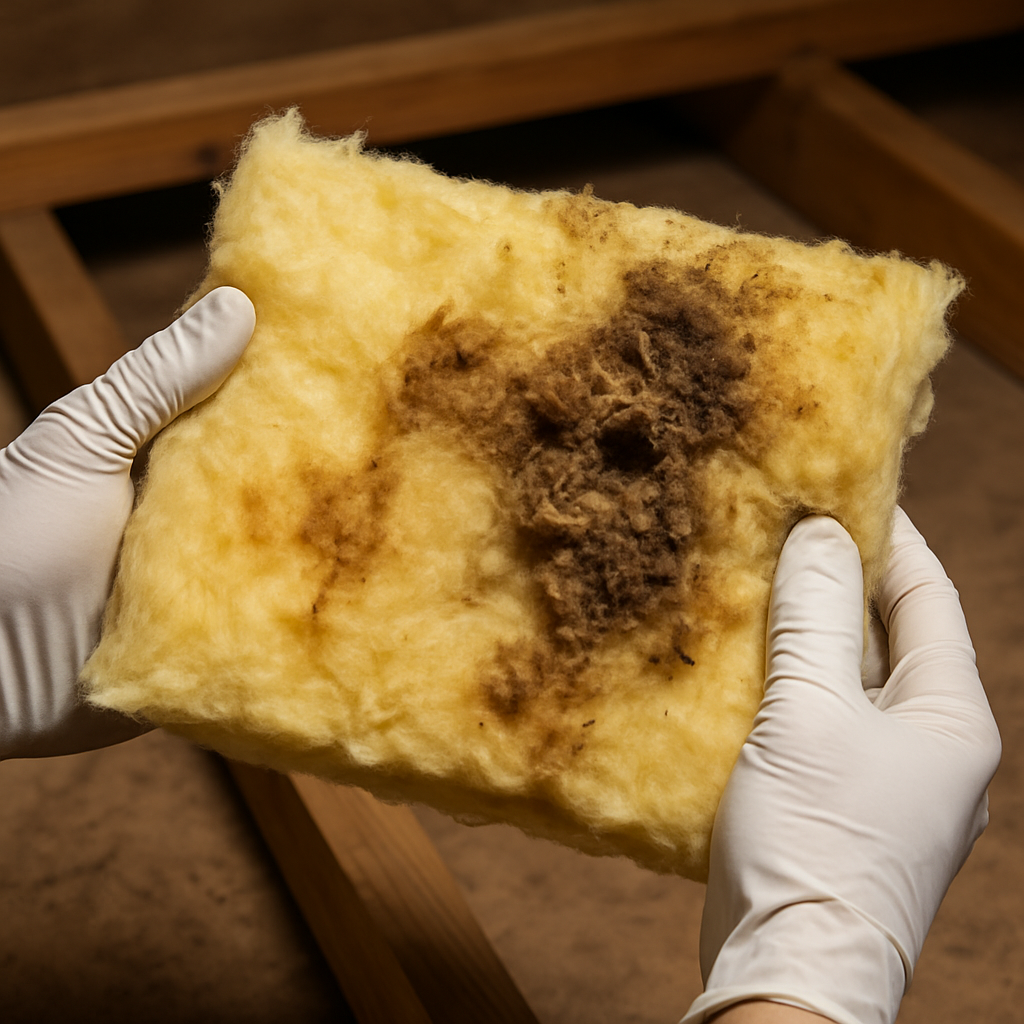
An Oakland attic insulation inspection note on your home-purchase report can feel urgent and vague at the same time. The inspector flagged something — “rodent evidence,” “contaminated insulation,” “insufficient depth” — but the report doesn’t tell you what to do about it. That gap between observation and action is where most new Oakland homeowners get stuck.
This guide decodes the language inspectors use, explains when you need cleanup versus new insulation (or both), and shows you how to get clarity before committing to an on-site visit.
At a glance
- Decode your inspector’s language first — phrases like “rodent evidence” or “contaminated insulation” signal cleanup is needed before reinsulating, while “insufficient depth” may mean insulation-only work is enough.
- Cleanup and sanitization come before sealing or insulation — burying contamination under new material doesn’t solve the problem; the right sequence is clean, sanitize, seal, rodent-proof, then insulate.
- Get ballpark guidance by phone before scheduling a visit — Atticare USA can discuss your inspection report and likely scope before anyone climbs into your attic.
- One contractor handles the full project — exclusion, cleanup, sanitization, and insulation in the correct order, so you don’t juggle multiple vendors with conflicting recommendations.
What Home Inspectors Actually Flag — and Why It Matters
Short answer: Inspectors describe what they see — droppings, staining, thin coverage, debris — but they don’t prescribe a fix. Their job is observation, not restoration planning. The phrases in your report are clues to scope, not a service order.
Home inspectors document conditions. They don’t recommend contractors or scope projects. When they write “rodent evidence noted in attic insulation” or “insulation appears compressed,” they’re recording what their flashlight revealed. They leave the next step to you.
That’s useful and frustrating. Useful because an inspector’s language is usually consistent — the same phrases mean roughly the same things across reports. Frustrating because you still have to translate those phrases into a decision about what service you actually need.
Common Inspection Phrases and What They Usually Mean
| Inspection Language | What It Usually Means | Likely Service Scope |
|---|---|---|
| “Rodent droppings present” or “rodent evidence” | Active or past rodent activity; droppings, nesting material, or gnaw marks visible | Cleanup and sanitization first, then likely insulation removal and rodent-proofing before reinsulating |
| “Contaminated insulation” or “soiled insulation” | Insulation has absorbed urine, debris, or biological material | Removal, cleanup, and sanitization before new insulation |
| “Insufficient depth” or “below recommended R-value” | Insulation is too thin or has settled over time | May be insulation-only if no contamination |
| “Compressed insulation” | Batt or loose-fill has been walked on, stored on, or degraded | Evaluate whether removal is needed or if topping off is enough |
| “Moisture staining” or “water damage noted” | Past or active moisture intrusion | Inspect for source; may need removal depending on extent |
| “Debris accumulation” | Construction debris, old nesting material, or general mess | Cleanup likely needed before insulation work |
These phrases aren’t diagnoses. They’re starting points for a conversation about scope.
Why Oakland’s Older Housing Stock Makes This More Common
Oakland has a high concentration of pre-1970s homes — Craftsman bungalows, Victorians, mid-century ranches in the hills and flatlands alike. Many still have original insulation that’s 50+ years old. That material has seen decades of settling, temperature cycling, and potential rodent activity.
Bay Area rodent pressure doesn’t stop in winter. The climate stays mild year-round, so rats and mice stay active year-round. Older homes often have more entry points: gaps at rooflines, unsealed utility penetrations, vents without proper screening. If your inspector flagged rodent evidence in an older Oakland home, it’s not unusual — it’s common.
The question isn’t whether your attic might have issues. The question is whether those issues require cleanup, removal, sealing, or just a fresh layer of insulation.
Do You Need Attic Cleanup, New Insulation, or Both? Oakland Attic Insulation Inspection Decisions
Short answer: If the inspector noted contamination, rodent evidence, or debris, cleanup comes first. If the insulation is just old, thin, or compressed but otherwise clean, insulation-only may be enough. The right answer depends on what’s actually in the attic — not what you hope is there.
When Insulation-Only Is Usually Enough
You may be able to add or replace insulation without full cleanup if:
- The inspector noted “insufficient depth” or “below recommended R-value” but no contamination.
- There’s no rodent evidence, no staining, no debris, no odor.
- The existing material is clean but just settled or thin.
In these cases, a contractor can often install new insulation over or in place of the old material. The attic doesn’t need a full restoration — it needs better thermal performance.
When Cleanup Comes First
If your inspection report includes any of the following, cleanup and sanitization are typically needed before new insulation makes sense:
- Rodent droppings or nesting material. According to the CDC’s guidance on cleaning up after rodents, droppings, urine, and nesting materials should be handled carefully to avoid stirring up contaminated dust.¹
- Urine staining or odor.
- Dead animals or carcasses noted.
- “Contaminated” or “soiled” language anywhere in the report.
- Debris accumulation beyond normal dust.
Why does cleanup come first? Because new insulation installed over contaminated material doesn’t solve the problem — it buries it. The droppings are still there. The odor can still migrate into your living space. And if rodents are still getting in, they’ll nest in the new insulation just as easily.
The right sequence is: remove compromised material, clean and sanitize the exposed attic floor, seal gaps, rodent-proof entry points, then install new insulation.
When You Need the Full 5-Step Restoration
If your inspection flagged both contamination and signs of ongoing or recent rodent activity, you likely need a full attic restoration — not just cleanup, not just insulation.
Atticare USA’s 5-step process addresses this:
- Inspect — Identify contamination, damage, and entry points.
- Remove — Take out contaminated or damaged insulation.
- Clean and sanitize — Clean the exposed attic floor and address odor.
- Seal and rodent-proof — Close gaps and entry points so rodents can’t return.
- Insulate — Install new insulation only after the attic is clean and sealed.
The sequence matters because each step depends on the one before it. You can’t seal entry points you can’t see under insulation. You can’t install clean insulation over a contaminated floor. And you shouldn’t pay for new insulation if it’s going to get damaged again because nothing was sealed.
For more on this process, see our guide to attic rodent cleanup in Oakland.
How Atticare USA Handles the “I’m Not Sure” Moment
Short answer: If you’re not sure whether you need cleanup or just new insulation, Atticare USA can give you a ballpark scope by phone — before anyone climbs into your attic. Then a free inspection confirms the diagnosis and produces a written proposal.
Ballpark Guidance by Phone Before Anyone Climbs Into Your Attic
Most homeowners don’t want to schedule an inspection appointment before they have some idea of what they’re dealing with. That’s reasonable.
Atticare USA can often give you preliminary guidance by phone. Describe what the inspector noted, share photos if you have them, and the team can help you understand whether you’re likely looking at cleanup, insulation-only, or a full restoration. That phone call is a starting point — not a commitment.
This is different from contractors who won’t discuss scope or pricing until they’ve sent someone to your home. A phone conversation helps you decide whether an inspection makes sense, not whether you’ve already committed to a project.
One Contractor for the Whole Project
The alternative to a full-service contractor is hiring multiple vendors: a pest company to trap, a cleanup crew to remove material, an insulation installer to put in new material. That means multiple schedules, multiple quotes, and no single party responsible for the sequence.
Atticare USA handles exclusion, cleanup, sanitization, and insulation as one licensed contractor (CA #1051462). The work happens in the right order because one team controls the process. You don’t have to coordinate between vendors who may have conflicting recommendations.
For Oakland and East Bay homeowners, this matters. Older homes often need more than one scope of work — and a single contractor means the job gets done in the correct sequence, not piecemeal.
Diamond Certified — The Same Trust Signal, With Actual Answers
Atticare USA is Diamond Certified, the same third-party certification you’ll see on Bay Area directory listings. But a certification badge doesn’t tell you what your inspection report means or whether you need cleanup before insulation.
The difference is that Atticare USA combines that credential with the diagnostic guidance most directories don’t provide. You get the same trust verification — plus a real answer to your question.
What to Expect During Your Oakland Attic Insulation Inspection and Quote Process
Short answer: The inspection assesses insulation condition, rodent evidence, entry points, and duct condition. The quote arrives as a written proposal outlining the recommended scope of work and pricing. Photos are available upon request.
What the Inspection Covers
During a free inspection, the technician looks at:
- Current insulation type, depth, and condition.
- Evidence of rodent activity (droppings, nesting, gnaw marks). The CDC notes that common signs include droppings, gnaw marks, and nesting materials.²
- Visible entry points where rodents or pests could enter.
- Duct condition and any visible damage.
- Moisture indicators or staining.
The goal is to see what’s actually happening in your attic — not just confirm what the home inspector noted. If you want before-and-after photos, they’re available upon request.
How the Quote Works
After the inspection, you receive a written proposal outlining the recommended scope of work and pricing. No upfront fees before work begins.
If the inspection reveals you only need insulation work, the quote reflects that. If you need cleanup, sanitization, sealing, and insulation, the quote shows each component. You decide what to approve.
For guidance on evaluating any attic quote, see our Bay Area attic insulation decision guide.
FAQ — Questions Oakland Homeowners Ask After an Inspection Flags Attic Insulation
What does “rodent evidence” or “rodent damage” mean on a home inspection report?
It typically means the inspector saw droppings, nesting material, gnaw marks, or other signs of rodent activity. It doesn’t mean rodents are necessarily active right now — but it does mean the attic may need cleanup, sanitization, and entry-point sealing before new insulation. The CDC provides guidance on identifying rodent infestations based on these signs.²
Can I put new insulation over old insulation if the inspector flagged it?
Only if the old insulation is clean, dry, and uncontaminated. If there’s rodent evidence, staining, or debris, new insulation should not be installed over the problem — it should replace it after cleanup and sanitization.
How do I know if I need attic cleanup before reinsulating?
If your report mentions contamination, rodent evidence, odor, or debris, cleanup and sanitization are usually needed first. If it only mentions low R-value or compression with no contamination, you may be able to insulate without full cleanup.
What’s the difference between an insulation company and an attic restoration contractor?
An insulation company installs insulation. An attic restoration contractor handles the full sequence: inspection, removal, cleanup, sanitization, sealing, and insulation. If your attic has contamination or rodent issues, you need restoration — not just installation. Learn more about choosing an attic insulation company in the Bay Area.
Does Atticare USA handle rodent removal, or do I need a separate pest company?
Atticare USA handles rodent exclusion (sealing entry points), cleanup, sanitization, and insulation. If live rodents need to be trapped or removed first, that’s handled by a licensed pest control provider before Atticare USA begins restoration work. For more on rodent proofing, see our Bay Area rodent proofing services.
What warranty does Atticare USA offer on rodent proofing?
Rodent proofing carries a 1-year warranty — a one-time, subscription-free solution. This contrasts with exterminators who often require recurring service contracts.
Next Steps — Get Clarity Before You Decide
If your Oakland home inspection flagged old or dirty attic insulation, you don’t have to guess what it means or commit to a project you don’t understand.
Call Atticare USA for a phone conversation about your inspection report. Get a ballpark sense of whether you’re looking at cleanup, insulation-only, or a full restoration. Then schedule a free inspection if you want a confirmed diagnosis and a written proposal.
Atticare USA has served Bay Area homeowners since 2012. Diamond Certified. Over 1,400 reviews. More than 11,000 clients. Licensed, insured, and bonded (CA #1051462).
Book a free attic inspection or call for a phone consultation to decode your inspection report and understand your options — before you decide anything.
Keep reading
Sources
- Centers for Disease Control and Prevention. “Cleaning Up After Rodents.” https://www.cdc.gov/healthy-pets/rodent-control/clean-up.html
- Centers for Disease Control and Prevention. “Controlling Wild Rodent Infestations.” https://www.cdc.gov/healthy-pets/rodent-control/index.html
Serving Oakland: Atticare USA handles the exclusion side of this work locally — see attic rodent proofing in Oakland.
Recent Atticare USA projects in and near Oakland
- Attic Insulation Replacement & Rodent Proofing in Oakland, CA (Oakland, December 2025)
- Attic Insulation Removal, Cleanup & Rodent Proofing in Oakland, CA (Oakland, June 2026)
- Attic Insulation Replacement & Rodent Proofing in Oakland, CA (Oakland, September 2026)
- Attic Insulation Replacement & Rodent Proofing in Oakland, CA (Oakland, July 2026)


