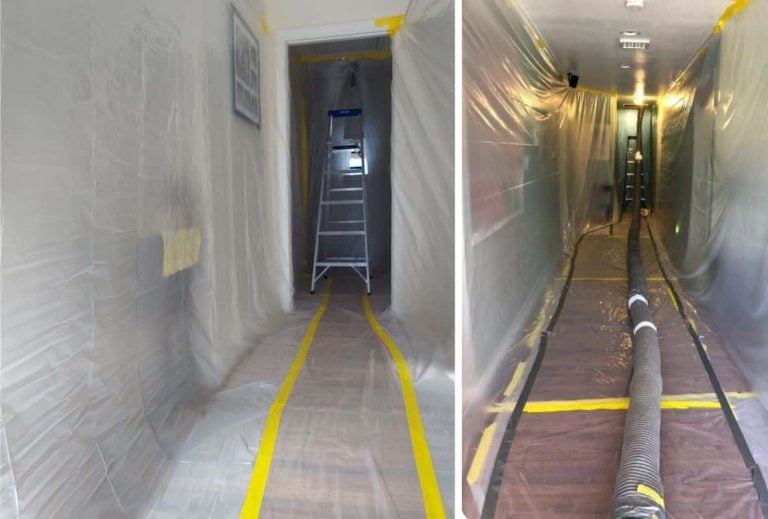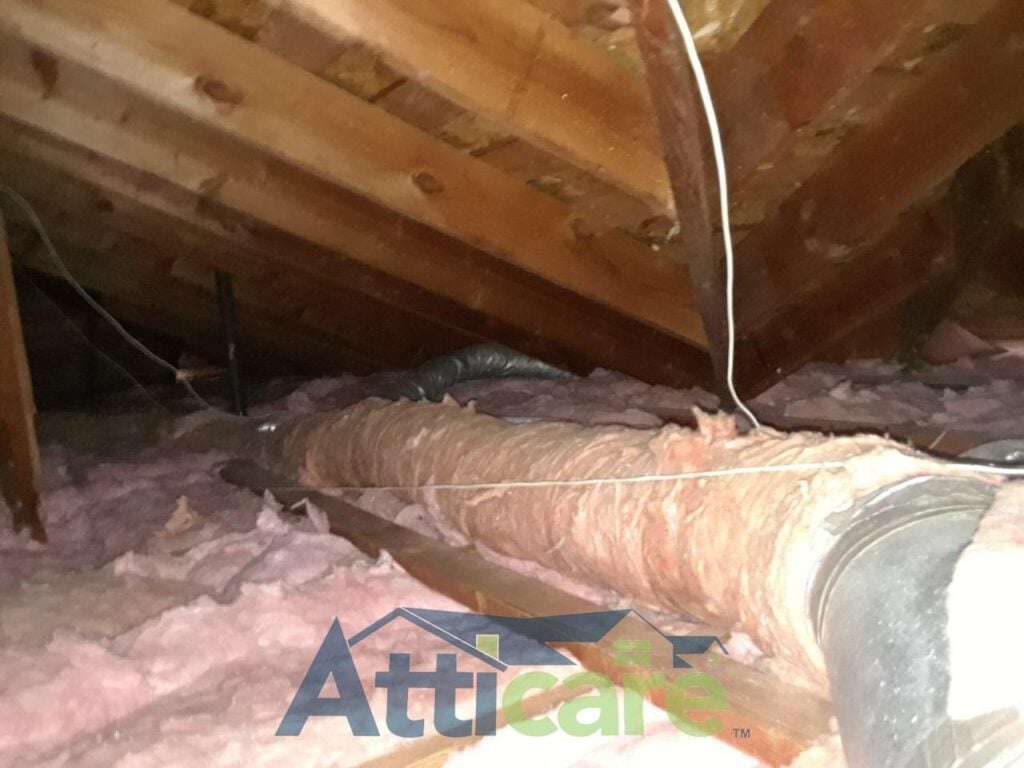
Attic restoration after rodents is not just about removing contamination — it’s about finishing the job with new insulation in place, not leaving you with an empty attic and another contractor to find. The difference between a temporary fix and a lasting solution comes down to sequence: inspect, clean and sanitize, seal entry points, rodent-proof, then install new insulation. Skip a step or do them out of order, and the problem comes back.
At a glance
- Inspect first — a proper inspection reveals contamination extent, entry points, and hidden damage before any work begins.
- Remove, clean, and sanitize — contaminated insulation must come out, then exposed surfaces need thorough cleaning and sanitization to eliminate odors and biological hazards.
- Seal entry points, then rodent-proof — exclusion work closes the paths rodents used so they can’t return after cleanup.
- Install new insulation last — insulation goes in only after the attic is clean, sanitized, and sealed; never over unresolved problems.
- One contractor, one project — complete restoration means the job ends with new insulation in place, not an empty attic and another contractor to call.
Many companies in Northern California offer attic remediation or decontamination services. But remediation often stops at cleanup. You’re left with a sanitized attic floor and no insulation — which means you still need to hire someone else to finish the job. That’s not restoration. That’s half the work.
This guide explains what complete attic restoration after rodents actually involves, why the order of operations matters, and what Northern California homeowners can expect to pay for a project that ends with the attic fully restored.
What Attic Restoration After Rodents Actually Means
Short answer: Attic restoration is the complete process from contaminated attic to finished attic with new insulation. It includes inspection, insulation removal, cleaning, sanitization, entry-point sealing, rodent-proofing, and new insulation installation — handled as one continuous project.
Rodent contamination creates multiple problems at once. Droppings and urine saturate insulation. Nesting material collects in hidden areas. Rodents chew through ducts, wiring, and vapor barriers. The damage is often invisible from the attic opening because it’s buried under existing insulation.
Cleaning the surfaces or vacuuming droppings doesn’t solve the underlying issue. If the contaminated insulation stays in place, the odor stays. If entry points aren’t sealed, new rodents follow the same paths. If you skip new insulation, your home loses energy efficiency and comfort.
Restoration means addressing all of it — not just the part you can see.
Restoration vs. Remediation vs. Cleaning — Why the Words Matter
These terms get used interchangeably, but they describe different scopes of work:
- Attic cleaning typically means surface-level work: vacuuming droppings, removing debris, basic sanitization.
- Attic remediation or decontamination usually includes removing contaminated insulation and sanitizing the exposed attic floor.
- Attic restoration means the complete fix: everything above, plus sealing entry points, rodent-proofing, and installing new insulation.
The problem is that many remediation companies stop at the cleanup phase. Some explicitly state they don’t install insulation. That leaves you with a clean but empty attic — and another project to coordinate with a different contractor.
When you’re comparing quotes, ask what’s included at the end. If the answer isn’t “new insulation installed,” you’re getting remediation, not restoration.
Why the Order of Operations Determines Whether Your Fix Lasts
Short answer: New insulation should never be installed over contamination or before entry points are sealed. The correct sequence is: inspect → remove → clean and sanitize → seal → rodent-proof → insulate. Doing steps out of order means the problem returns.
Here’s why sequence matters:
You can’t properly inspect an attic with insulation still in place. Contamination, duct damage, gaps, and entry points hide under the material. Removing old insulation first reveals what you’re actually dealing with.
Cleaning and sanitizing before anything else is restored. Contaminated insulation can’t be sanitized in place. Rodent urine soaks through fiberglass and saturates cellulose. The material has to come out, and then surfaces must be thoroughly cleaned and sanitized.
Sealing and rodent-proofing before insulation is critical. If you install new insulation first, you’ve buried the entry points. Rodents will find them again. The attic will be re-contaminated, and you’ll start over.
Insulation is always the final step. Once the attic is inspected, cleaned, sanitized, sealed, and rodent-proofed, new insulation goes in last. This is the step that restores energy efficiency and comfort — but only after the problems underneath are resolved.
The 5-Step Attic Restoration Process
Short answer: Complete attic restoration after rodents follows five steps: (1) Inspect, (2) Remove contaminated insulation and clean and sanitize, (3) Seal entry points, (4) Rodent-proof, (5) Install new insulation. Each step must happen in this order for the fix to last.
Step 1 — Inspect the Attic and Identify the Full Scope
A proper inspection goes beyond looking for droppings. The goal is to understand the extent of contamination, locate all entry points, assess duct condition, and identify damage that’s hidden under insulation.
This inspection informs the scope of work. Is contamination isolated to one area, or spread throughout? Are ducts damaged? Are there moisture stains suggesting other issues? How many entry points need sealing?
Without a thorough inspection, you’re guessing at what the project requires.
Step 2 — Remove Contaminated Insulation, Then Clean and Sanitize
Contaminated insulation needs to come out. This isn’t optional when rodents have been nesting in the material, urinating on it, or leaving droppings throughout.
The CDC recommends proper cleanup protocols when handling rodent droppings, urine, and nesting materials to reduce exposure risks.¹ Contaminated insulation that stays in place continues to hold those materials.
Once insulation is removed, the exposed surfaces need thorough cleaning and sanitization. This includes the attic floor, framing, and any areas where contamination was present. Proper sanitization reduces odors and addresses biological contamination. Deodorizing may be appropriate depending on the severity of the infestation.
Removal also serves a practical purpose: it exposes the attic floor so the crew can see — and seal — what’s underneath.
Step 3 — Seal Entry Points
Sealing is what prevents re-infestation. Rodents enter through gaps, cracks, roofline openings, utility penetrations, vents, and construction gaps. These entry points need to be sealed with appropriate materials — wire mesh, cement, foam, or other rodent-resistant options depending on the opening.
Important clarification: Entry-point sealing (exclusion) is different from pest control. If rodents are still actively present in the attic, live-animal removal should be handled first by a licensed pest control provider. Sealing and rodent-proofing close the paths so rodents can’t return after they’re gone.
This step must happen before new insulation goes in. Once insulation is installed, entry points are hidden again.
Step 4 — Rodent-Proof the Attic
After entry points are sealed, rodent-proofing reinforces the exclusion work with additional protective measures. This may include securing vents, reinforcing vulnerable areas, and ensuring all access paths are permanently closed.
Step 5 — Install New Insulation
New insulation is the final layer of a restored attic system. It restores energy efficiency, supports comfort, and completes the project.
The key is that insulation should only be installed after everything else is done. Installing over an unresolved contamination problem or unsealed entry points guarantees future problems.
This is where many remediation companies stop short. They clean the attic but leave insulation installation to someone else. That approach creates coordination headaches, extends the project timeline, and leaves you managing two contractors instead of one.
What Attic Restoration Costs in Northern California
Short answer: Complete attic restoration after rodents typically costs $6,000–$15,000 or more in Northern California, depending on attic size, contamination severity, and insulation type.
Component costs include attic cleaning ($1,500–$4,500), contaminated insulation removal ($1,500–$6,000), sealing ($750–$2,000), and new insulation (roughly $2.50–$4.50 per square foot).
Prices vary based on several factors: attic square footage, how extensively rodents damaged the space, how difficult access is, and what type of insulation you choose for replacement.
The important comparison isn’t between contractors who quote different numbers — it’s between quotes that include the complete job versus quotes that stop at cleanup. A lower quote that doesn’t include insulation installation isn’t actually cheaper. It’s just incomplete.
What Most Remediation Companies Leave Out
Short answer: Many remediation companies explicitly don’t install new insulation. They clean and decontaminate the attic, then leave homeowners to hire a separate insulation contractor to finish the job.
This creates real problems:
- Coordination burden. You’re now managing two contractors, two schedules, and two warranties.
- Gap in accountability. If something goes wrong after insulation is installed, who’s responsible — the cleanup company or the insulation company?
- Extended timeline. Your attic sits empty between the end of remediation and the start of insulation work.
- Energy loss. An attic without insulation bleeds energy. Every day between cleanup and insulation installation costs you in comfort and utility bills.
When you’re evaluating options, ask whether the quote includes new insulation installed at the end. If it doesn’t, you’re comparing partial solutions to complete ones.
When You Do — and Don’t — Need Full Attic Restoration
Short answer: Full attic restoration is typically needed when contamination is widespread, insulation is heavily soiled or damaged, or rodents have been nesting in the attic for an extended period. Minor, isolated contamination may only require targeted cleanup.
Signs that suggest full restoration is needed:
- Droppings visible throughout the attic, not just in one corner
- Strong, persistent odors even after surface cleaning
- Insulation that’s visibly tunneled, compressed, or discolored
- Evidence of nesting material in multiple areas
- Damage to ducts, wiring, or structural components
- Repeated rodent activity despite prior cleanup attempts
If contamination is limited to a small area and the rest of the attic is in good condition, targeted cleanup and spot-sealing may be sufficient. But if you’re seeing widespread evidence, the insulation usually needs to come out so the full scope can be addressed.
A proper inspection clarifies which approach makes sense before work begins.
Northern California Attic Conditions and Why They Matter
Short answer: Northern California’s hot summers, year-round rodent pressure, and varied housing stock make complete attic restoration — including proper insulation — especially important for comfort and protection.
In Sacramento and the Central Valley, summer attic temperatures regularly reach 140–160°F. That heat load puts serious stress on cooling systems and makes inadequate or damaged insulation a comfort and cost problem. Inland Bay Area communities from Concord to San Jose experience similar summer heat patterns.
The Department of Energy recommends proper insulation as a fundamental step for home energy efficiency.² In hot climates like Northern California, that recommendation carries extra weight.
Rodent pressure in California doesn’t have an off-season. Warm winters mean wildlife stays active year-round. Roof rats, Norway rats, and mice find their way into attics through gaps that may be invisible from the outside. An attic that isn’t sealed after cleanup remains vulnerable to re-entry — whether it’s a Sacramento ranch home, a San Francisco Victorian, or a newer build in Stockton or Modesto.
Frequently Asked Questions
Should I remove attic insulation after rodents, or can I just add more on top?
If insulation is contaminated with droppings, urine, or nesting material, it should be removed. Installing new insulation over contaminated material traps odors and doesn’t address the underlying problem.
Who removes the rodents before attic cleanup can begin?
If rodents are still actively present, a licensed pest control provider should handle live-animal removal before restoration work begins. Attic restoration contractors handle exclusion (sealing entry points) and cleanup — not trapping or extermination.
What’s the difference between attic cleaning and attic restoration?
Attic cleaning is surface-level work. Attic restoration includes insulation removal, cleaning, sanitization, entry-point sealing, rodent-proofing, and new insulation installation — the complete fix.
Does sealing entry points guarantee rodents won’t come back?
Sealing significantly reduces the chance of re-entry by closing the paths rodents used. However, no service can guarantee permanent elimination. Atticare’s rodent proofing includes a 1-year warranty on exclusion work.
The Complete Fix, From One Contractor
Most attic restoration projects require someone to inspect, someone to clean, someone to seal, and someone to install insulation. That’s a lot of coordination for a homeowner who just wants the problem solved.
Atticare USA handles the full 5-step process — from contaminated insulation removal through rodent-proofing to new insulation installation. One contractor, one project, one point of accountability.
Since 2012, Atticare has helped more than 11,000 clients across Northern California with attic restoration that actually works. Diamond Certified and highly rated with 1,400+ reviews, the company provides professional attic cleaning, rodent proofing services, and complete attic insulation replacement after rodents.
A free inspection shows you exactly what’s happening in your attic — the contamination extent, the entry points, and what the complete fix involves. You’ll receive a written proposal outlining the recommended scope of work and pricing. No pressure. Just a clear picture of the problem and a plan to solve it.
Schedule a free attic inspection and find out what it takes to restore your attic the right way — with new insulation in place, not an empty attic and another contractor to call.
Sources
- Centers for Disease Control and Prevention. “Cleaning Up After Rodents.” https://www.cdc.gov/healthy-pets/rodent-control/clean-up.html
- U.S. Department of Energy. “Insulation.” Energy Saver. https://www.energy.gov/energysaver/insulation
Recent Atticare USA projects in and near Sacramento
- Attic Insulation Replacement and Rodent Proofing in Sacramento, CA (Sacramento, August 2026)
- Attic Insulation Replacement, Rodent Proofing & Whole House Fan in Concord, CA (Concord, September 2026)
- Attic Insulation Replacement & Rodent Proofing in Concord, CA (Concord, February 2026)
- Attic Insulation Replacement & Rodent Proofing in San Jose, CA (San Jose, May 2026)