If you’re selling a home in Concord or San Ramon, pre-sale attic cleanup Concord San Ramon homeowners schedule often comes down to one question: can the work be done before the listing date? When your attic has contaminated insulation, rodent evidence, or visible damage, addressing it now — before the buyer’s inspector arrives — protects your sale price and removes a negotiation lever you don’t want to hand over.
Atticare USA offers a 5-step attic restoration process — inspect, clean and sanitize, seal entry points, rodent-proof, and install new insulation — handled by one licensed contractor on one schedule. Call for a same-day ballpark quote to confirm the work fits your timeline.
At a glance
- Address attic problems before listing — inspection findings become negotiation leverage or deal-killers; handling cleanup first puts you in control
- Understand what inspectors check — rodent evidence, insulation condition, entry points, and moisture indicators all trigger findings that affect your sale
- Follow the correct restoration sequence — inspect, clean and sanitize, seal, rodent-proof, then insulate; new insulation always goes in last
- Work with one contractor, not three — a single schedule eliminates coordination gaps between pest companies, cleanup crews, and insulation installers
- Get a ballpark quote fast — phone quotes help you decide quickly whether the timeline and budget work before your listing date
Why Pre-Sale Attic Cleanup Concord San Ramon Sellers Should Prioritize
Short answer: Attic problems discovered during the buyer’s inspection become negotiation leverage — or deal-killers. Handling cleanup and reinsulation before listing removes that risk.
When a buyer’s inspector flags rodent droppings, damaged insulation, or unsealed entry points, the finding doesn’t just show up in a report. It becomes a repair credit request, a price reduction conversation, or — in competitive East Bay markets — a reason for the buyer to walk and make an offer elsewhere.
Concord and San Ramon sellers know Bay Area transactions move fast. Homes that show well and inspect clean command stronger offers. Homes with attic problems face re-negotiation after the inspection, delayed closings, or deals that collapse entirely.
The logic is straightforward: if the attic needs work anyway, doing it before listing means you control the timeline, the cost, and the outcome. Waiting means the buyer controls the conversation.
What Happens When Inspectors Find Attic Problems
Bay Area home inspectors are thorough. When they enter an attic and find evidence of rodent activity, contaminated insulation, or gaps where pests can enter, they document it. That documentation goes to the buyer, and the buyer’s agent uses it.
Common consequences include:
- Repair credit requests ($2,000–$8,000+ depending on scope)
- Price reductions tied to “deferred maintenance”
- Contingency extensions while the seller scrambles to fix the problem
- Buyer walkaway, especially when competing homes inspect cleaner
The Concord and San Ramon Seller’s Timeline Reality
East Bay listing prep windows are compressed. Between deciding to sell and going on-market, sellers are managing staging, photography, disclosures, repairs, and often still living in the home. Adding attic work to that list feels overwhelming — especially if it means coordinating a pest company, a cleanup crew, and an insulation installer separately.
That coordination burden is exactly why pre-sale attic work stalls. By the time multiple contractors are lined up, the listing window has passed.
What Home Inspectors Actually Look For in Bay Area Attics
Short answer: Inspectors check for rodent evidence, insulation condition, entry points, and moisture indicators. Each of these can trigger findings that affect your sale.
Understanding what inspectors flag helps you understand what needs addressing before listing.
Rodent Evidence and Contamination
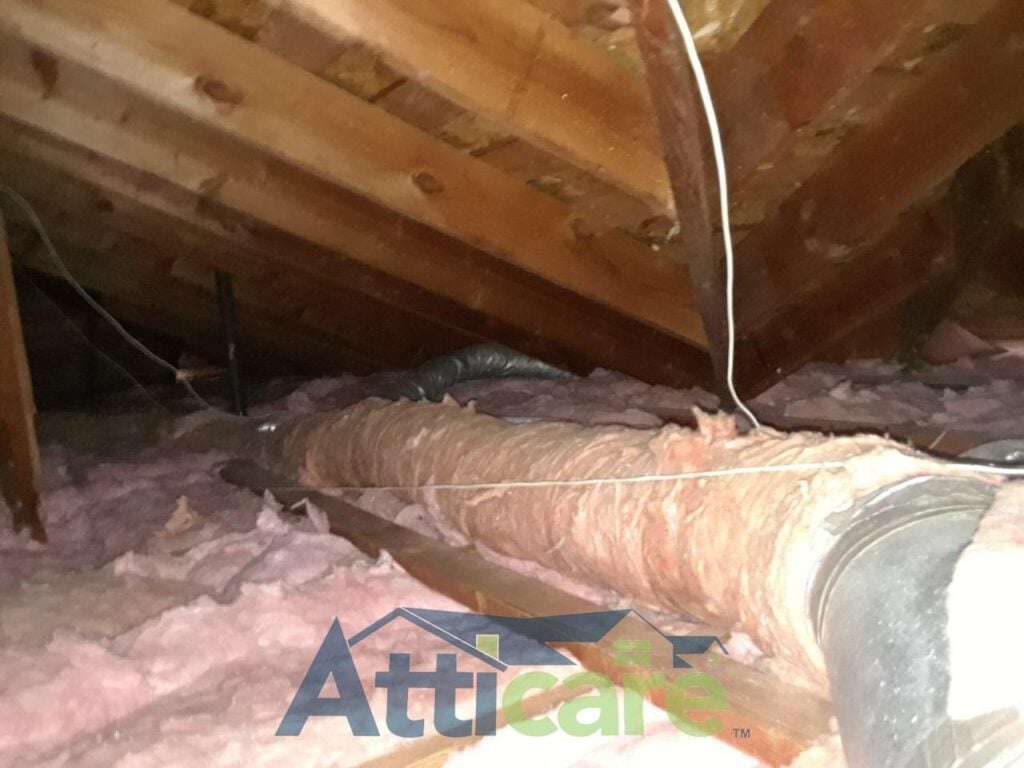
Inspectors look for droppings, nesting material, gnaw marks, and urine staining. Rodent evidence in attic insulation is a common finding in Concord and San Ramon homes, particularly in older construction with roofline gaps or unsealed utility penetrations. Year-round rodent pressure in the Bay Area means pests don’t die off in winter — activity continues regardless of season.
According to the CDC’s guidance on cleaning up after rodents, rodent droppings, urine, and nesting materials should be handled carefully because they may pose health risks.
When inspectors document rodent contamination, buyers often request full insulation removal and replacement — not spot treatment.
Insulation Condition and Coverage
Thin, compressed, or visibly soiled insulation draws inspector attention. Beyond contamination, inspectors note whether insulation depth appears adequate and whether it’s evenly distributed.
Insulation that’s been disturbed by rodent activity, compressed by storage, or degraded over time often gets flagged as “recommend evaluation” or “deferred maintenance.”
Entry Points and Exclusion Gaps
Visible gaps at rooflines, around vents, at plumbing and electrical penetrations — these are entry points for rodents. Inspectors note them, and buyers read those notes.
The CDC’s rodent control guidance identifies common entry points including gaps around vents, utility penetrations, and roofline openings — the same areas home inspectors check.
An attic that shows sealed, rodent-proofed entry points signals a maintained home. An attic with obvious gaps signals future problems.
Moisture Indicators and Ventilation Issues
Inspectors also check for staining, moisture intrusion signs, and ventilation adequacy. Bay Area microclimates vary — coastal and bay-influenced moisture patterns can affect crawl spaces and attics differently than inland East Bay areas like Concord. Visible staining or inadequate ventilation often appears in inspection reports as items for further review.
Atticare USA’s 5-Step Pre-Sale Attic Solution
Short answer: The 5-step process — inspect, clean and sanitize, seal entry points, rodent-proof, and install new insulation — addresses each inspection concern in the correct order, handled by one contractor.
The order matters. New insulation should never be installed over an unresolved rodent or contamination problem. The process ensures each step happens in sequence, so the final result is an attic that’s clean, sealed, and properly insulated.
Step 1 — Inspection and Assessment
The process starts with understanding what’s actually in the attic. Atticare USA inspects for rodent evidence, insulation condition, entry points, duct damage, and other issues that affect scope.
For sellers working on tight timelines, ballpark quotes are available by phone. This helps you decide quickly whether to proceed, without waiting for an in-person visit to get initial pricing.
Step 2 — Removal of Contaminated Insulation
When insulation is contaminated by rodent activity, damaged, or too degraded to remain, it comes out. Removing compromised material exposes the attic floor so the crew can see and address what’s underneath.
New insulation should not be layered over contamination. Removal first is non-negotiable when rodent activity is present.
Step 3 — Cleaning and Sanitizing
With the attic floor exposed, cleaning and sanitizing address rodent evidence, odors, and residual contamination. This step is mandatory — it’s never skipped.
A sanitized attic floor means new insulation goes in clean, not on top of what was causing the problem.
Step 4 — Sealing Entry Points and Rodent-Proofing
After cleaning and sanitizing, Atticare USA identifies and seals accessible entry points with appropriate materials — wire mesh, foam, cement, or other approved methods. This exclusion work prevents rodents from re-entering through the same gaps.
Sealing entry points helps reduce the chance of future rodent activity. This exclusion work carries a 1-year warranty.
Note: Atticare USA does not trap, bait, or exterminate. If live animals need to be removed first, that’s handled by a licensed pest control provider before restoration work begins.
Step 5 — New Insulation Installation
Only after the attic is clean, sanitized, sealed, and rodent-proofed does new insulation go in. This is always the last step.
According to the U.S. Department of Energy, proper insulation supports home comfort and energy efficiency — but only when installed correctly in a prepared space.
Installing insulation last means it’s protecting a clean, sealed space — not covering over problems that will resurface.
Why One Contractor Beats Three for Pre-Sale Attic Work
Short answer: Coordinating a pest company, cleanup crew, and insulation installer separately creates scheduling gaps, handoff failures, and delays you can’t afford before listing.
Sellers preparing homes for market have enough vendors to manage. Staging, photography, landscaping, repairs — the list is long. Adding three separate attic contractors compounds the coordination burden.
One Schedule, One Point of Contact
When Atticare USA handles the full scope — cleanup, sanitizing, sealing, and insulation — you’re working with one schedule, one point of contact, and one contractor responsible for the outcome.
No waiting for the pest company to finish before the cleanup crew can start. No wondering if the insulation installer will arrive before the listing date.
No Handoff Gaps Between Vendors
The common failure mode with multiple contractors: cleanup happens, but entry points never get sealed. Or insulation gets installed before the rodent problem is actually resolved.
When one contractor owns the entire sequence, nothing falls through the cracks. Each step happens in order, and no one moves to the next phase until the current one is complete.
Timeline: What’s Realistic Before Your Listing Date
Short answer: Most projects can be completed within one to three weeks depending on scope and scheduling availability. Call early.
Getting a Ballpark Quote Fast
Atticare USA provides ballpark quotes by phone for sellers who need to make fast decisions. You don’t have to wait for an in-person inspection to understand approximate pricing.
This helps you evaluate whether the work fits your budget and timeline before committing to scheduling.
Scheduling the Inspection and Work
Once you decide to proceed, Atticare USA schedules an inspection to confirm scope, followed by the work itself. Bay Area demand varies, so earlier contact means more flexibility on timing.
If your listing date is fixed, communicate that upfront. The team can advise whether the timeline is realistic.
Completing Before the Buyer’s Inspection
The goal is completion before listing — or at minimum, before the buyer’s inspection. A clean attic at the time of inspection means nothing to flag, nothing to negotiate, and one less obstacle to closing.
What About Documentation for the Buyer?
Short answer: Before-and-after photos are available upon request. The completed work is the proof — a clean, sealed, freshly insulated attic.
Some sellers wonder what they’ll have to show the buyer’s inspector. Atticare USA provides photos upon request, showing the attic condition before and after the work.
The more important point: the work itself is what matters. An inspector entering a clean, properly insulated attic with sealed entry points has nothing to flag.
Frequently Asked Questions
How long does pre-sale attic cleanup and reinsulation take?
Most projects complete within one to three weeks from initial contact, depending on scope and scheduling availability. Communicate your listing date early for the best timeline fit.
Can I get a quote without an in-person inspection?
Yes. Atticare USA provides ballpark quotes by phone so you can make a fast initial decision. A detailed inspection confirms exact scope and pricing.
What do home inspectors look for in attics before a sale?
Inspectors check for rodent evidence, insulation condition, entry points, and moisture indicators. Any of these can trigger findings that affect your sale.
Does Atticare USA provide documentation for the buyer’s inspector?
Before-and-after photos are available upon request. The completed work — a clean, sealed, reinsulated attic — is the primary proof.
Get a Ballpark Quote for Pre-Sale Attic Cleanup in Concord or San Ramon
You’re selling. Your timeline is fixed. Your attic needs attention.
Atticare USA handles the full scope — cleanup, sanitizing, sealing, and new insulation — with one contractor, one schedule, and one goal: done before your listing date.
Serving Bay Area homeowners since 2012. Diamond Certified. 1,400+ reviews. Licensed, insured, and bonded (CA #1051462).
Call for a same-day ballpark quote and find out if the work fits your timeline.
Schedule a free attic inspection or call the San Francisco Bay Area office to get started.
Related Resources
- Attic rodent cleanup in the Bay Area
- Why the order of operations matters
- Attic insulation replacement in Concord
- Attic restoration services in San Ramon
- Rodent proofing services in the San Francisco Bay Area
Sources
- Centers for Disease Control and Prevention. “Cleaning Up After Rodents.” https://www.cdc.gov/healthy-pets/rodent-control/clean-up.html
- Centers for Disease Control and Prevention. “Rodent Control.” https://www.cdc.gov/healthy-pets/rodent-control/index.html
- U.S. Department of Energy. “Insulation.” https://www.energy.gov/energysaver/insulation
Serving Concord, San Ramon: Atticare USA handles the exclusion side of this work locally — see attic rodent proofing in Concord and attic rodent proofing in San Ramon.
Recent Atticare USA projects in and near Concord
- Attic Insulation Replacement, Rodent Proofing & Whole House Fan in Concord, CA (Concord, September 2026)
- Attic Insulation Replacement & Rodent Proofing in Concord, CA (Concord, February 2026)
- Large Attic Insulation Replacement and Air Duct Replacement in San Ramon, CA (San Ramon, July 2026)
- Attic Insulation Replacement with Blown-In, Rodent Proofing & Air Duct Work in San Ramon, CA (San Ramon, August 2026)